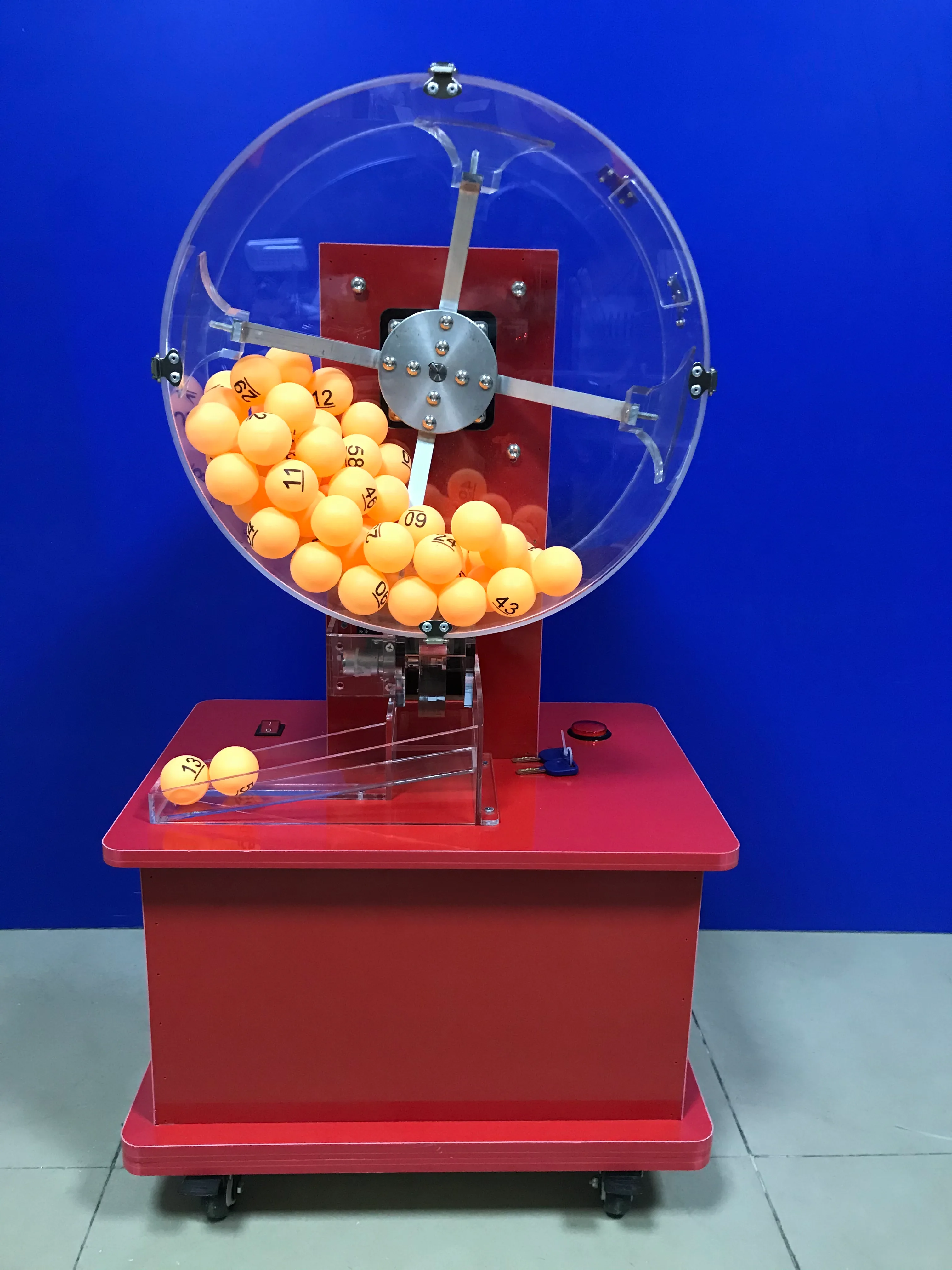
← Lottery Ball Machines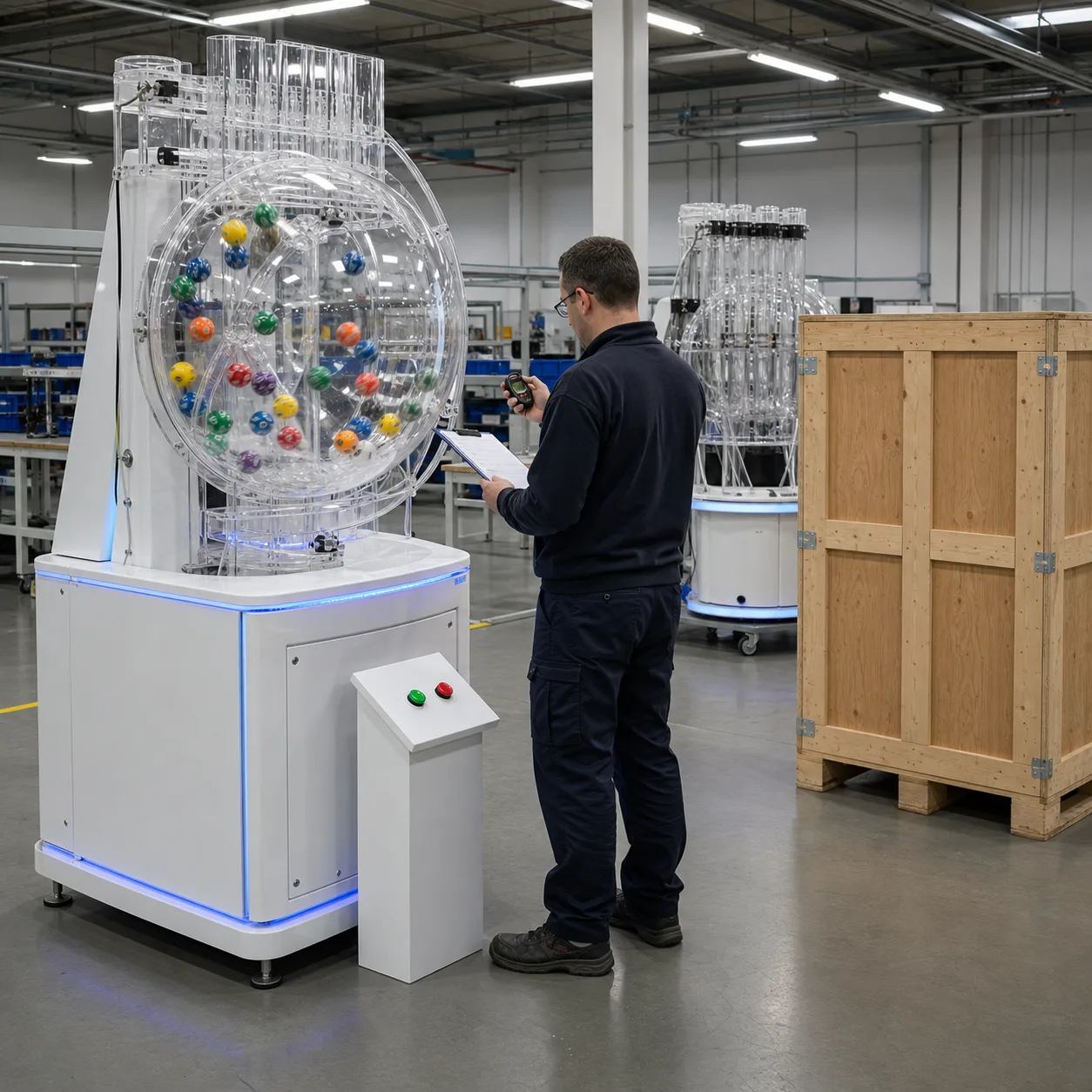
Mark proposed or unperformed tests as pending instead of passing them from a specification sheet. To request a quote and acceptance plan, send the draw rules and the configuration-specific tests the buyer needs witnessed.
Lottery Draw Machine Factory Acceptance Testing
Lottery draw machine factory acceptance testing verifies that the finished unit follows the buyer’s approved game rules and performs correctly before export packing. This guide explains what buyers should witness, record and sign off.
Written by Jisun Product Team
Lottery draw machine factory acceptance testing should verify the approved game rules, ball handling, draw timing, controls, displays, electrical configuration, cabinet finish and export preparation before shipment. In our factory, we run the completed machine in the testing room, record any corrections and pack the accepted unit in a wooden export crate.
Factory acceptance testing (FAT) is a documented inspection and functional trial performed at the manufacturer’s facility before equipment is released for shipment. For lottery equipment, a useful FAT tests the actual configured machine—not merely a showroom sample—and connects every observed result to the buyer’s signed specification.
What should a lottery draw machine FAT prove?
A practical FAT should prove three things: the delivered configuration matches the order, the draw mechanism operates consistently, and the shipment can leave the factory without unresolved defects. We start with the model, cabinet layout, ball set and game format, then operate the controls through complete mixing, selection, display and reset sequences. The test also checks visible workmanship, lighting and buyer-approved options. This matters because a single-chamber lotto machine and a multi-cylinder digit machine follow different acceptance logic. Buyers comparing formats can review our Lottery Draw Machine Manufacturer range before fixing the FAT scope. Every machine passes incoming-material, in-process, powered-on functional and pre-shipment checks before export packing.
Recommended FAT evidence
- Signed order specification and approved game rules
- Machine serial or order reference visible in the inspection record
- Photos or video of mixing, selection, display and reset
- Measured timing for the agreed draw sequence
- Recorded voltage, frequency and fitted optional functions
- Close-up images of acrylic, cabinet edges, controls and lighting
- Final packing photos before the crate closes
Which configuration details must match the purchase order?
The inspector should compare the physical unit with the approved specification line by line. On one single-chamber model, the machine measures 1400 mm high, 1085 mm wide and 505 mm deep; it uses air-blower mixing with 40 mm balls and releases one ball every 10 seconds. Those values form a model-specific baseline, not a universal rule for every Jisun machine. Standard power is 220–240 V AC at 50 Hz, while a 110–120 V, 60 Hz build is available as a customization. Custom configurations are built to the buyer’s game rules, so FAT should use the agreed ball quantity, sequence and draw format. For a compact comparison, buyers can also examine the 50-Ball Tabletop Lottery Draw Machine.
Example acceptance points for the documented single-chamber configuration| Item | Documented configuration | FAT observation |
|---|---|---|
| Overall size | 1400 × 1085 × 505 mm | Confirm the finished cabinet matches the ordered model |
| Mixing method | Air-blower, single transparent chamber | Observe stable circulation and visible balls |
| Ball specification | 40 mm diameter | Check the working set against the order |
| Release pace | One ball every 10 seconds | Time repeated selections |
| Electrical build | 220–240 V, 50 Hz standard; 110–120 V, 60 Hz customized | Match the finished unit to the destination specification |
MOQ and production lead time are commercial order terms rather than machine operating data. They should appear in the quotation or contract if applicable; the FAT record should not invent them or substitute them for technical acceptance criteria.
What can a functional mixing and release test establish?
A functional demonstration can show that the approved ball set circulates, a selection is presented and the machine resets according to the agreed workflow. It cannot prove that all outcomes are equally likely or eliminate the possibility of human interference. Keep those claims separate from routine factory acceptance. Record the ball population, material, numbering, chamber configuration and selected settings before the test. Agree the sequence and number of repetitions in advance, retain failed or interrupted cycles and identify the acceptance criteria. Any formal randomness assessment or gaming approval requires its own defined method and evidence; a short video of visible mixing does not supply it.
How do we test a multi-cylinder lottery draw machine?
A multi-cylinder FAT treats each draw position as a separate operating channel before testing the complete result. For the 4D-V2, four transparent spherical mixing cylinders align with four display screens, one screen per cylinder. Each cylinder holds up to 10 solid EVA balls, giving a total capacity of 40 balls; the 4 cm balls carry numbers on six sides. We run each cylinder independently, verify the corresponding display, and then run the cylinders together in the buyer’s required sequence. Mixing uses jet air with no mechanical contact with the balls. The inspector should record cross-channel errors, delayed extraction and incorrect screen mapping. Buyers sourcing a longer format can compare this logic with our 6D Lottery Ball Draw Machine.
Multi-cylinder test sequence
- Load the approved numbered set into each designated cylinder.
- Run every cylinder alone and confirm that only its paired result channel responds.
- Run the required simultaneous sequence and verify result order.
- Check the return or reset action specified for that model.
- Repeat the agreed cycle count and save the resulting video record.
What electrical, control and optional-function checks belong in FAT?
The completed build must match the destination’s ordered voltage and frequency before powered testing begins. On the documented single-chamber cabinet, standard electrics are 220–240 V AC at 50 Hz, with 110–120 V, 60 Hz available as a customization. Its angled operator console carries two round push buttons for running the draw, so we check both controls for correct response and consistent sequencing. Blue LED trim around the middle and lower cabinet sections should illuminate when power is applied. Optional functions need their own signed test cases: RFID, website integration, fully automatic operation and remote control are documented as paid options. They should not be assumed from the base cabinet or accepted merely because a screen or reader is physically installed.
Control and option evidence to retain| Test area | Evidence |
|---|---|
| Power input | Rating information and powered test at the ordered supply |
| Push-button control | Video showing each button and its machine response |
| LED lighting | Powered photographs of the complete illuminated cabinet |
| RFID or data functions | Recorded identification and output against known test balls |
| Automatic or remote control | Command, machine response, result output and reset record |
How should finish, cleaning and export packing be accepted?
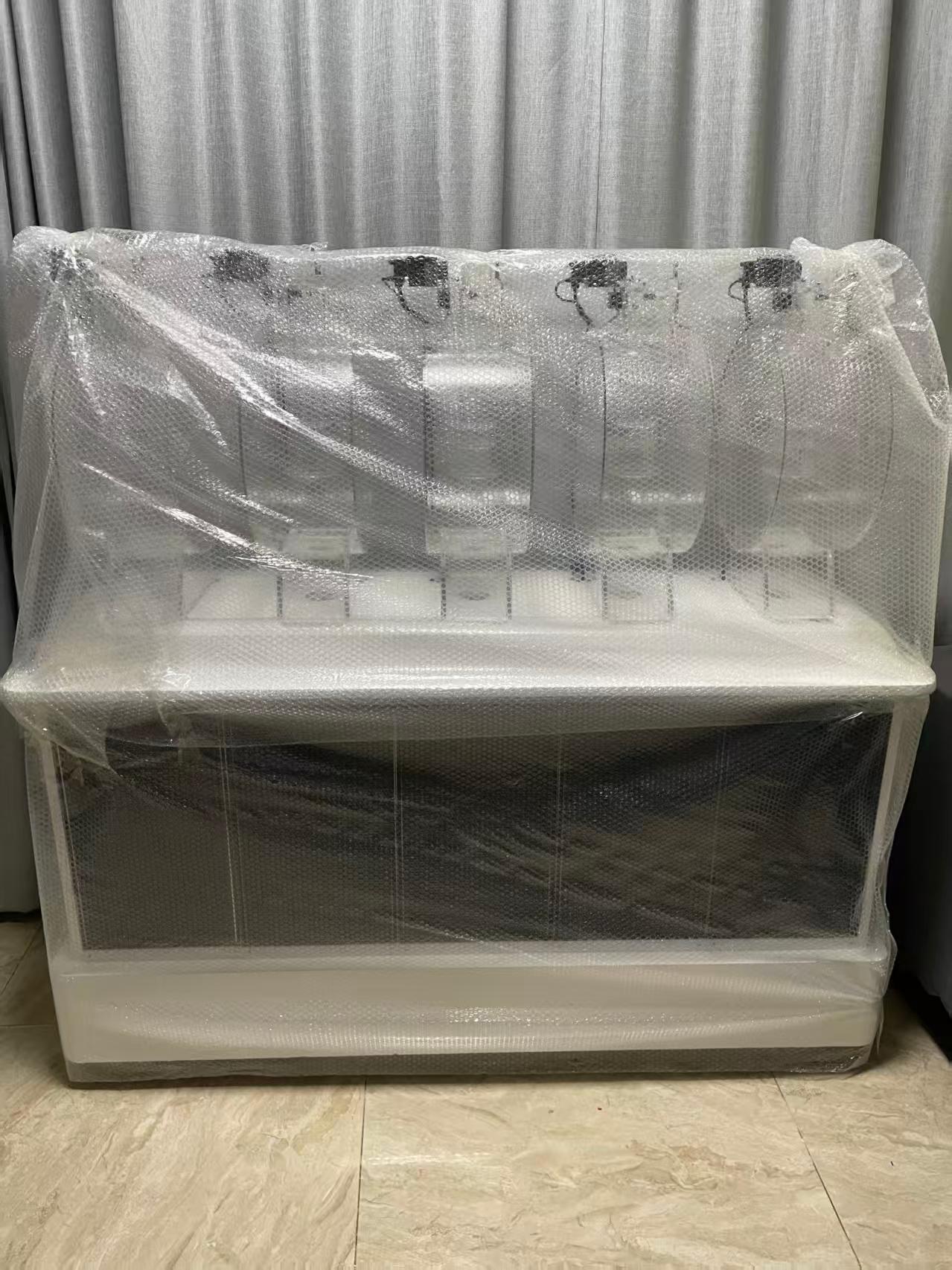
Finish inspection should happen under normal room light and with the cabinet LEDs powered, because reflections can reveal marks that remain hidden on an unlit acrylic panel. We check transparent chambers, cabinet joints, trim, display windows, casters and operator controls before cleaning the unit. Acrylic needs gentle handling: cleaning requires only a damp soft cloth with no special detergent, and sharp tools must not touch the surfaces. After functional acceptance, machines are inspected in the factory testing room and packed in wooden export crates before shipment. Units ship in wooden export crates marked with fragile and keep-dry symbols and are loaded by forklift. Buyers planning sea transport can use our guide to lottery machine packaging for sea freight when coordinating the warehouse handover.
Ask for photographs of the clean machine, protective wrapping, internal restraint and closed crate. Bare cabinet dimensions are useful for installation planning, while the freight booking should follow separately confirmed packed shipment data.
What should the FAT record allow the buyer to reproduce?
Identify the exact machine and control revision, ball set, electrical configuration, installed options, test date and participants. For each test, keep the expected behavior, observed result, evidence reference and unresolved issue.
| FAT case | Record to retain |
|---|---|
| Normal draw and reset | Sequence, result presentation and return behavior |
| Display or identification option | Physical result matched to displayed result |
| Interrupted operation | State retained and agreed recovery action |
| Service and shipment | Access demonstration and packed accessory inventory |
Equipment Discussed in This Guide
Use the model photos, available demonstrations and specification sheets to check the equipment discussed above. Specifications apply to each named model.
Frequently Asked Questions
- Should the production ball set be used during lottery machine FAT?
- Yes. FAT should use the ordered ball diameter, material, quantity and numbering arrangement because these variables affect circulation, selection and presentation. For the documented single-chamber configuration, the working balls are 40 mm in diameter.
- What timing evidence should be captured for a 10-second release machine?
- The inspection record should include a continuous video and timer showing several complete mixing and release events. The documented model releases one ball every 10 seconds, so repeated timing should be compared with that approved configuration.
- How is cylinder-to-screen mapping verified on a four-digit machine?
- Run each cylinder independently first and confirm that only its dedicated display shows the selected result. Then operate all four in the required sequence and check that the displayed digit order matches the physical cylinder order.
- Do paid RFID or remote-control options pass with the base-machine test?
- No. Purchased options require separate acceptance cases that demonstrate the command or ball identification, the machine response, the result output and the reset behavior. Their physical presence alone does not prove operation.
- Why inspect transparent acrylic while the cabinet lighting is powered?
- Powered LEDs and reflections can expose scratches, cloudy areas or edge defects that are less visible on an unlit cabinet. The accepted surfaces should then be cleaned only with a damp soft cloth and kept away from sharp tools.
Related Buying Guides
Automatic vs Interactive Lottery Draw Machine
A practical buyer guide for choosing automatic or interactive operation on a physical lottery draw machine. Covers workflow, timing, result verification, screens, consoles, and quotation inputs for Jisun custom builds.
High-Capacity & 50,000-Ticket Draws: Single Large-Pool Ball Machine vs Multi-Digit Pick System
Use a large single-pool ball machine when you have 100 to 2,000 entries and want every ticket mapped to one physical ball without replacement. Once entries pass 2,000—such as 5,000 to 50,000 competition tickets—switch to a multi-digit chamber machine with a pre-published valid-range and redraw rule.
Air-Mix vs Mechanical Lottery Machines: Comparing Capacity, Ball Type, Power and Draw Workflow
Air-mix lottery machines use airflow in transparent chambers for fast 10–200 ball draws and multi-cylinder digit games. Mechanical rotating-arm machines tumble 50 to 2,000 solid or ping-pong balls at lower motor wattage when large single pools and open front viewing matter most.