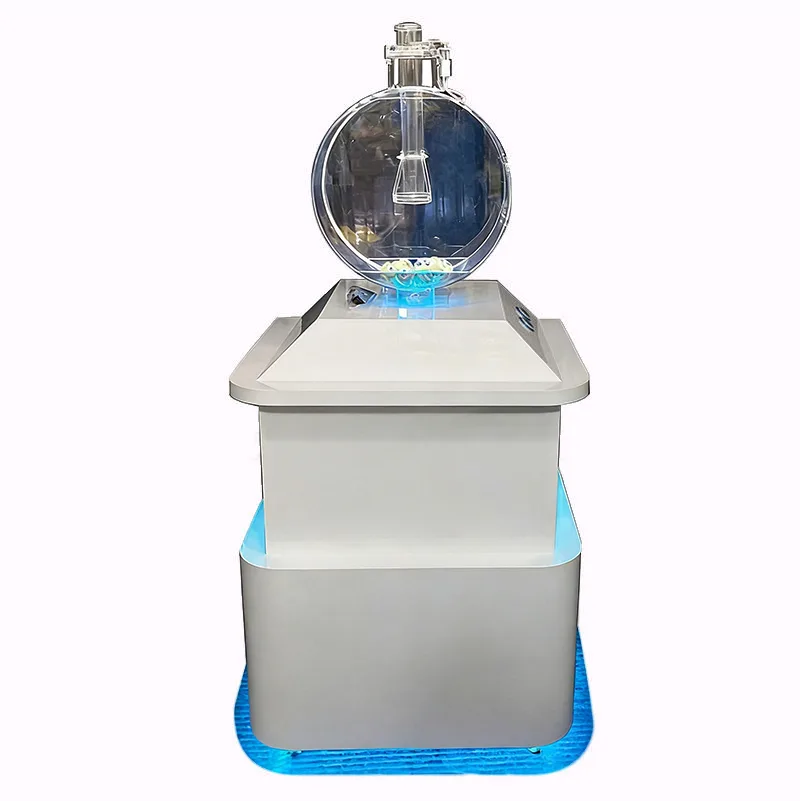
← Lottery Ball Machines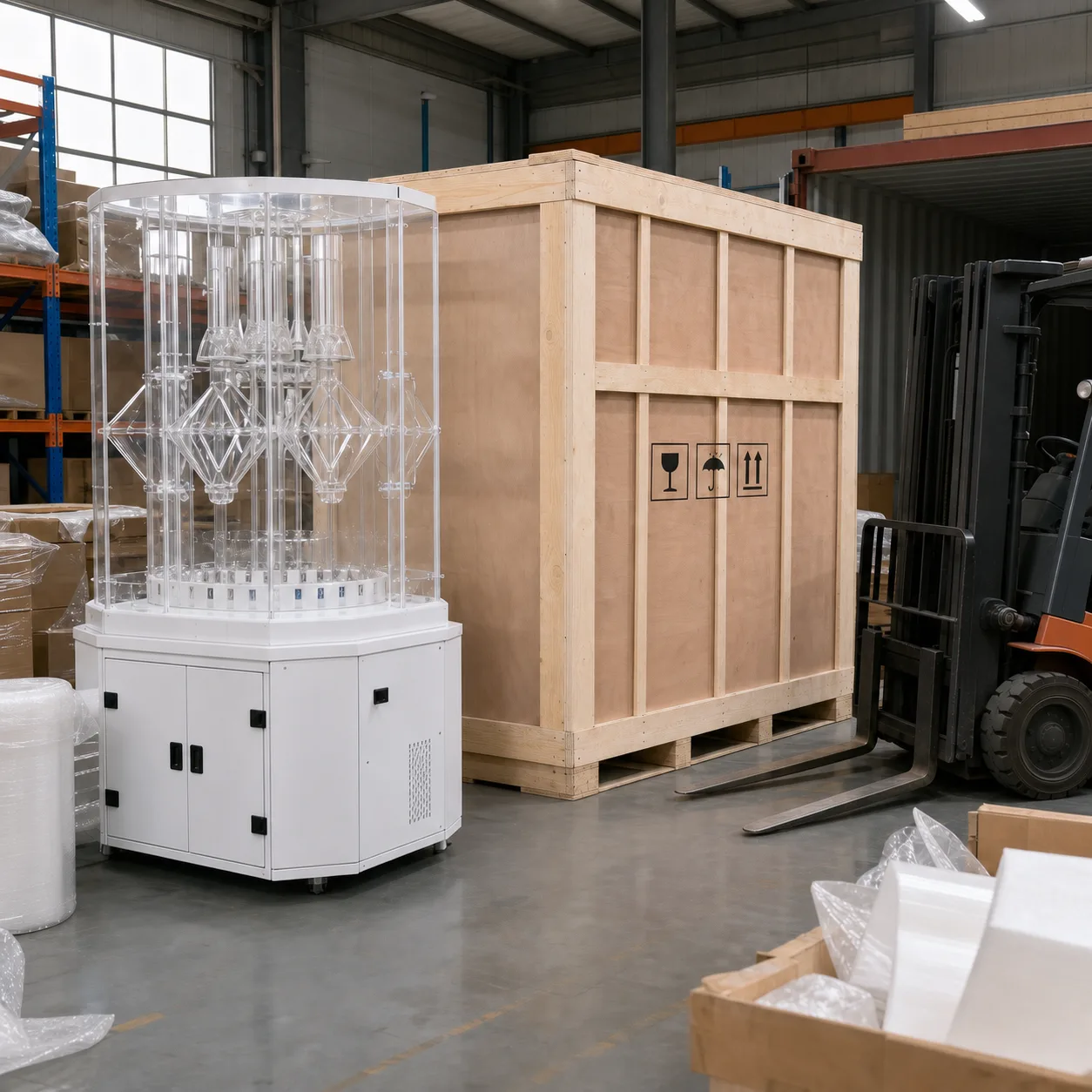
Ask the packing team and forwarder to confirm the final shipment values rather than estimating crate volume from a product photo.
Lottery Machine Packaging for Sea Freight
Proper sea-freight packaging protects a lottery machine’s acrylic chambers, cabinet and electronics while giving the forwarder accurate handling information. We explain the crate, inspection and booking details buyers should confirm.
Written by Jisun Product Team
For sea freight, a lottery machine should travel in a rigid export wooden crate, with its cabinet secured, transparent surfaces protected and handling direction clearly identified. At Jisun, we inspect the machine before packing, apply fragile and keep-dry symbols, and prepare the crate for forklift loading. Buyers should confirm packed shipment data before booking.
How should a lottery machine be packaged for sea freight?
Effective lottery machine packaging for sea freight starts with a professional export wooden crate sized for the completed machine. An export wooden crate is a rigid shipping enclosure designed to protect equipment during lifting, container loading and international transport. Our units ship in wooden export crates marked with fragile and keep-dry symbols and are loaded by forklift. The crate must protect the cabinet, transparent ball chamber, operator controls and any fitted display as one coordinated system. It also needs a stable base so the machine remains upright through terminal handling and vessel movement. For buyers reviewing our broader lottery draw machine manufacturer range, the key point is simple: packaging must match the selected cabinet, not a generic machine category.
- Use a model-specific rigid wooden export crate.
- Keep the cabinet upright and stable inside the enclosure.
- Protect transparent chambers, screens and control surfaces from contact.
- Provide forklift access and visible handling symbols.
Which measurements belong on the shipment packing sheet?
Keep the machine envelope, detached components and closed-crate measurements in separate rows. The 1D Bingo Blower Machine for Custom Lotto Draws lists 1400 mm high × 1085 mm wide × 505 mm deep; 5P350 Five-Cylinder Lottery Machine 3-230 Balls lists 1750 × 620 × 1560 mm and 113 kg net weight. These are machine figures, not packed size or gross weight.
| Packing item | Record before freight booking |
|---|---|
| Each numbered crate | Closed dimensions, gross weight and receiving destination |
| Detached console or screen | Crate identity, protected connections and reassembly reference |
| Ball set and accessories | Count, numbering list and package location |
| Handling arrangement | Approved lift points, orientation and unloading equipment |
How are acrylic chambers and cabinet surfaces protected?
Acrylic parts need protection from pressure, rubbing and sharp contact throughout packing and unpacking. Lottery machines use clear chambers because audiences must see the balls mixing and being selected; scratches therefore affect both appearance and draw visibility. In our handling guidance, cleaning requires only a damp soft cloth with no special detergent, and sharp tools must not touch the machine surfaces. The same care rule applies when a crate is opened: knives, pry bars and metal straps should never be allowed to scrape the chamber or facing. Packing should also prevent loose accessories from moving against transparent panels. If a machine includes balls, a console or detachable display hardware, the packing record should show where each item is secured. Short version: clear surfaces should arrive clear.
What crate markings and unloading arrangements are required?
The outside of the crate should communicate fragility, moisture sensitivity and correct handling orientation before anyone opens it. Jisun export units are marked with fragile and keep-dry symbols and loaded by forklift. Those markings matter at the factory, port terminal, destination warehouse and final venue. Buyers should send the crate details to their freight forwarder and receiving team so suitable lifting access is ready. A common freight reality is that an assembled cabinet can look manageable in photographs but becomes a different handling job once enclosed in timber. Don’t plan around hand carrying. Check forklift access, door clearance and the route from the unloading point to the unpacking area using the final packed dimensions—not the bare cabinet measurements.
- Give the receiving team the packed dimensions, gross weight and piece count.
- Confirm that lifting equipment can approach the crate safely.
- Keep the package upright and dry until it reaches the unpacking position.
- Open the crate without bringing sharp tools into contact with acrylic or painted surfaces.
What should be photographed before the crate is closed?
Record the machine identity, approved configuration, protected ball paths and any detached display or console. Show restraints at the intended structural locations; do not assume an acrylic chamber or a decorative trim can carry tie-down loads. Keep the accessory and ball inventory linked to the crate number. Request the unpacking sequence and any transport restraints that must be removed before commissioning. Photograph the protected assembly before closure and the closed crate markings afterward. These records help the receiving team distinguish missing parts, transport movement and an assembly step still to be performed; they are not proof against every possible transit damage.
How should a buyer specify sea-freight packaging in the purchase order?
The purchase order should identify the exact lottery machine model, cabinet configuration, destination electrical supply, included accessories and sea-freight packing requirement. It should also request final packed dimensions, gross weight, crate count and handling marks before the freight booking is confirmed. For customized machines, freeze the housing, displays, console and other external components first because they determine the physical shipment. A 2D air-mix lottery draw machine and a single-chamber model need different packing plans even when both use transparent air-mixing chambers. We recommend placing the packing requirements directly beside the approved machine specification, rather than leaving them in a separate email thread. That gives our factory, the forwarder and the destination warehouse one clear reference.
Planning an export order? Send us your selected model, destination country, voltage, accessories and delivery port. Request a quote from Jisun for the machine and model-specific sea-freight packaging.
Equipment Discussed in This Guide
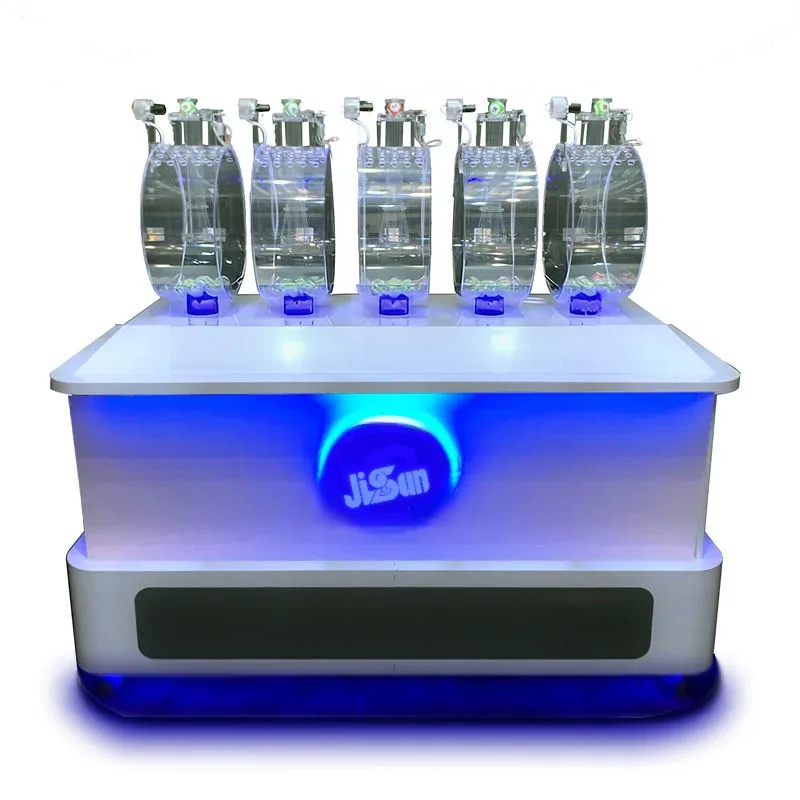
Use the model photos, available demonstrations and specification sheets to check the equipment discussed above. Specifications apply to each named model.
Frequently Asked Questions
- Which handling symbols appear on Jisun lottery machine export crates?
- Jisun crates are marked with fragile and keep-dry symbols. These markings tell terminals, warehouses and receiving teams to protect the package from impact and moisture.
- Can ocean freight be booked from the bare cabinet dimensions alone?
- No. Cabinet dimensions help identify the model, but the forwarder needs final packed dimensions, gross weight and crate count because the wooden enclosure changes the shipment envelope.
- How should acrylic surfaces be cleaned after unpacking at the destination?
- Use only a damp soft cloth without special detergent. Keep knives, pry bars and other sharp tools away from the acrylic because scratches can permanently affect its appearance.
- What unloading equipment should the receiving warehouse prepare?
- The receiving plan should provide forklift access appropriate to the confirmed crate size and gross weight. Jisun’s crated export units are prepared for forklift loading, so buyers shouldn’t assume they can be hand-carried.
- When should packed shipment data be requested for a customized lottery machine?
- Request it after the cabinet, displays, console and other external components are finalized, but before booking freight. Those choices determine the crate dimensions, shipment weight and number of pieces.
Related Buying Guides
Automatic vs Interactive Lottery Draw Machine
A practical buyer guide for choosing automatic or interactive operation on a physical lottery draw machine. Covers workflow, timing, result verification, screens, consoles, and quotation inputs for Jisun custom builds.
High-Capacity & 50,000-Ticket Draws: Single Large-Pool Ball Machine vs Multi-Digit Pick System
Use a large single-pool ball machine when you have 100 to 2,000 entries and want every ticket mapped to one physical ball without replacement. Once entries pass 2,000—such as 5,000 to 50,000 competition tickets—switch to a multi-digit chamber machine with a pre-published valid-range and redraw rule.
Air-Mix vs Mechanical Lottery Machines: Comparing Capacity, Ball Type, Power and Draw Workflow
Air-mix lottery machines use airflow in transparent chambers for fast 10–200 ball draws and multi-cylinder digit games. Mechanical rotating-arm machines tumble 50 to 2,000 solid or ping-pong balls at lower motor wattage when large single pools and open front viewing matter most.