← Lottery Ball Machines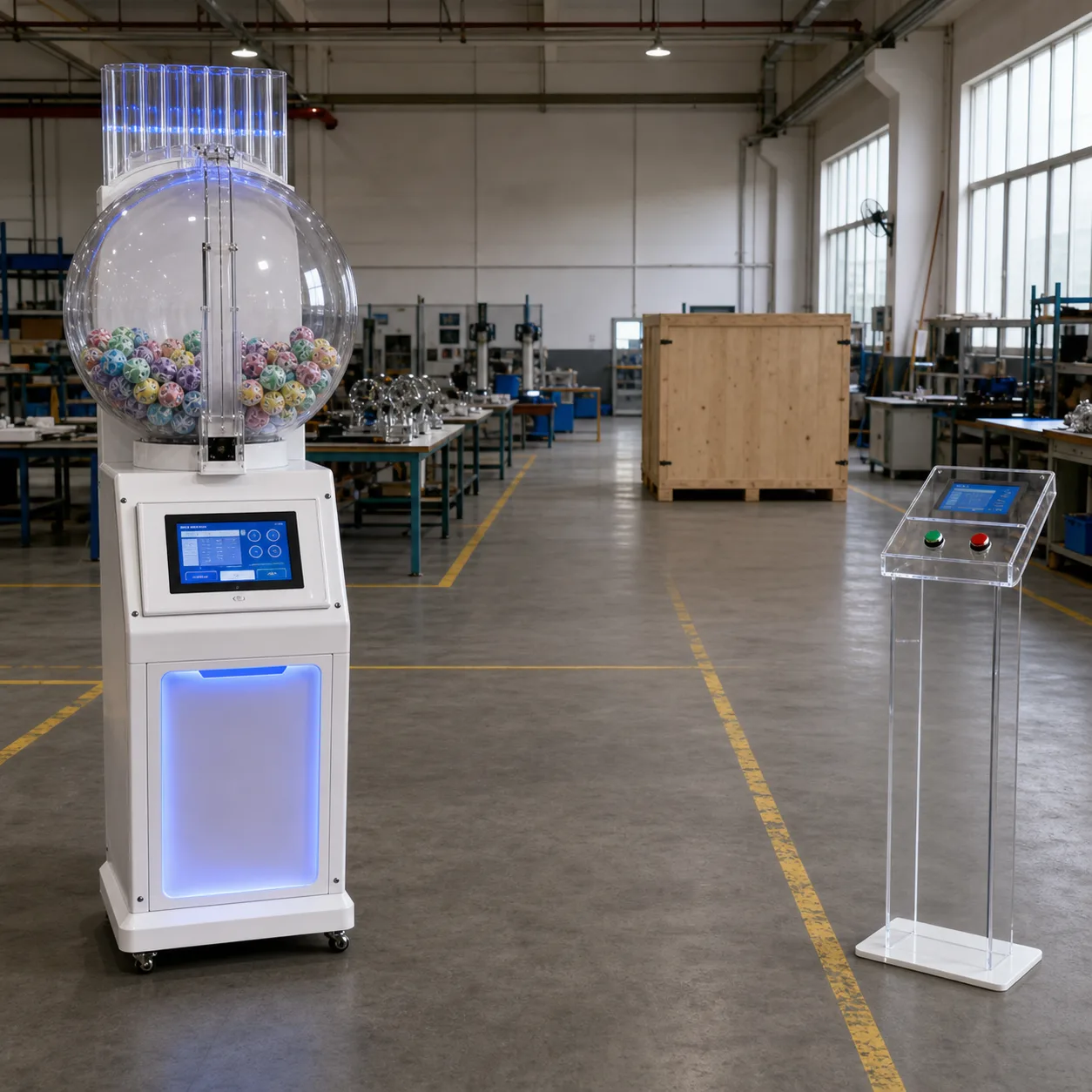
Separate Console Lottery Machine Benefits
A separate console gives lottery operators more freedom to position the host, preserve audience sightlines and organize draw control around the venue rather than the cabinet.
Written by Jisun Product Team
The main separate console lottery machine benefits are better host positioning, a cleaner audience view and more flexible draw control. Because the operator does not need to stand at the cabinet, the console can support studio, stage or venue layouts while the transparent chamber and result display remain the visual focus.
A separate-console lottery machine is draw equipment whose operator controls are housed in a freestanding unit positioned away from the ball-mixing cabinet.
What does a separate console change during a lottery draw?
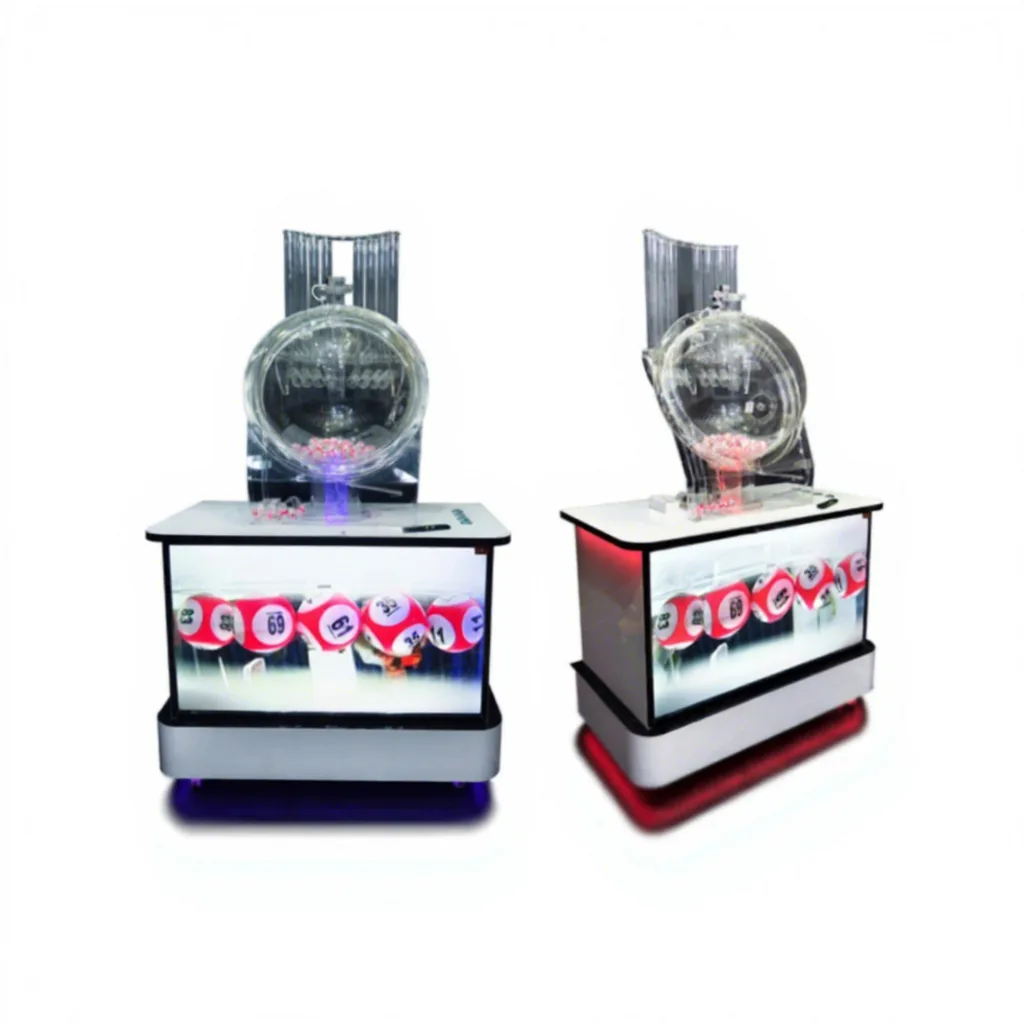
It separates the operator’s working position from the machine’s presentation position. In our documented configuration, the floor-standing transparent console carries its own small screen and control buttons, while a large LCD screen embedded in the main cabinet displays the drawn numbered balls. The presenter can therefore run the draw without blocking the transparent chamber or standing beside the result screen. This is useful when the machine faces an audience, camera or customer-service area. The console is not simply decorative furniture: it creates a dedicated control point where the operator can monitor the process and initiate the draw while the main cabinet remains devoted to ball movement and result presentation.
What does the documented console distance actually establish?
The Remote-Control 50-Ball Lottery Draw Machine with TV records console operation up to 50 m and a cabinet 1900 mm high × 1280 mm wide × 700 mm deep. That is a reference for this named model, not a universal control range or proof of a particular wired or wireless installation. For the requested configuration, state the actual operator position, connection route, intermediate obstacles and display view. Choose cable or wireless arrangements according to the approved control design. Test the start and confirmation workflow at the intended installation position, including what the operator sees if the connection is unavailable.
Why can a separate console improve audience presentation?
The machine stays visually clear because controls do not need to dominate its front panel. This configuration combines a transparent 50-ball drum with an embedded cabinet display, so spectators can follow both physical ball movement and the displayed result. An air-mix lottery machine uses blower-generated airflow to circulate numbered balls inside a transparent chamber before selection. Here, air-blower mixing works with 40 mm solid balls, while the LED-lit base and large LCD support visibility across the venue. For a live draw, that division matters: the host operates from the console, the chamber shows the physical action, and the cabinet screen communicates the selected balls.
Is a separate console useful for every lottery format?
No. It earns its floor space when operator separation, presentation or remote placement forms part of the draw plan. A compact counter installation may be better served by a 50-ball tabletop lottery draw machine. Multi-position number games may instead require dedicated chambers and displays, such as a 6D lottery ball draw machine. When buyers ask us to compare formats, we start with the game rules: ball pool, balls selected, result sequence, audience size and operator location. Cabinet appearance comes later. That order prevents a visually suitable machine from being paired with the wrong draw structure.
Which operational benefits matter most to B2B buyers?
For distributors and venue planners, the strongest benefit is a clearer division between control, draw action and result display. That can simplify staff positioning and make the equipment easier to fit into a designed presentation area. The separate console also gives an integrator a defined location for the operator interface instead of forcing every control onto the main cabinet. Optional systems still require careful quotation: RFID ball recognition, website integration, full-automatic mode and remote-control configurations are separately quoted options. A physical console does not automatically include those functions. We define the standard controls and every paid integration line before production so the buyer can compare like with like.
- Document the game format and working ball count.
- Mark the cabinet, console and audience-display positions on a floor plan.
- Specify which party operates the draw and how far that person stands from the cabinet.
- List required RFID, website, automation or remote-control functions separately.
- Confirm destination handling and packed shipment information before freight booking.
What should an OEM or ODM specification include?
A usable specification should connect the console layout to the buyer’s actual game rules. Start with the number of digits or selected balls, then define the required ball capacity, display arrangement, operator distance and control method. Record venue dimensions as well; the documented floor-standing cabinet measures 1900 × 1280 × 700 mm before export packing. We can then separate standard hardware from paid functions such as RFID recognition, website integration, full automation and remote control. Buyers comparing a wider range can use our lottery draw machine manufacturer pillar page to identify the appropriate base format before requesting a custom build.
How should console faults and operator authority be accepted?
Define which controls are available at the cabinet and which at the separate console. If both can start a sequence, agree how conflicting or repeated inputs are handled. The operator should see the machine’s actual ready, running and result-pending states rather than only a successful button press. Test a disconnected console, a repeated start, loss of power and reconnection with a result awaiting confirmation. Do not silently begin a new draw after reconnection. To request a quote, send the operator and audience layout, required control functions and the recovery behavior you want reviewed for the selected model.
Equipment Discussed in This Guide
Use the model photos, available demonstrations and specification sheets to check the equipment discussed above. Specifications apply to each named model.
Frequently Asked Questions
- What is the biggest benefit of moving lottery controls onto a separate console?
- It lets the presenter operate away from the main cabinet, leaving the transparent mixing chamber and embedded result display unobstructed for the audience or camera.
- How far can the documented console stand from the lottery machine?
- The documented operating distance is up to 50 m. Buyers should still submit the intended floor layout and operating position so the supplied configuration matches the venue.
- Does a separate operator console automatically include RFID or website control?
- No. RFID recognition, website integration, full-automatic operation and remote-control configurations are separately quoted options rather than assumed console features.
- Does the operator need a separate audience display at the console?
- Not necessarily. The documented main cabinet has a large embedded LCD for drawn balls, while the transparent floor-standing console carries its own smaller screen and control buttons for the operator.
- Which draw specification should be settled before choosing a console position?
- Define the game format, working ball count, result sequence and operator workflow first. Those requirements determine whether a single-chamber separate-console machine or a multi-cylinder format is the better fit.
Related Buying Guides
Automatic vs Interactive Lottery Draw Machine
A practical buyer guide for choosing automatic or interactive operation on a physical lottery draw machine. Covers workflow, timing, result verification, screens, consoles, and quotation inputs for Jisun custom builds.
High-Capacity & 50,000-Ticket Draws: Single Large-Pool Ball Machine vs Multi-Digit Pick System
Use a large single-pool ball machine when you have 100 to 2,000 entries and want every ticket mapped to one physical ball without replacement. Once entries pass 2,000—such as 5,000 to 50,000 competition tickets—switch to a multi-digit chamber machine with a pre-published valid-range and redraw rule.
Air-Mix vs Mechanical Lottery Machines: Comparing Capacity, Ball Type, Power and Draw Workflow
Air-mix lottery machines use airflow in transparent chambers for fast 10–200 ball draws and multi-cylinder digit games. Mechanical rotating-arm machines tumble 50 to 2,000 solid or ping-pong balls at lower motor wattage when large single pools and open front viewing matter most.