Lottery Ball & Draw Machines
Mechanical Lottery Machine with Rotating Mixing Arms
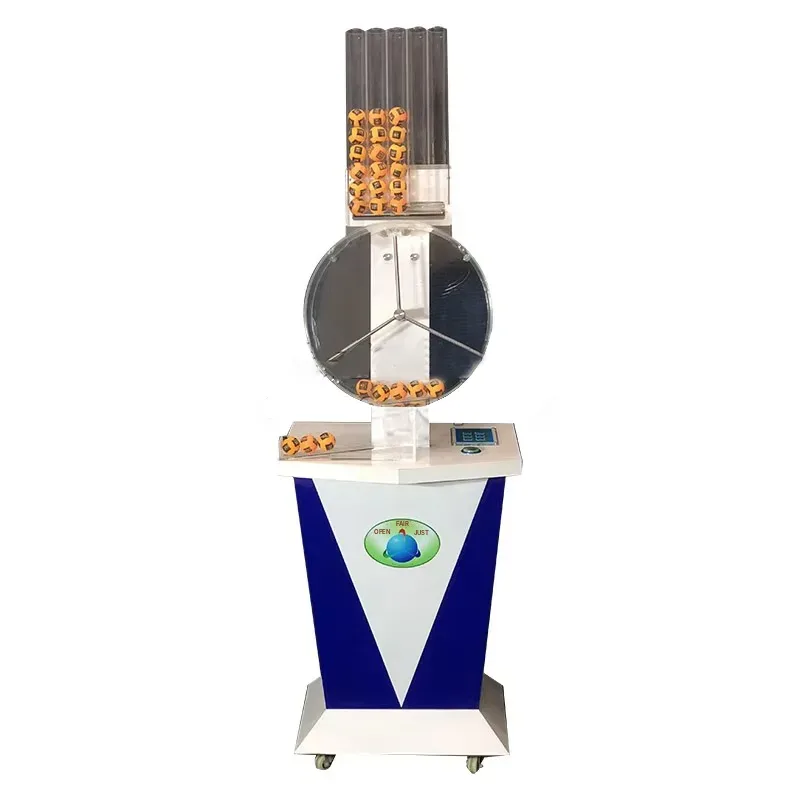
- Three rotating arms turn toward the audience, so every rotation of the mix is visible
- Works with a 100-ball load of table-tennis balls or solid numbered balls
- Five clear vertical ball columns above the drum keep balls in the audience's view
- Slim 530 x 400 mm footprint at 1700 mm tall fits beside a podium or auction desk
- Keypad panel and round push button on the operator deck beside the drum
- White-and-blue pedestal rolls on casters between rooms and events
Mechanical Mixing Explained
How the Rotating-Arm Mechanical Lottery Machine Draws
This mechanical lottery machine mixes a 100-ball load with three rotating arms inside a transparent drum, so the audience can watch every turn of the draw. It stands 1700 mm tall on a 530 x 400 mm footprint and takes table-tennis balls or solid balls, making it a compact and fully visible draw machine for auctions, bidding sessions and company events.
What is a rotating-arm mechanical lottery machine?
A mechanical lottery machine mixes balls with a moving mechanism instead of airflow. In this model, three mixing arms fixed to a central hub turn clockwise inside a clear round drum and move toward the viewing audience on every rotation. The arms lift and tumble the balls through the full height of the drum and let them fall back into the pool, so the mix can be followed from the front, from the sides and on camera. Because no blower is involved, the action is purely mechanical and easy to explain, which many buyers prefer when the room is full of bidders, employees or property buyers who want to see exactly how a number was chosen.
Above the drum, five transparent vertical ball columns keep balls in view, and a clear tray sits at the lower front of the drum. The operator deck carries a keypad panel and a round push button, and the white-and-blue pedestal rolls on casters, as the photos show.
Which specifications are documented for this model?
The table lists the figures published for this model and what each one means when you plan a draw. Items marked as photographed come from the product photos rather than the parameter sheet.
| Parameter | Value | What it means for your draw |
|---|---|---|
| Mixing method | Mechanical, three rotating arms turning clockwise | No blower; the mixing action is visible and easy to explain |
| Working ball quantity | 100 balls | Covers raffle ranges up to 100 and most bidding-order draws |
| Ball types | Table-tennis balls or solid balls | Light balls are cheap to replace; solid balls look more formal on stage |
| Overall height | 1700 mm | Check ceiling and doorway height on the delivery route |
| Length x thickness | 530 x 400 mm | Fits beside a lectern, a stage wing or an auction desk |
| Mobility | Pedestal on casters (photographed) | Rolls between rooms on a level floor |
Weight, rated power and draw-cycle time are confirmed for your configuration in writing in the quotation rather than published here as general figures. If you need them for floor loading, power planning or your event schedule, ask for them before you pay a deposit.
How does a draw run on the rotating-arm machine?
Load your numbered ball set, start the mixing arms from the operator deck, and let the arms tumble the pool while the host introduces the round. Every stage of the draw happens in transparent parts: the drum, the front tray and the five ball columns keep the balls visible to the room from the first mix to the announced result. The draw sequence for your game, including how many balls are drawn per round and where they are presented, is set up with your configuration and confirmed in the quotation.
What should you confirm before ordering?
- Your number range and how many results each round draws, which sets the ball count and printing.
- Table-tennis balls or solid balls, and the ball colors you want.
- Destination country and mains voltage, so the electrical build matches your venue.
- Logo or event artwork for the front emblem, and the pedestal colors.
- Weight, rated power and draw-cycle time for your configuration, stated in the quotation.
Sending these details with your inquiry lets us quote the exact configuration instead of a generic model. Our guide to lottery draw machine price by configuration explains which choices change the price.
Where does a 100-ball mechanical machine fit best?
The documented application scope covers bids and auctions, games rooms, lottery draws, company and factory celebrations, and real-estate draws such as allocating apartments or parking spaces. What these settings share is a room of people who each care about the outcome and want to see the selection happen. The slim footprint lets the machine stand beside an auction desk or a stage lectern, and the 100-ball load covers typical bidder lists, employee raffles and allocation lists. If your list is longer than 100 entries, look at the J800 500-ball mechanical lottery machine; for a lower machine that is easier to move, compare the JT800 portable mechanical lottery machine.
How are quality, shipping and after-sales handled?
Each machine passes the incoming-material, in-process, functional and pre-shipment checks described on our quality control page, and you can ask for photos or a video of your own unit mixing your ball set before it is packed. Floor-standing machines are packed for export in wooden crates and quoted under EXW, FOB Guangzhou, CFR or CIF terms. The machine carries a 12-month warranty with lifetime technical support, as set out in our warranty and after-sales policy. For daily care, wipe the drum with a damp soft cloth, use no special detergent, and keep sharp tools away from the acrylic, because scratches cannot be repaired.
Documented Figures
Rotating-Arm Mechanical Machine: Size, Capacity and Build
- Base
- White and blue pedestal on casters
- Ball Types
- Table-tennis balls or solid balls
- Mixing Drum
- Transparent round drum on a white upright column
- Ball Columns
- Five transparent vertical columns above the drum (photographed)
- Mixing Method
- Mechanical: three rotating arms turning clockwise toward the audience
- Operator Deck
- Keypad panel and round push button (photographed)
- Overall Height
- 1700 mm
- Length x Thickness
- 530 x 400 mm
- Working Ball Quantity
- 100 balls
- Weight, Rated Power, Draw Cycle
- Stated in the written quotation for your configuration
Events That Suit a 100-Ball Mechanical Draw Machine
Configuring the Rotating-Arm Machine for Your Game
- Machine set up for your game rules and number range, with table-tennis or solid balls
- Pedestal colors and front emblem replaced with your logo or event artwork
- Drum and ball-column configuration adjusted to your game rules at quotation stage
Before You Request a Quote
Rotating-Arm Mechanical Lottery Machine Questions
How does a lottery machine with rotating mixing arms mix the balls?
Three mixing arms fixed to a central hub turn clockwise inside the transparent drum, moving toward the audience on every rotation. The arms lift and tumble the balls through the drum and let them fall back into the pool, so the mix can be followed from the front, the sides or on camera. The mixing is purely mechanical, with no blower, and nothing about it is hidden inside a cabinet.
Is 100 balls a fixed load, or can I run a smaller number range?
The documented working load is 100 balls, which covers raffle ranges up to 100, bidder numbers and most employee or property allocation lists. If your range is smaller, tell us the range and the ball type (table-tennis or solid) and we confirm the ball set and loading for your game in the quotation. If your list is longer than 100 entries, the J800 500-ball mechanical machine is the better fit.
What are the weight, power rating and draw time of this model?
This page publishes the mixing method, ball capacity and dimensions (1700 x 530 x 400 mm) for this model. Weight, rated power and draw-cycle time are confirmed for your configuration in writing in the quotation, rather than published as general figures. If you need them for floor loading, circuit planning or event timing, ask for them before you pay a deposit and they become part of the order specification.
Which events is a 100-ball mechanical draw machine best for?
The documented application scope includes bids and auctions, games rooms, lottery draws, company and factory celebrations, and real-estate draws such as allocating apartments or parking spaces. These are rooms where every participant cares about the result and wants to watch the selection. The slim base stands next to a podium or auction desk, and the transparent drum lets the whole room see the arms mixing the balls before each number is taken.
How can I check the machine is working before it is shipped?
Every unit goes through incoming-material, in-process, powered-on functional and pre-shipment checks. You can ask for photos or a video of your own machine mixing your ball set, with the drum, the arms and the ball columns in view, before the balance payment and before it is packed, so you can check its condition and configuration before shipment.
How should the acrylic drum and columns be cleaned?
Wipe the drum, the ball columns and the front tray with a damp soft cloth. No special detergent is needed. Keep knives, scrapers and other sharp tools away from the acrylic during unpacking and cleaning, because scratches on the surface cannot be repaired and a clouded drum weakens the visibility that makes the draw credible.
Ordering, Crating and Warranty for the Rotating-Arm Machine
Our usual production schedule and commercial terms are outlined below. Final MOQ, schedule, freight term, and warranty coverage are confirmed in the quotation or proforma invoice for your order.
- MOQ
- 1 unit (sample order accepted)
- Confirmed for this product.
- Production Lead Time
- 7-15 working days typical
- Production usually takes 7-15 working days after deposit and final specification confirmation. Shipping time is additional; the final schedule is confirmed in the quotation.
- Shipping
- EXW / FOB Guangzhou / CFR / CIF
- Available trade term for this product.
- Warranty
- 12 months
- Product warranty period confirmed for this model.
Documented Projects
Related Deployment Case Studies
- Quantity:
- 1 unit
Mechanical rotating-arm lottery draw machine configured for European 220-240 V / 50 Hz power and CE/RoHS compliance documentation. Designed for steady low-noise tumbling inside a clear acrylic drum, verified prior to crating and shipped in a reinforced plywood export crate.
Read case studyLocal compliance required; the operator is responsible for licensing and local regulations.