Lottery Ball & Draw Machines
JT800 Portable Mechanical Lottery Machine
Model: JT800
- Compact 90 x 60 cm base and 127 cm height for a draw machine that travels
- Large transparent drum keeps the whole mechanical mix in view
- Drum capacity built to your ball count, including large-capacity versions
- Add RFID, a camera or a screen when the draw needs verification or broadcast
- Size, color and logo made to order for event and rental fleets
Portable Mechanical Draw
A Mechanical Lotto Drum Sized for Travel
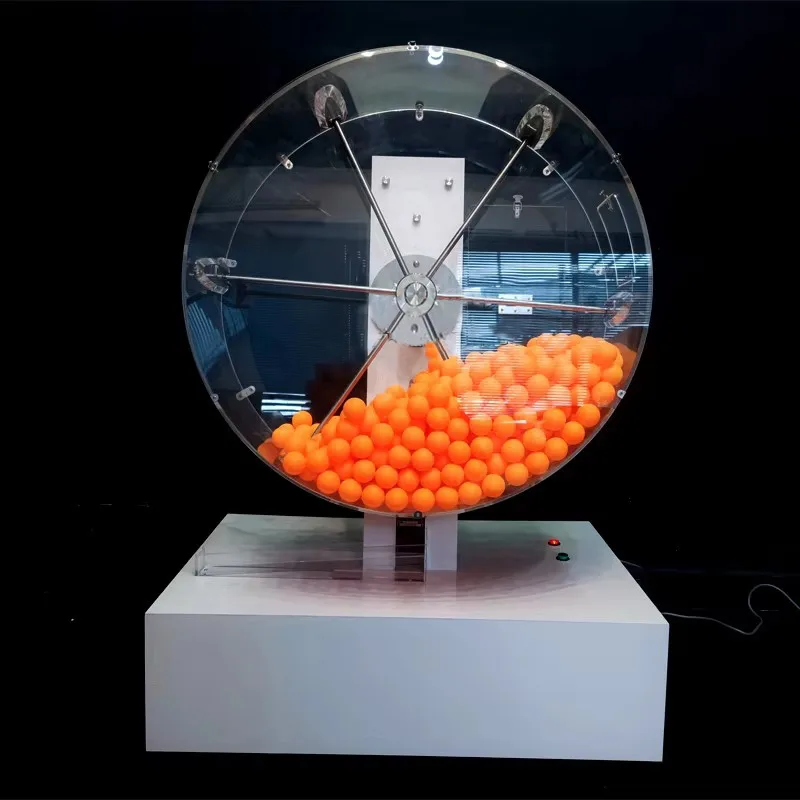
The JT800 is a portable mechanical lottery machine for lotto games: a transparent spoked drum on a compact white base, 90 x 60 x 127 cm overall, mixing balls by mechanism rather than airflow. Capacity is built to your ball count, including large-capacity versions, and RFID, a camera and a screen can be added.
Who is the JT800 built for?
The JT800 is documented as a portable lottery machine, made for buyers whose draws move: event agencies running promotions in different malls, rental companies building a fleet of draw machines, and organizers who run the same lotto game in several venues. Its base is 90 x 60 cm and it stands 127 cm tall, a size that suits small stages and mall atriums, and because it mixes mechanically, there is no blower to set up.
The drum is large and fully transparent, with a spoked frame mounted on a white upright column. Whether it is loaded with a large number of light table-tennis-style balls or a smaller set of numbered balls, every ball stays in view during mixing.
What are the JT800 specifications and options?
| Item | JT800 | Note |
|---|---|---|
| Working method | Mechanical mixing | No blower to set up |
| Size (L x W x H) | 90 x 60 x 127 cm | Check vehicles and doorways against these figures |
| Capacity | Built to your ball count | Large-capacity versions available |
| Optional functions | RFID, camera, screen | Specify at order so they are built in |
| Custom items | Size, color, logo | For branded event or rental fleets |
The photos show red and green push buttons on the base, and the drum loaded both with orange table-tennis-style balls and with yellow numbered balls.
How do RFID, a camera and a screen change the draw?
- RFID reads each drawn ball electronically, so the result is captured without anyone typing it.
- A camera films the drawn ball, so a large audience or a livestream sees it clearly.
- A screen displays the result next to the machine for the whole room.
A simple promotional draw usually needs none of these. A draw with a large audience, a broadcast or a strict record of results benefits from one or more. Specifying them at order means the wiring and mounting are built into the machine rather than added later.
How does the JT800 compare with other mechanical machines?
For a fixed hall and a long number list, the J800 500-ball mechanical lottery machine stands 2000 mm tall and draws one ball every 15 seconds. For a slim 100-ball machine with rotating arms and ball columns, see the mechanical lottery machine with rotating mixing arms. The JT800 is the most compact of the three.
How do you set up the JT800 at a new venue?
- Move the machine to a level floor or a sturdy stage, with the drum facing the audience.
- Connect power, load the ball set, and run the drum briefly so the audience sees the balls mixing.
- Draw each ball, show it to the room or to the camera, and record the result before the next draw.
- After the event, remove the balls, wipe the drum with a damp soft cloth, and pack the machine for the next venue.
Keeping the ball set in its own case between events means the complete set arrives at every venue, which is the first thing participants will ask about.
What should you send with your inquiry?
- Your number range and preferred ball type.
- Whether you need RFID, a camera or a screen.
- Base color and logo artwork.
- Destination country and mains voltage, and how the machine will be transported between venues.
How is the JT800 inspected, shipped and supported?
Each machine passes incoming-material, in-process, powered-on functional and pre-shipment checks, and you can ask for a video of your own unit turning a full ball load before it is crated. The machine ships in a wooden export crate under EXW, FOB Guangzhou, CFR or CIF terms, with a 12-month warranty and lifetime technical support. Rental and event fleets usually order spare ball sets at the same time; see our spare parts page for how replacement parts are handled after delivery.
JT800 Data
JT800 Size, Drum and Option List
- Base
- White box base with red and green push buttons (photographed)
- Drum
- Transparent drum with spoked frame on an upright column (photographed)
- Model
- JT800
- Capacity
- Built to your ball count; large-capacity versions available
- Custom Items
- Size, color, logo
- Working Method
- Mechanical mixing
- Balls Photographed
- Orange table-tennis-style balls; yellow numbered balls
- Optional Functions
- RFID, camera, screen
- Machine Size (L x W x H)
- 90 x 60 x 127 cm
Traveling Draws and Venues Suited to the JT800
Scaling the JT800: Capacity, RFID, Camera and Screen
- Drum size and ball capacity for your number range
- RFID ball reading
- Camera to film each drawn ball
- Result screen
- Color scheme and logo on the base
JT800 Questions
Choosing the JT800 Portable Mechanical Machine
- What makes the JT800 portable?
- The JT800 is documented as a portable lottery machine measuring 90 x 60 x 127 cm, and it mixes mechanically, so there is no blower to set up. Before a tour or rental program, check your vehicles and venue doorways against those three numbers, and ask for the packed weight in the quotation.
- How many balls can the JT800 hold?
- Capacity is built to your ball count, and large-capacity versions are available. The photos show the drum loaded with a large number of orange table-tennis-style balls and, in another setup, with a few yellow numbered balls. Tell us your number range and ball type, and the drum is specified to hold it with room to mix.
- Can I add RFID, a camera or a screen?
- Yes. RFID, a camera and a screen are documented options for the JT800. RFID reads each drawn ball, a camera films the drawn ball for an audience or a broadcast, and a screen displays the result. Specify them when you order so the wiring and mounting are built in, rather than fitted later.
- Which balls can the JT800 use?
- The JT800 is photographed with orange table-tennis-style balls and with yellow numbered balls. Table-tennis balls suit large counts and frequent events because they are inexpensive to replace. Tell us your number range and preferred ball type, and the ball set for your configuration is confirmed in the quotation.
- How does the JT800 compare with the J800?
- The J800 is a 2000 mm tall stage machine with a documented 500-ball load, 200 W drive and 15-second draw per ball, built for fixed venues and long number lists. The JT800 is the compact, portable option at 127 cm tall. If the machine stays in one hall, the J800 has more presence; if it moves between events, the JT800's smaller size is easier to manage.
- How is the JT800 protected during shipping?
- The machine is packed for export in a wooden crate, and freight is quoted under EXW, FOB Guangzhou, CFR or CIF terms. You can ask for photos of your crated unit before it leaves the factory, and for crate dimensions and gross weight so your forwarder can quote accurately.
Terms, Export Packing and Warranty for the JT800
Our usual production schedule and commercial terms are outlined below. Final MOQ, schedule, freight term, and warranty coverage are confirmed in the quotation or proforma invoice for your order.
| Term | This Model | Notes |
|---|---|---|
| MOQ | 1 unit (sample order accepted) | Confirmed for this product. |
| Production Lead Time | 7-15 working days typical | Production usually takes 7-15 working days after deposit and final specification confirmation. Shipping time is additional; the final schedule is confirmed in the quotation. |
| Shipping | EXW / FOB Guangzhou / CFR / CIF | Available trade term for this product. |
| Warranty | 12 months | Product warranty period confirmed for this model. |
Local compliance required; the operator is responsible for licensing and local regulations.