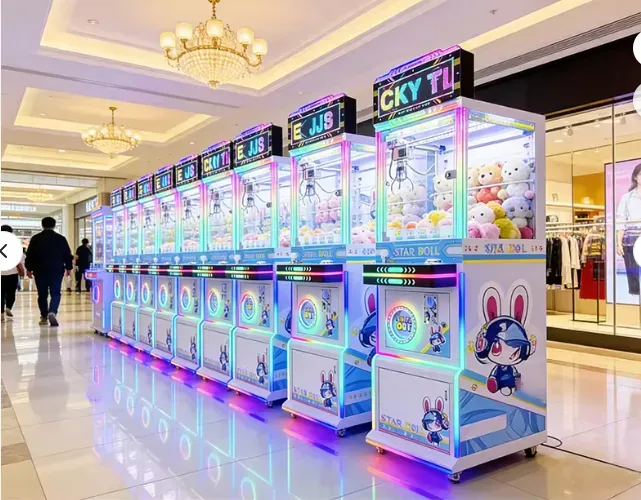
← Claw Machine Manufacturer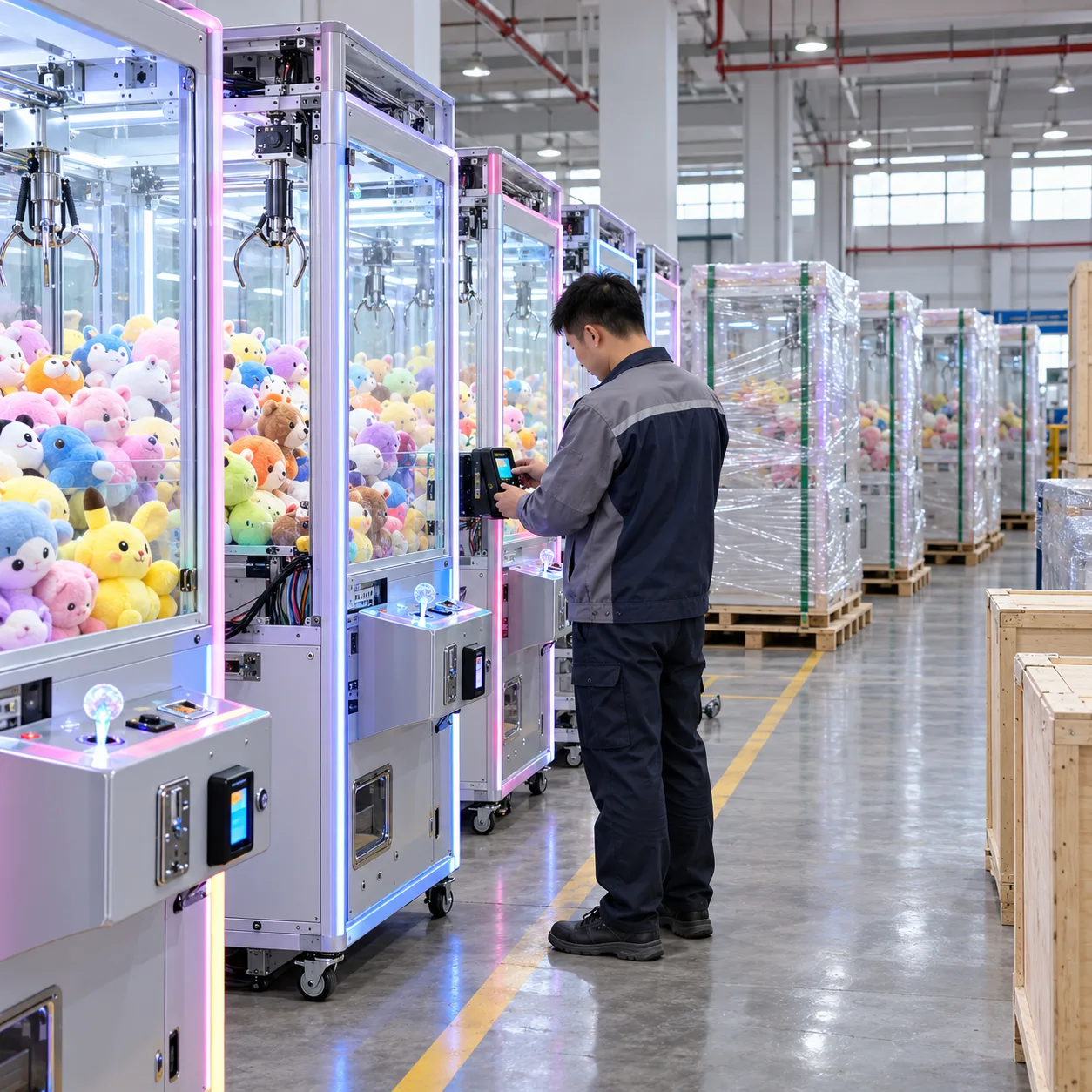
A terminal provider’s account activation and recurring service terms are separate from the cabinet purchase. Do not promise automatic refunds or offline acceptance unless the selected system supports and validates them.
Cashless Claw Machines: Reader Integration and Acceptance
For buyers searching for a cashless claw machine manufacturer, the key is choosing a factory that can build commercial cabinets and customize the payment interface for your market.
Written by Jisun Product Team
For a cashless claw machine purchase, buyers should start with a manufacturer that can build commercial cabinets and adapt the payment interface for the venue, market, and operator workflow. In our factory, we treat card reader requirements as part of an OEM/ODM project, alongside cabinet size, prize type, branding, voltage, and placement.
What does a cashless claw-machine integration need to specify?
Name the exact reader or terminal, the cabinet controller and the communication method connecting them. A reader cutout is not a completed payment integration. The supplier and payment provider need to agree on credit units, authorization behavior, wiring, supply requirements and how a failed start is recorded. Use the actual component documentation rather than assuming all pulse or serial interfaces behave alike. The Mini Claw Machine documents optional Nayax card payment, but that does not establish compatibility with every terminal or every controller elsewhere in the catalog.
How should the reader-to-game boundary be documented?
Create an interface brief before the cabinet wiring is finalized. Identify who supplies and configures each part and who witnesses the combined test.
| Interface item | Decision needed |
|---|---|
| Reader and firmware | Exact supported device and configuration |
| Credit conversion | What approved transaction starts how many turns |
| Signal or protocol | Connector, supply and timing from actual documentation |
| Availability | How the reader knows the game cannot accept another session |
| Service ownership | Who resolves accepted-payment but no-play faults |
How should coin, bill and card inputs coexist?
Define which inputs share the same credit balance and whether a game can be started while another transaction is pending. The Mini record states that its optional bill acceptor and Nayax payment can be installed together, alongside the documented coin arrangement. The final control setup still needs testing. A duplicate authorization message must not create another turn, and a coin arriving during a card-start sequence needs an agreed outcome. Record how service credits and customer credits are distinguished. If the cabinet is unavailable, avoid continuing to accept value that it cannot turn into the advertised play.
What specifications should be checked before ordering?
Before we quote a purchase project, we ask buyers to confirm the cabinet footprint, voltage, power rating, prize size, plug expectations, and shipping constraints. These details decide whether a machine fits the venue and whether service staff can refill and move it safely. For example, the Starlight Gift Claw Machine uses an 86*80*220cm upright footprint, a metal and glass cabinet, a 150W power rating, and 220V/60Hz input. The Phone Booth Claw Machine also uses an 86*80*220cm footprint, supports 8# dolls of approximately 24-30cm, and has a 110-240V/60Hz voltage range with 150W rated power. The Full-Transparent Claw Machine is lighter at 45 kg, with a 142 cm body height and 163 cm topper height.
| Model reference | Useful buyer check | Supplied data |
|---|---|---|
| Starlight Gift Claw Machine | Full-size indoor placement | 86*80*220cm, 150W, 220V/60Hz |
| Phone Booth Claw Machine | Prize display and voltage planning | 86*80*220cm, 110-240V/60Hz, 150W |
| Full-Transparent Claw Machine | Visible prize display with lighter cabinet | 45 kg, 142 cm body height, 163 cm topper height |
| Star Core Claw Machine | Space-efficient project placement | 51cm x 52cm footprint, 120W, 110V-220V/50Hz |
Which fault cases belong in cashless acceptance?
Test an approved transaction with no game start, repeated start notification, communication loss and power interruption between credit assignment and play. Show what the customer sees and what the operator can retrieve afterward. Include a normal round through completion and a service test that does not appear as a customer sale. The goal is one identifiable payment entitlement for the intended number of turns, with unresolved exceptions visible. Use the selected real reader configuration for the test; a manual button simulating a pulse is useful development evidence but does not validate the entire provider-to-game path.
How does Jisun support OEM/ODM cashless claw machine purchases?
For OEM/ODM buyers, we look at the whole project: cabinet artwork, colors, lighting, logos, prize setup, payment interface, voltage range, and venue layout. The 10-Second Challenge Claw Machine has OEM/ODM options for branding, cabinet style, and gameplay settings, with factory-direct support for wholesale and project buyers. The Triple Lucky Claw Machine supports OEM/ODM graphics, colors, lighting, and logos, and Jisun provides source factory support for wholesale project inquiries. The Vecur Treasure Island Claw Machine also supports cabinet artwork, branding, lighting, and payment setup. These details matter more than a generic product photo. A good cashless claw machine order should leave the factory ready for the buyer’s installation plan, not waiting for improvised changes on site.
What should be handed over after integration?
Keep the reader model, controller version, approved harness, credit mapping and tested recovery behavior in the commissioning record. Document who manages the payment account and connectivity and who services the cabinet; share account access through the provider’s appropriate process rather than printing credentials on the machine. Record any configuration change that could affect play pricing or credits. To request a quote, send the chosen reader documentation, destination market, intended cabinet and complete payment-to-play cases. Jisun can then distinguish an existing option from integration work that still needs validation.
Equipment Discussed in This Guide
Use the model photos, available demonstrations and specification sheets to check the equipment discussed above. Specifications apply to each named model.
Frequently Asked Questions
- Does mounting a card reader establish integration?
- No. Credit mapping, wiring, availability and payment-to-play behavior must be validated with the selected reader and cabinet controller.
- Can a manual test pulse replace the complete payment test?
- It can test part of the cabinet input but does not validate authorization, provider configuration or exception handling through the real reader.
- What is the required response to duplicate start notifications?
- The approved integration should recognize the existing entitlement and avoid adding unintended turns. Test the actual device and configuration.
Related Buying Guides
Best Locations for Claw Machines: Operator Guide
The strongest claw machine locations pair visible foot traffic with natural waiting time, suitable audiences, and practical installation conditions. This guide explains how buyers can compare venues, test exact positions, and match cabinets to each site.
Claw Machine Distributor Opportunities
A factory-side guide to evaluating claw machine distributor opportunities for malls, arcades, FECs, cinema lobbies, and retail venues. Learn how Jisun supports wholesale buyers with cabinet choices, OEM/ODM options, and commercial specifications.
Commercial Claw Machine Maintenance: Checks and Fault Triage
Maintain a claw machine by keeping the prize path clear, checking the visible play sequence and recording faults against the exact model. Separate routine operator observations from internal mechanical or electrical service. Use the supplied manual for access, isolation and approved cleaning; the schedule below is an operating checklist to adapt, not a universal factory service interval.