← Claw Machine Manufacturer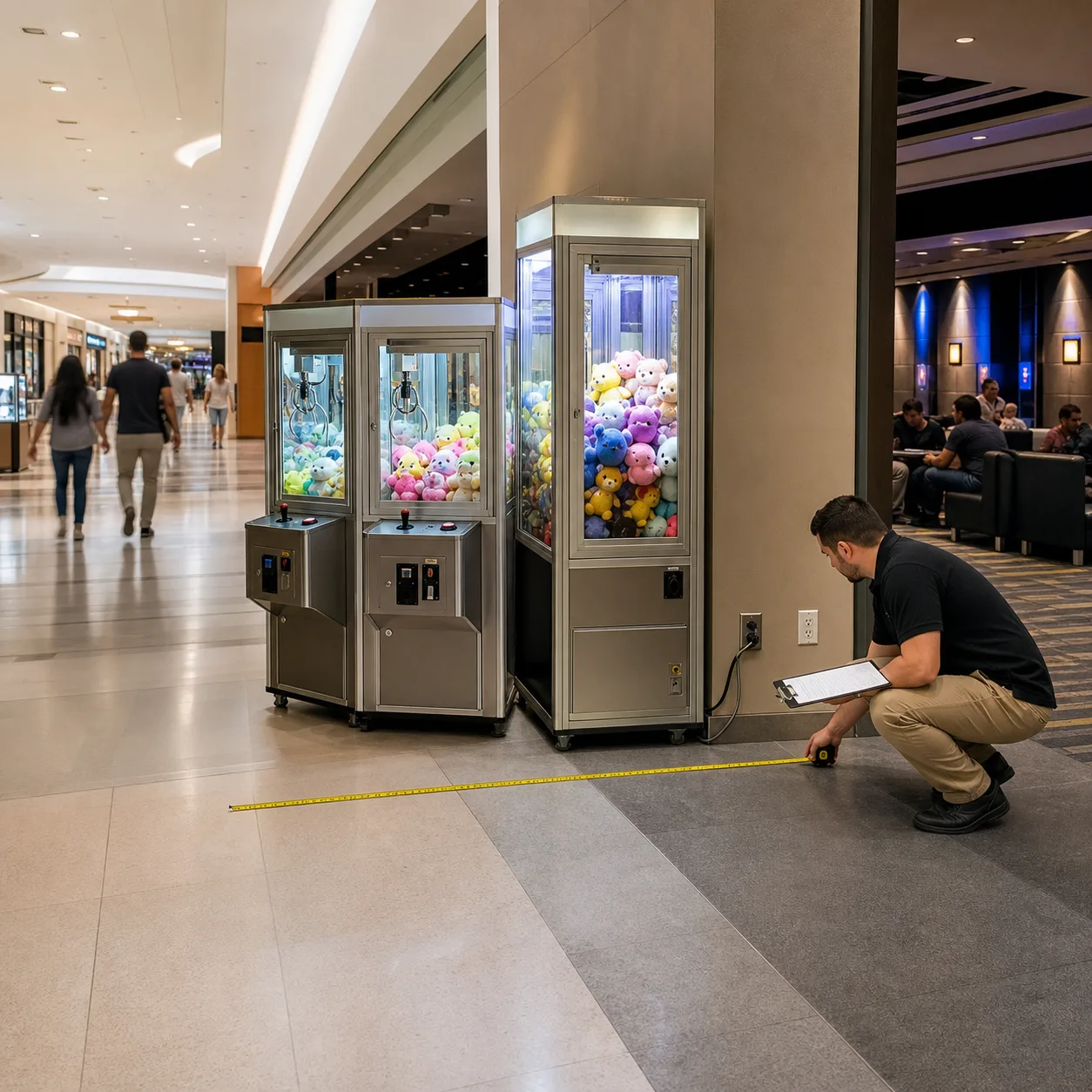
Best Locations for Claw Machines: Operator Guide
The strongest claw machine locations pair visible foot traffic with natural waiting time, suitable audiences, and practical installation conditions. This guide explains how buyers can compare venues, test exact positions, and match cabinets to each site.
Written by Jisun Product Team
The best locations for claw machines combine steady foot traffic, visible waiting time, an audience that welcomes small-prize entertainment, safe indoor placement, and enough room for players to stop without blocking circulation. Start with malls, arcades, FECs, cinema lobbies, and supermarkets, then validate each exact spot with a short operating test.
A claw machine is a self-service amusement cabinet in which a player controls a mechanical claw to try to retrieve a displayed prize. Location determines whether that cabinet becomes an impulse-play attraction or gets overlooked.
How do you find locations for claw machines?
To find locations for claw machines, build a shortlist from places where people already pause, wait, browse, or accompany children. Visit each candidate during different trading periods and observe the exact path people follow—not just the venue’s total attendance. Then speak with the property manager about available floor space, electrical access, operating hours, access for delivery, and any rules covering noise, lighting, payments, or prize displays. In our factory discussions, we ask buyers to compare specific placement zones rather than broad venue categories. A busy shopping center can contain both an excellent cinema queue and a nearly invisible side corridor. Document the candidates in one scorecard so the final decision reflects observed behavior and installation reality.
- List venues whose customers have natural waiting or leisure time.
- Map entrances, queues, food areas, escalators, checkouts, and family routes.
- Confirm the usable floor area and delivery path with venue management.
- Record power availability, operating restrictions, and the commercial arrangement.
- Run a controlled placement test before committing to a larger rollout.
Which venue types are usually best for claw machines?
Malls, arcades, family entertainment centers, cinema lobbies, and supermarkets are the strongest starting categories because each can combine walk-by visibility with leisure or waiting time. Our machines are suitable for malls, arcades, FECs, cinema lobbies, and supermarkets, but the operating role changes by venue. An arcade cabinet joins an existing game mix, while a supermarket unit often serves shoppers near a family-oriented pause point. Cinema lobbies create concentrated periods before screenings. FECs support customers who already expect paid amusement. Mall placements can capture mixed-age traffic throughout the day. Buyers can review our broader capabilities as a claw machine manufacturer while planning a cabinet mix for more than one venue type.
| Venue type | Promising behavior to observe | Common placement risk |
|---|---|---|
| Shopping mall | Browsing, family movement, and leisure stops | A high-traffic path with no safe stopping area |
| Arcade or FEC | Customers already comparing games and prizes | Cabinet hidden behind taller equipment |
| Cinema lobby | Concentrated waiting before screenings | Traffic that disappears between showtimes |
| Supermarket | Family pauses near entrances or service zones | Interference with checkout or trolley circulation |
What makes one position inside a venue better than another?
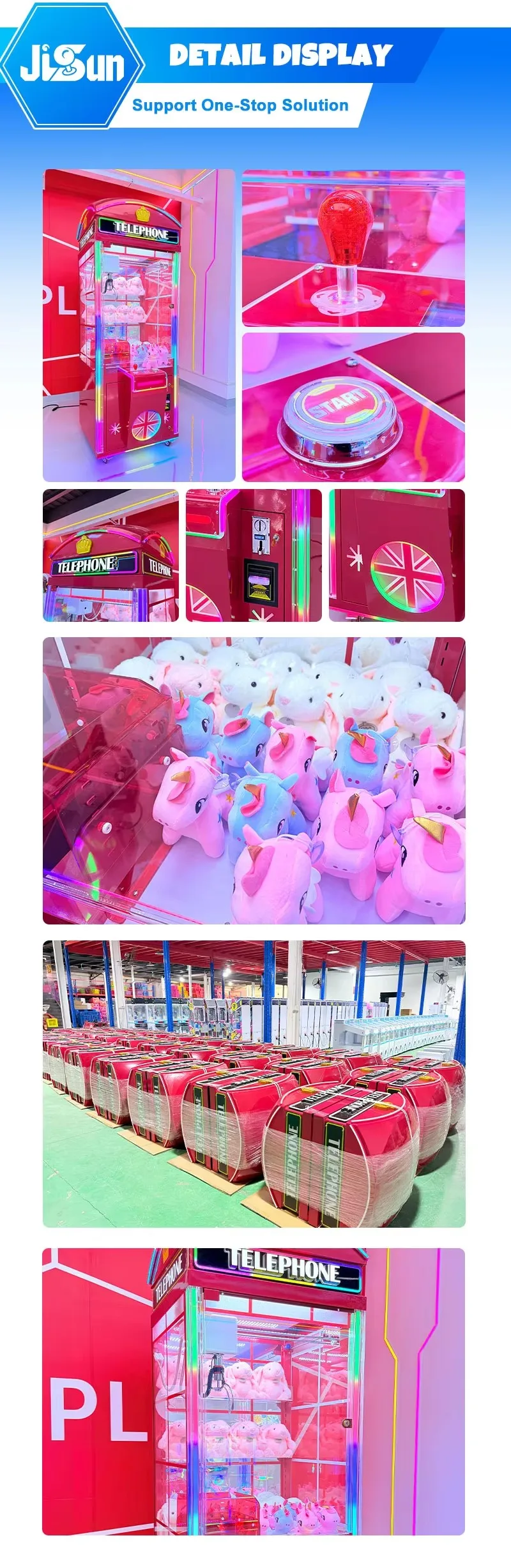
The better position lets approaching customers see the prizes and understand the game before they pass it. Look for a clear sightline, comfortable stopping space, nearby power, and circulation that won’t be obstructed by a player or companion. Corners beside queues, transitions between entertainment and food areas, and open approaches can work when the cabinet remains visible from several steps away. Test the view at both adult and child height. Prize presentation matters, so buyers may compare a high-visibility format such as the Phone Booth Claw Machine with other cabinet styles. Here’s the operator’s reality: heavy footfall means little when every shopper is rushing past or watching for carts, stairs, and checkout lines.
How should the exact cabinet be matched to a candidate position?
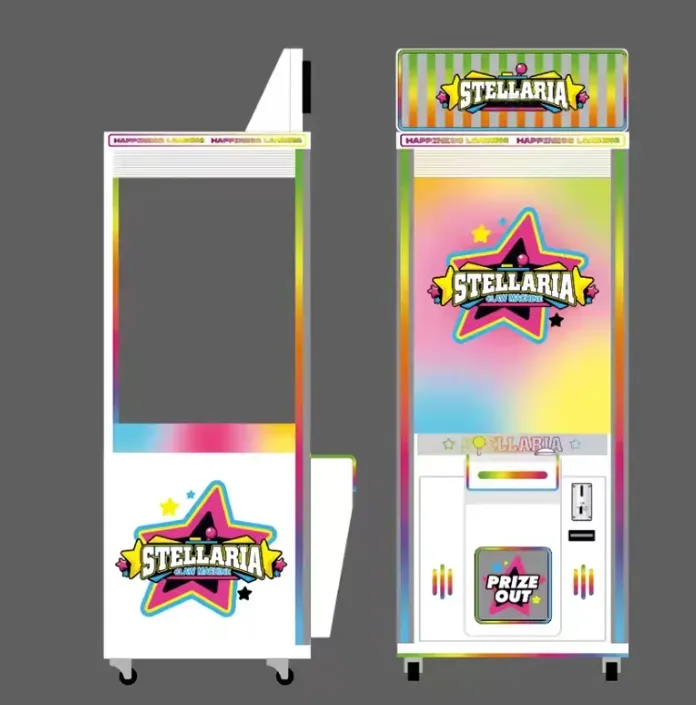
Attach the named model to its layout and electrical data. Phone Booth Claw Machine lists 86 × 80 × 220 cm and 110–240 V / 60 Hz; the similar-size Starlight Gift Claw Machine lists 220 V / 60 Hz. Do not combine one model’s link with another’s rating. Mark the player position, collection opening and service-door sweep on the location drawing. Check visibility from the actual pedestrian approach and confirm that waiting guests will not block another tenant or machine. Cabinet mass does not prove stability, and a base that fits a corner does not establish a usable location.
What should a location trial measure before expansion?
Use a dated observation sheet with paid plays, active hours, price, prize assortment, awards, service interventions and unavailable time. Record relevant context such as screenings, school holidays or a temporary promotion. Distinguish people passing, people stopping and people paying instead of treating footfall as sales. Change one major variable at a time when testing a weak position. Compare contribution after the actual venue and service costs, then decide whether to retain, relocate or expand. A short game cycle does not itself establish repeat demand; use the site’s observations.
How do branding and payment choices affect location fit?
Branding and payment choices affect whether the cabinet belongs in the venue and whether its customers can start a game without confusion. A cinema promotion, family center, and supermarket campaign may require different cabinet artwork, colors, prize presentation, or transaction flow. We offer custom branding, cabinet artwork and payment interface options for OEM/ODM projects, allowing buyers to define those details around a specific deployment. Settle them before production. Payment hardware can change the front-panel layout and customer interaction, while artwork must suit the venue’s viewing distance and audience. When several sites are planned, document the approved configuration for each group so units intended for one operating environment aren’t mixed into another during delivery or installation.
Choosing a location and specifying the machine should happen together. Contact our factory team to share your venue type, floor measurements, destination electrical standard, preferred cabinet format, and project quantity, and request a tailored claw machine quote.
Equipment Discussed in This Guide
Use the model photos, available demonstrations and specification sheets to check the equipment discussed above. Specifications apply to each named model.
Frequently Asked Questions
- What should a location test distinguish beyond footfall?
- Record people passing, stopping and paying separately, alongside active hours, price, prizes and service interruptions. Passing traffic alone does not establish paid demand.
- Can Phone Booth and Starlight share the same electrical line in a location plan?
- Keep their named standard-version records separate, then specify the required destination power configuration. Jisun can customize voltage for the order.
- Does a short claw-game round prove customers will play again?
- No. Observe repeat paid play at the actual site; game duration alone does not establish demand.
Related Buying Guides
Claw Machine Distributor Opportunities
A factory-side guide to evaluating claw machine distributor opportunities for malls, arcades, FECs, cinema lobbies, and retail venues. Learn how Jisun supports wholesale buyers with cabinet choices, OEM/ODM options, and commercial specifications.
Cashless Claw Machines: Reader Integration and Acceptance
For buyers searching for a cashless claw machine manufacturer, the key is choosing a factory that can build commercial cabinets and customize the payment interface for your market.
Commercial Claw Machine Maintenance: Checks and Fault Triage
Maintain a claw machine by keeping the prize path clear, checking the visible play sequence and recording faults against the exact model. Separate routine operator observations from internal mechanical or electrical service. Use the supplied manual for access, isolation and approved cleaning; the schedule below is an operating checklist to adapt, not a universal factory service interval.