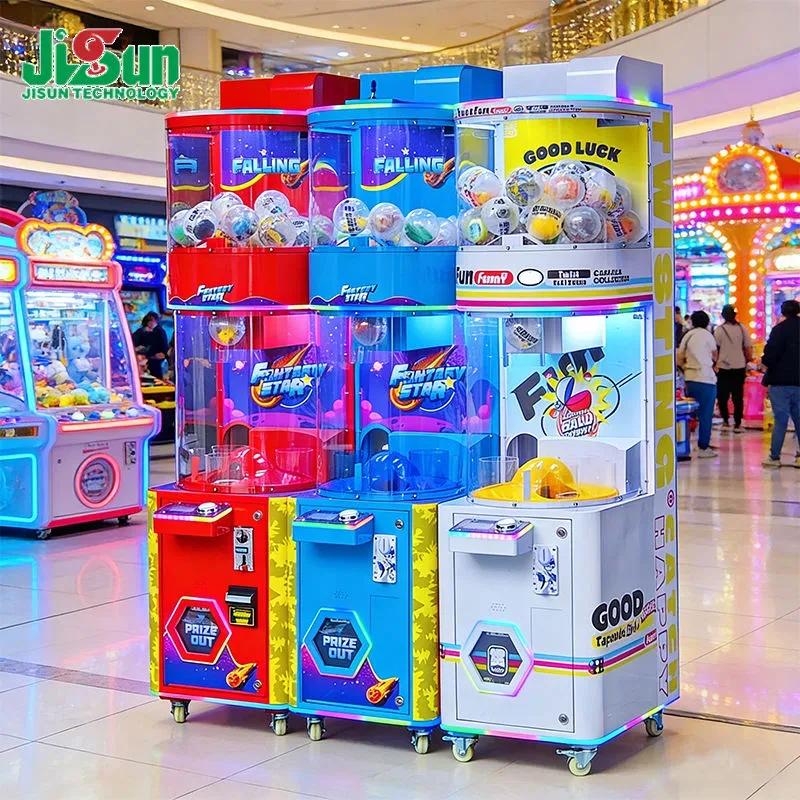
Dream Star Gacha Machine
Model: JISUN-GACHA-001
No prize-machine category is automatically the most profitable. Compare collected play revenue, merchandise awarded, venue terms, service effort and unavailable time for the actual location. Direct capsule vending, a claw attempt and a skill-prize game have different reward paths; treating them as the same business model produces misleading cost forecasts.
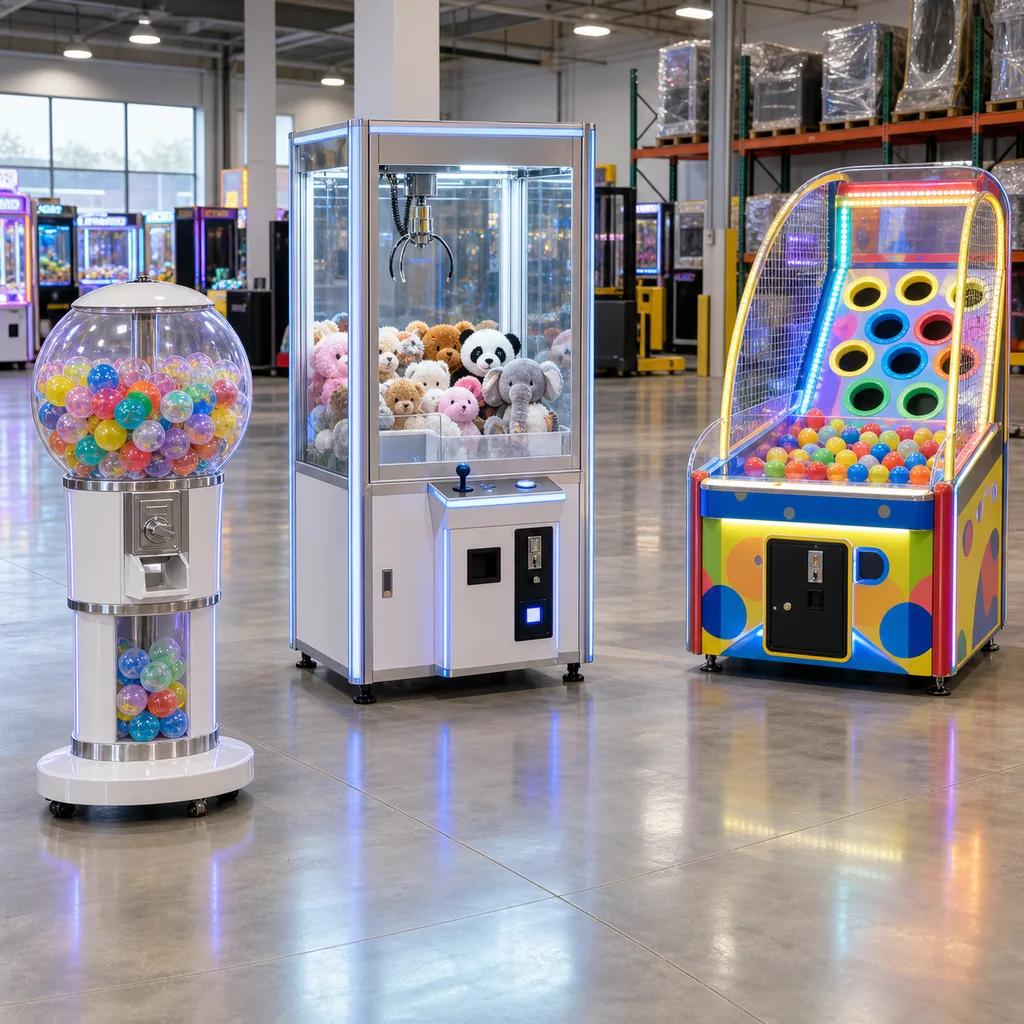
In a direct-vending arrangement, each completed purchase promises the stated item or capsule. In a claw or skill-prize game, payment buys the described attempt and an award depends on the rules. That difference changes the cost record: direct vending tracks the cost of items sold, while prize games track actual awards alongside paid attempts. Do not infer the mechanism from the word gacha alone. Dream Star Gacha Machine uses a target-timing skill sequence with unsuccessful capsules recycled; it should not be presented as a guaranteed capsule for every payment. Confirm the actual round and reward path before estimating merchandise consumption.
Use the same trading period and distinguish customer plays from tests, free rounds and refunds. Record net receipts, awards, loaded and remaining stock, recurring service work and time unavailable. A cabinet with more gross revenue can contribute less after high venue share or frequent interventions.
| Measure | Why it changes the comparison |
|---|---|
| Revenue after included refunds | Shows collected activity rather than headline price times every start |
| Actual prize consumption | Separates awarded merchandise from display stock |
| Staff visits and intervention time | Captures refill, collection and fault workload |
| Unavailable hours | Explains lost selling time and service burden |
| Occupied operating area | Includes players, collection and access, not just the base |
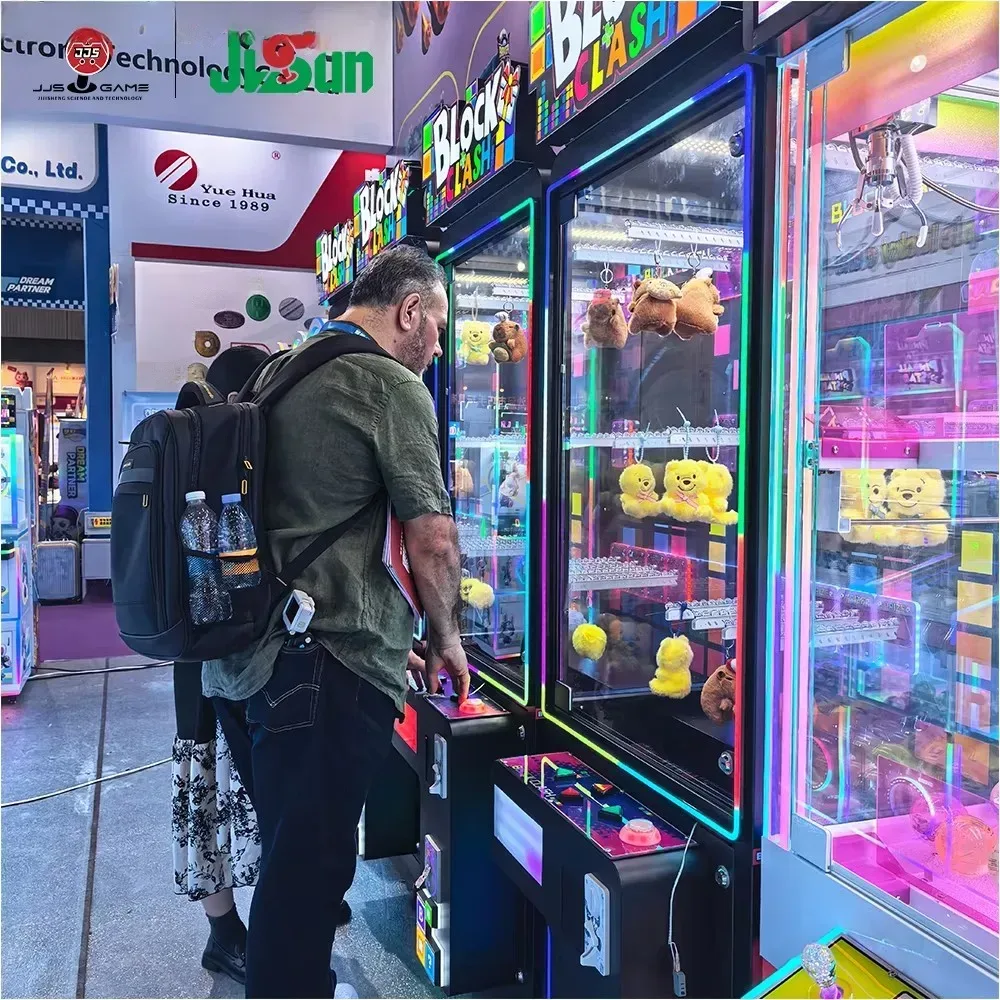
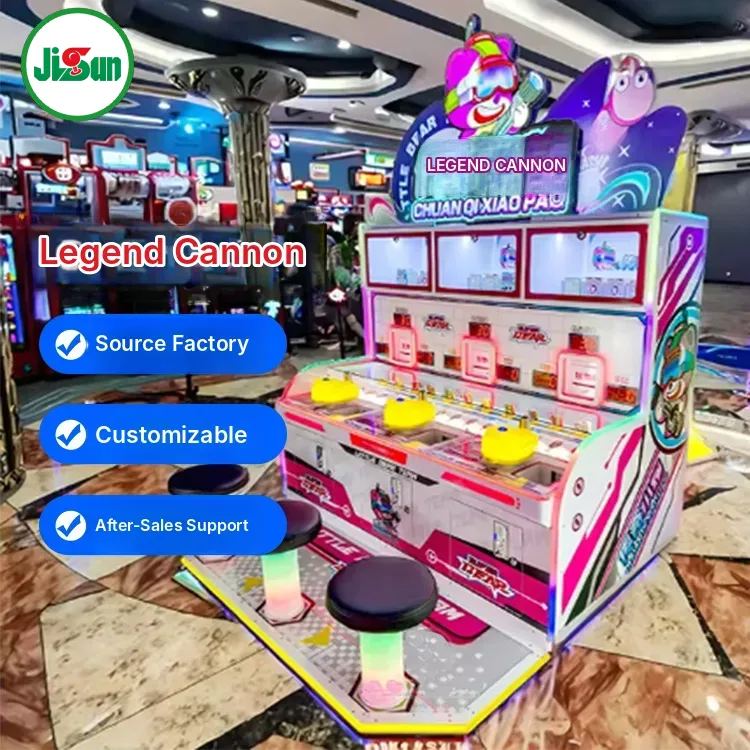
A compact cabinet can fit a position that a larger attraction cannot, but fit alone does not prove demand. Dream Star lists 45 × 74 × 180 cm. Block Clash Prize Game Machine lists 78 × 72 × 202 cm and one player. Legend Cannon Ball-Toss Prize Machine lists 160 × 165 × 232 cm. These are different mechanisms and cabinet envelopes, not rankings of profitability. Add the play and service area to each proposal. A larger attraction may serve a spectator role, but do not credit it with sales at neighboring machines without evidence. Compare the location’s measured behavior with the purpose assigned to each cabinet.
Record the landed cost of each awarded item, not just its purchase price, and track stock losses or damaged items separately. A visually appealing assortment may create repeated refill work or a high number of collection interruptions. For a claw game, packaging, tags and compressed shape can change handling. For a capsule mechanism, use approved filled capsules through the complete path. Changing the merchandise can change both demand and service effort, so preserve the previous setup in the record. Avoid changing play price, assortment and location simultaneously if the purpose is to understand which change helped.
Define the question before the trial: whether guests understand the game, whether a certain prize family is attractive, whether staff can service the position or whether a larger cabinet earns enough contribution to justify its area. Set the observation period to include the venue’s normal trading pattern and identify promotions separately. Use lower-demand and higher-service-cost scenarios rather than projecting only the busiest period. A short pilot gives evidence about that site and configuration; it does not establish a universal earnings figure. The separate mini-claw profitability guide explains operating contribution and simple payback with a labelled example.
Request a demonstration of the exact reward rule, merchandise compatibility, refill access and normal reset. Ask how an incomplete payout, blocked collection path and paid start failure are handled. Keep the supplied payment hardware and any recurring provider charges separate in the quote. Price the installation and selected spare parts, then place the total alongside the site’s own operating forecast. A supplier can explain configuration and evidence; it cannot establish demand at an untested location. To request a quote, send the venue layout, intended reward model, merchandise plan and service routine so the offered machine can be compared against your actual operating assumptions.
Use the model photos, available demonstrations and specification sheets to check the equipment discussed above. Specifications apply to each named model.
Commercial gacha machines for shopping malls should be chosen around floor footprint, capsule size, prize workflow, cabinet durability, and brand customization. Jisun manufactures purchase-ready gacha and prize game equipment for mall, arcade, and FEC operators that need wholesale supply or OEM/ODM builds.
A practical buyer guide for operators, distributors, and venue owners sourcing custom gacha and prize vending machines from a manufacturer. It explains when OEM/ODM customization matters, when a standard model is enough, and what equipment facts to confirm before ordering.
Commercial gacha machine pricing depends on cabinet specifications, capsule format, customization, order volume, and freight. This guide shows buyers how we prepare an accurate factory quotation without relying on misleading public price ranges.