Dream Star Gacha Machine
Model: JISUN-GACHA-001
A practical manufacturer guide for buyers sourcing gacha capsule machines and prize game equipment for malls, arcades, FECs, and retail venues.
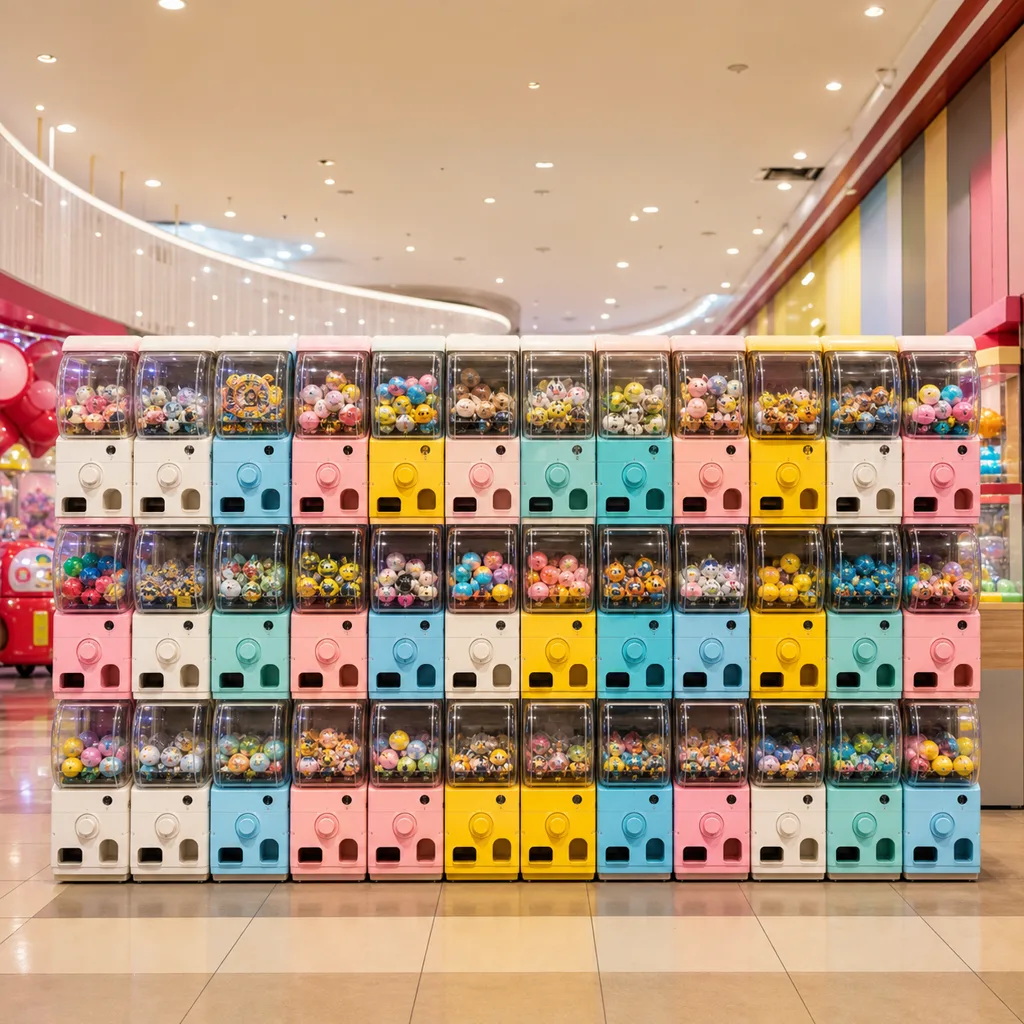
A gacha capsule equipment order should begin with the transaction: a guaranteed item after payment, or a skill attempt with a possible prize. Then test the intended filled capsules through the chosen mechanism. This guide uses Dream Star’s documented gameplay to explain the distinction and organize a physical sample trial.
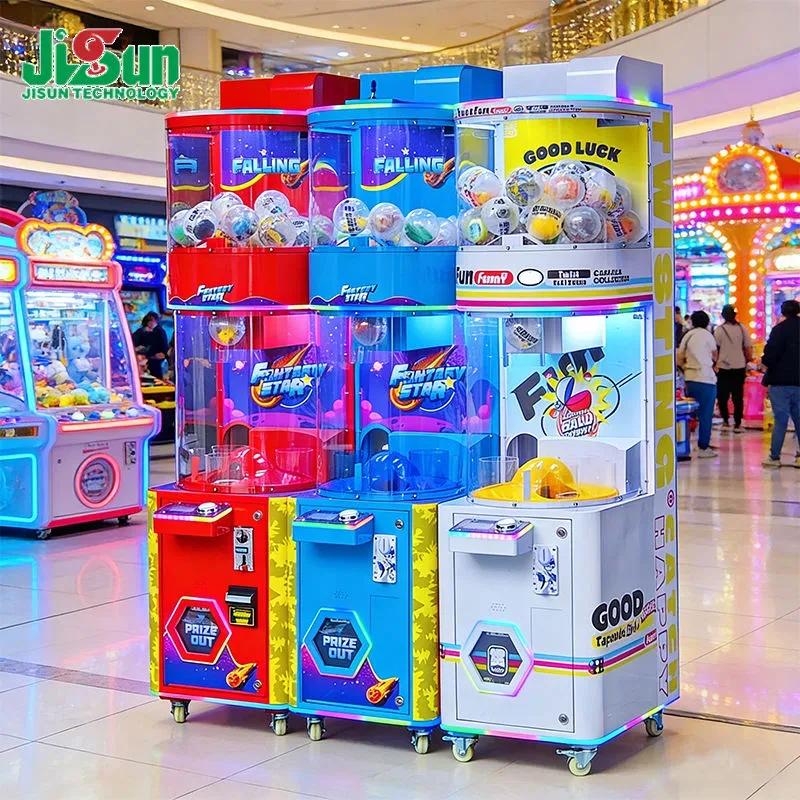
A conventional capsule dispenser releases an item after a completed purchase. The Dream Star Gacha Machine has a different supplied operating description: insert a token, aim at the target hole and time the button press to win a capsule. Unwon capsules recycle automatically. Its 75 mm and 100 mm capsule options do not change that basic distinction. Ask a supplier to demonstrate an unsuccessful attempt as well as a successful one before approving the order. A recording containing only wins may conceal the operating rule that matters most to a retail collectible project. Keep the agreed transaction type on the specification sheet.
Provide closed, filled capsules representative of the merchandise that will actually be used. Record diameter, shell material, seam or closure type and total mass; include an insert or label if it will travel inside the shell. Two nominally equal diameters can behave differently because the seam protrudes or the contents shift during motion. Do not approve compatibility from empty spheres alone. Ask whether the selected 75 mm or 100 mm Dream Star configuration requires a different setup, and have that setup recorded with the sample. Retain approved specimens so later merchandise substitutions can be compared with the original physical reference instead of a supplier photograph.
Follow the complete path: loading, movement into the active area, the player’s attempt, capsule release when successful and recycling when unsuccessful. Watch how a capsule enters a narrow opening and whether the seam catches or two shells bridge together. Include the collection point so an item is not counted as delivered merely because it moved inside the enclosure. Ask the demonstrator to show recovery from a stopped or obstructed attempt using the agreed operating procedure. Do not reach into moving equipment during the demonstration. Record the exact specimen and configuration used, together with any manual actions, rather than treating an edited highlight clip as a complete test.
Time and observe the operator’s replenishment sequence as a separate task. Identify which door is opened, where stock waits during loading and how staff keep damaged capsules out of circulation. Check that normal replenishment does not require crossing the customer collection position or disturbing the payment connection. Confirm how staff establish that the enclosure is ready for the next attempt after closing it. A large-looking transparent area does not prove a particular usable stock capacity, and no capacity should be inferred from a rendering. The receiving record should describe what was loaded and how it was counted. This gives the operator a repeatable procedure for future refills.
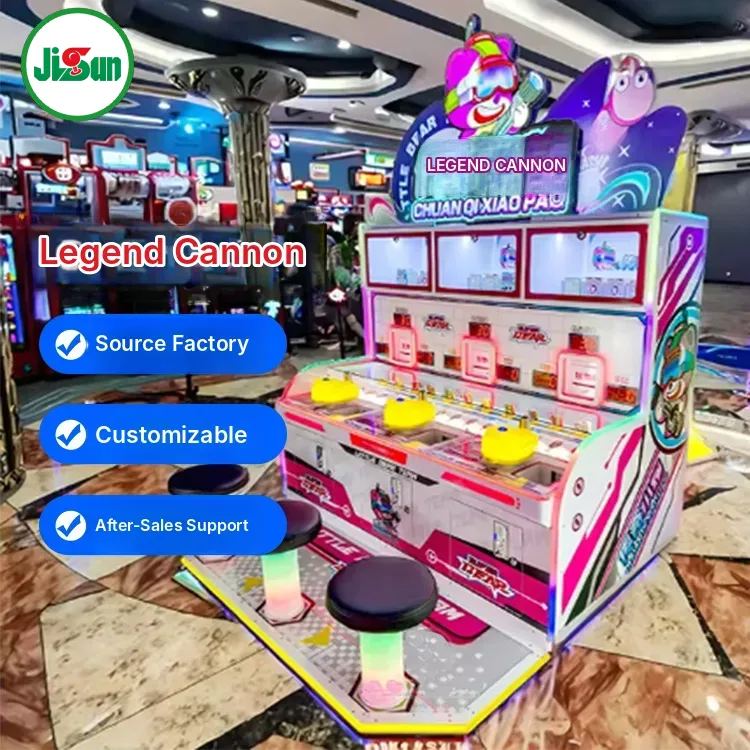
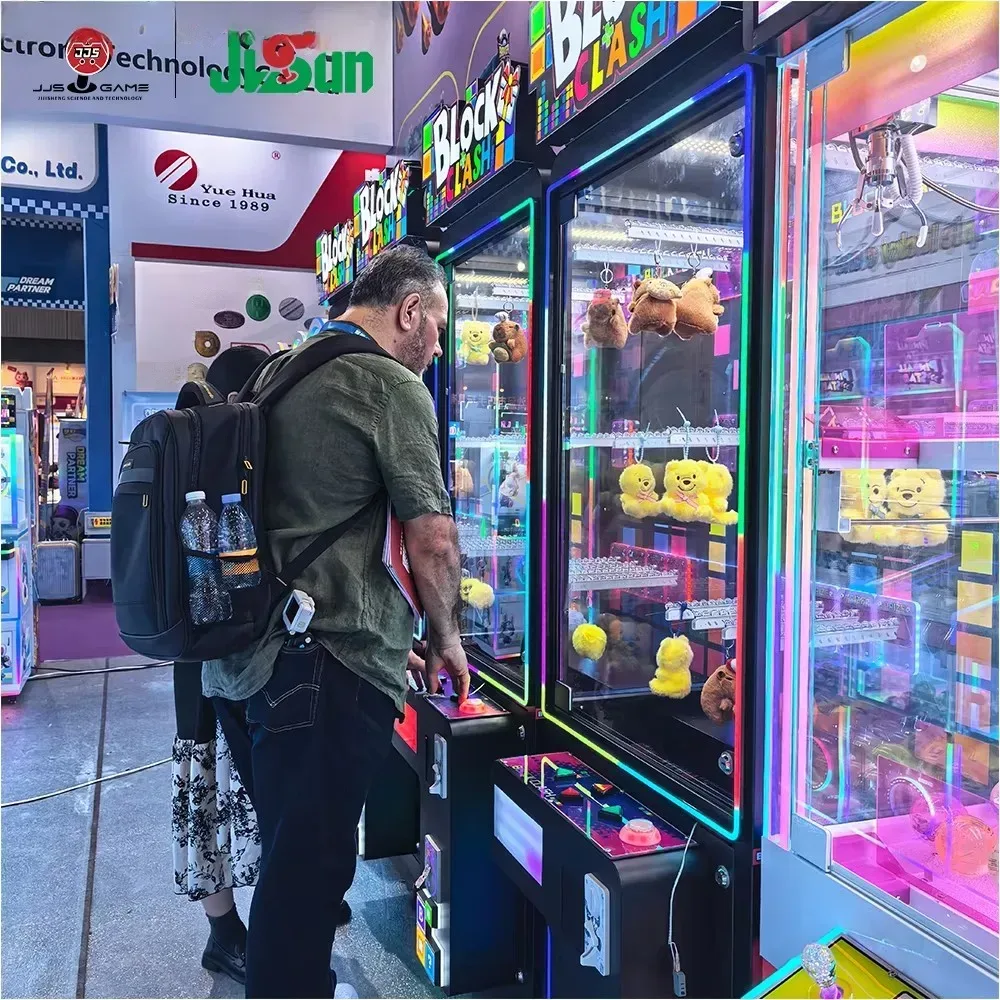
Dream Star lists a cabinet size of 45 × 74 × 180 cm, a weight of 75 kg, rated power of 150W and a 220V/50Hz electrical specification. Its packing size is listed separately at 47 × 76 × 182 cm. Use the cabinet dimensions for the equipment outline and add access, collection and queue space based on the actual site. Do not borrow the much larger envelope of the Legend Cannon Ball-Toss Prize Machine or the controls of Block Clash; those are different mechanisms. Check destination supply and the ordered payment setup before a floor position is finalized.
If every accepted payment must deliver one collectible, describe that as a guaranteed-vend requirement and request an appropriate design. Specify sold-out handling, failed delivery, an interrupted payment and the customer recovery procedure. Those requirements are not implied by Dream Star’s aim-and-time prize game. A custom dispenser can be discussed, but the drawing and demonstration must show the proposed transaction rather than presenting the existing skill mechanism as proof. Keep artwork changes separate from changes to the item path or control program. The custom capsule project guide explains that approval package; use this page to establish the physical capsule and operating format first.
| Record | Approval question |
|---|---|
| Transaction | Guaranteed vend or skill attempt? |
| Specimens | Filled shells with the intended seam and contents? |
| Sequence | Success, unsuccessful attempt, recovery and refill shown? |
| Configuration | Capsule size, payment equipment and destination supply recorded? |
Send the intended capsule specimens, transaction type and placement drawing to request a quote for the appropriate gacha equipment configuration.
Use the model photos, available demonstrations and specification sheets to check the equipment discussed above. Specifications apply to each named model.
No prize-machine category is automatically the most profitable. Compare collected play revenue, merchandise awarded, venue terms, service effort and unavailable time for the actual location. Direct capsule vending, a claw attempt and a skill-prize game have different reward paths; treating them as the same business model produces misleading cost forecasts.
Commercial gacha machines for shopping malls should be chosen around floor footprint, capsule size, prize workflow, cabinet durability, and brand customization. Jisun manufactures purchase-ready gacha and prize game equipment for mall, arcade, and FEC operators that need wholesale supply or OEM/ODM builds.
A practical buyer guide for operators, distributors, and venue owners sourcing custom gacha and prize vending machines from a manufacturer. It explains when OEM/ODM customization matters, when a standard model is enough, and what equipment facts to confirm before ordering.