Automatic Overturning Dice Machine with Clear Dome
Model: Overturning Dice Machine
Category: Dice Machines
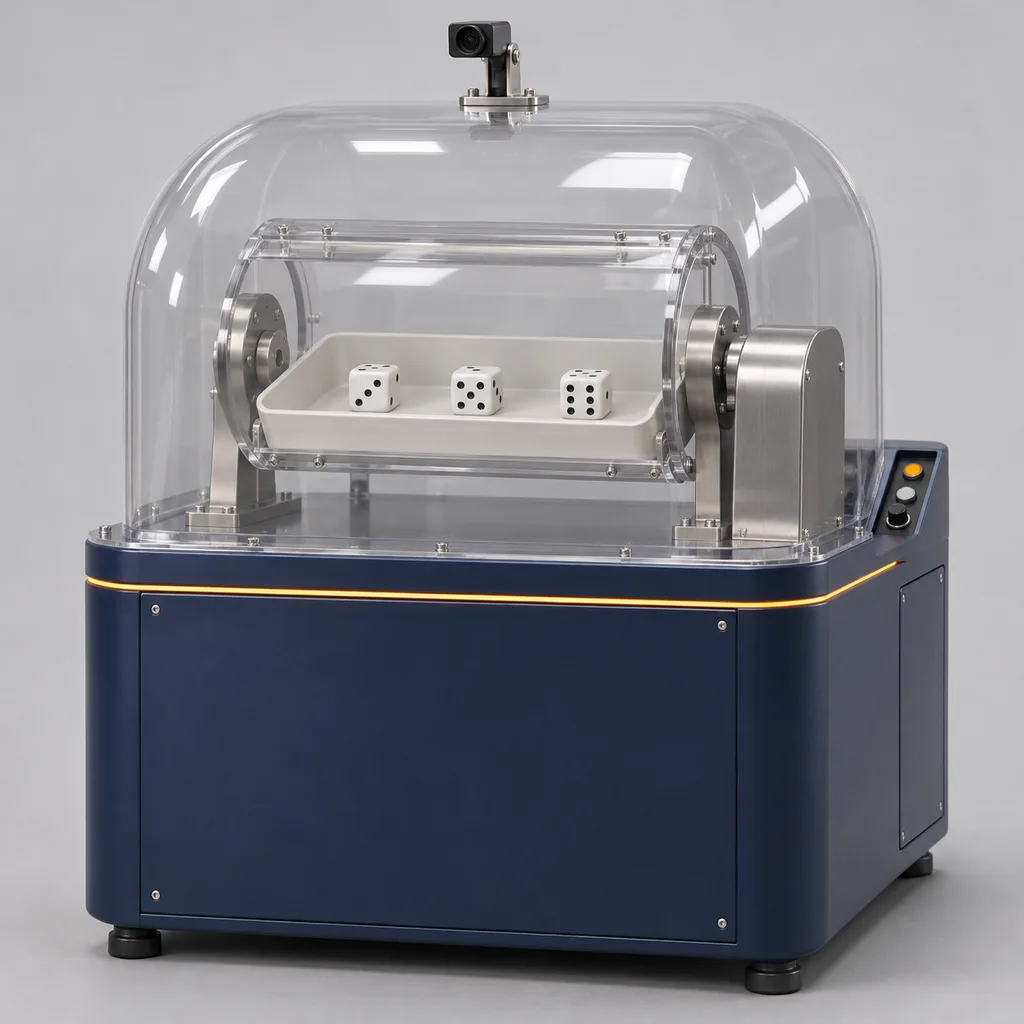
Concept design — fully customizable. Contact us to make it real.
Concept design — fully customizable. Contact us to make it real.
The TiltStage Dice Reveal Station is a proposed custom machine for an arcade equipment distributor running scheduled demonstrations in its showroom. It addresses one operating problem: visitors can watch dice tumble, but a final result may be difficult to inspect when the dice settle at an awkward angle or staff begin another cycle too soon. This concept proposes an overturning chamber that returns to a presentation position, followed by a deliberate result-hold stage controlled by showroom staff.
Physical equipment gives prospective venue buyers a direct view of the dice, moving chamber and staff controls. They can assess how the demonstration fits their own floor layout and operating routine. The concept is intended for a supervised demonstration area, with visitors outside the chamber movement envelope and staff able to reach the controls without crossing the audience sightline.
The proposed appearance combines a transparent dome with a low, faceted cabinet, a contrasting presentation tray and a recessed control panel on the staff side. A dark blue cabinet, pale tray and restrained amber status lighting are example finishes. A removable rear service panel is a custom layout direction, while its access space and internal arrangement depend on the selected mechanism.
Inside the dome, a motor-driven cradle would overturn the enclosed dice chamber and return it to a defined viewing position. The design target is to keep the dice on the same chamber floor throughout tumbling and presentation. Moving the dice after they settle could change the result, so the proposed sequence completes chamber movement before the settling and inspection stage. The drive, stopping arrangement, tray geometry and settling interval require engineering assessment with the intended dice.
A proposed status strip would distinguish ready, moving, settling and held-result stages. Staff would start a cycle, wait for motion to finish, inspect the physical dice and acknowledge the result before enabling another cycle. The start control initiates movement; it does not select a winning outcome. An optional external display could show a camera view of the settled dice. Automatic point recognition would be a separate custom scope with an agreed response to obscured or ambiguous faces.
Before a session, staff would check the agreed dice set, inspect the chamber for loose objects, close the access cover and confirm that the viewing area is clear. A proposed cover interlock would inhibit movement while access is open; its implementation belongs in the agreed engineering scope. Staff would then run a preparation cycle and check that the chamber returns to its viewing position.
During a demonstration, the operator initiates one cycle and lets the audience inspect the held result. If a die leans against another die or the chamber wall, staff would mark the round unresolved and follow the agreed rerun procedure. Acknowledging a result would re-arm the controls without moving the dice; the next start would begin the next overturning sequence. Cleaning access, recovery after a power interruption and service isolation should be included in the operating instructions for the final configuration.
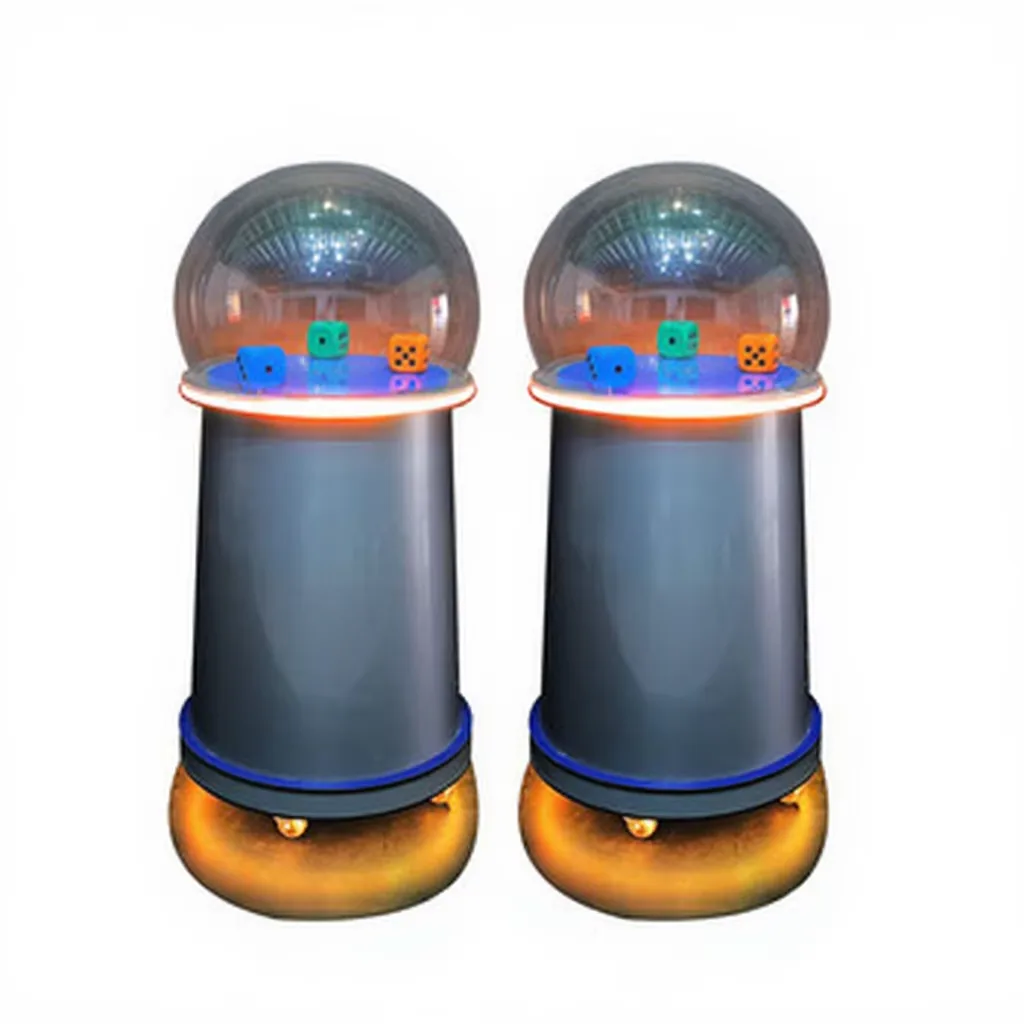
Jisun's Automatic Overturning Dice Machine with Clear Dome already uses a dice chamber that turns up and down above a floor-standing cylindrical cabinet, and automatic restart can be configured. That existing model is sufficient when the buyer needs an overturning demonstration without the proposed presentation-position workflow and separate staff acknowledgement stage. TiltStage instead explores a cabinet and control sequence organized around holding each result for a showroom discussion. The existing model's dimensions and reference turn cycle do not define this concept's size or timing.
Jisun needs the intended dice quantity, edge length, material and face markings to assess chamber clearance and settling behavior. Proposed capacity depends on those inputs and the usable tray area; it is not a fixed dice count. Buyers should also provide their demonstration sequence, preferred viewing height, available footprint, staff position, access route, destination electrical supply and any display connection requirements. Camera lighting and mounting would be assessed if that option is selected. RFID recognition would require a different scope using matched dice and reading hardware, rather than being assumed compatible with ordinary dice.
The proposed factory acceptance checklist would cover cover-open movement inhibition, chamber return position, result-hold behaviour, unresolved-round handling and power-interruption recovery. Acceptance methods and criteria would be agreed for the selected configuration. Production usually takes 7-15 working days after deposit and final specification confirmation. Shipping time is additional; the final schedule is confirmed in the quotation. Get a Quote for a TiltStage configuration based on your showroom workflow.
These photos and demonstrations show the existing models cited above. They do not show a completed version of this concept; each model keeps its own specifications.
Model: Overturning Dice Machine