Concept / Customizable Design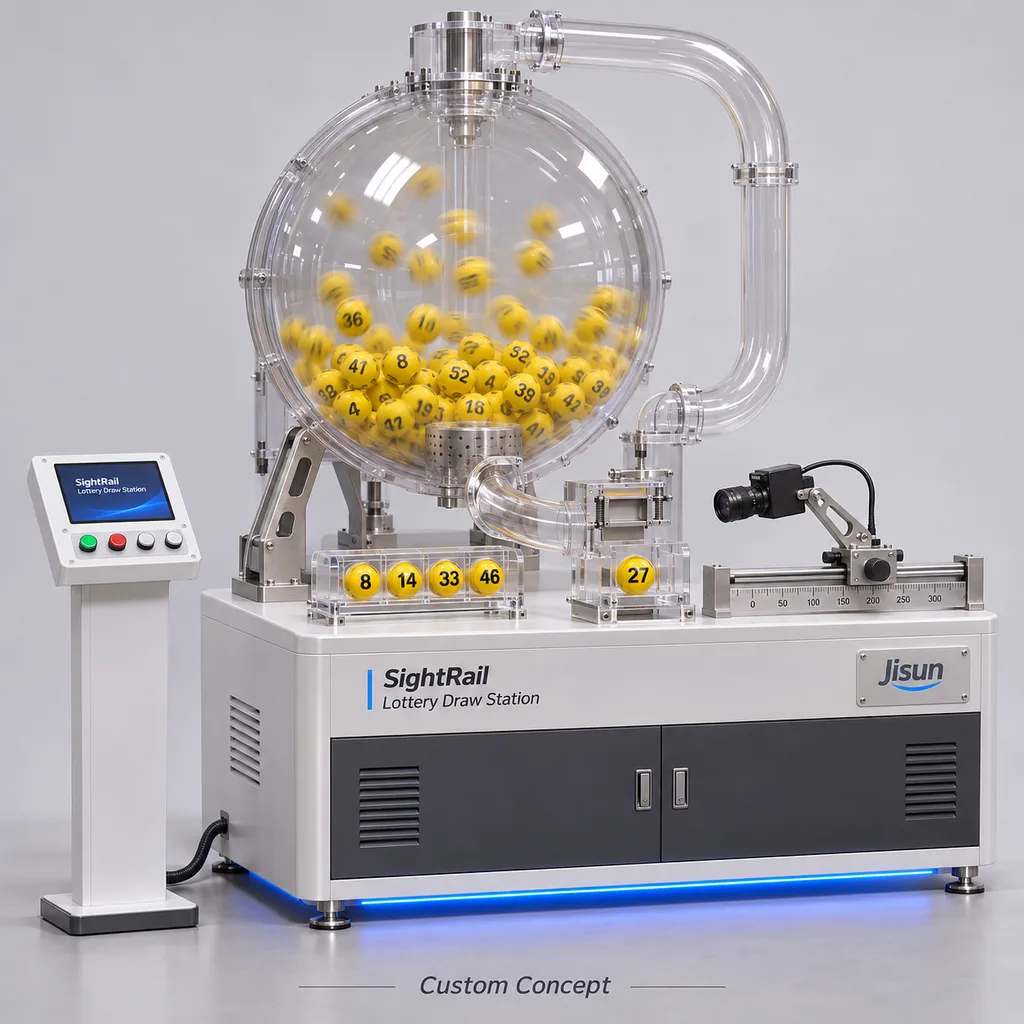
Category: Lottery Ball & Draw Machines
SightRail Lottery Draw Station
Concept design — fully customizable. Contact us to make it real.
- ✓Proposed side camera rail aligns a close view with the transparent result cradle.
- ✓Separate retention rack keeps recorded balls outside the common mixing pool.
- ✓Operator-authorized transfer creates a pause for recording each physical result.
- ✓Separate console places draw controls outside the close camera view.
- ✓Proposed controlled return chute supports end-of-round ball reconciliation and reset.
A physical draw designed around the camera view
Concept design — fully customizable. Contact us to make it real.
The SightRail Lottery Draw Station is a proposed custom equipment design for a lottery operator fitting out an indoor draw studio. Its operating scenario is a scheduled, filmed selection of numbered balls from one common pool. The problem is specific: a camera placed for an attractive wide shot may struggle to show the selected ball clearly, while a close camera or its support can obstruct the audience's view of the chamber. SightRail makes camera positioning part of the cabinet layout rather than an accessory added after the machine reaches the studio.
The proposed appearance combines a transparent spherical mixing chamber with a low, rectangular white cabinet, charcoal service panels and restrained blue edge lighting. A short transparent result cradle projects toward the front. An adjustable camera rail follows one side of the cabinet, outside the ball path, with a supported arm aimed at that cradle. The design target is a repeatable close view of the physical selected ball while leaving the chamber visible to a separate studio wide camera. Physical equipment provides the actual mixing, selection and retained ball that staff and viewers can observe.
One common pool, with a deliberate presentation pause
The proposed mechanism uses blower-driven air mixing and a gated outlet that guides one selected numbered ball into the transparent cradle. That ball stays outside the mixing pool while staff record it. For a sequence without replacement, a proposed transfer gate moves the recorded ball into a separate transparent retention rack before another selection begins. Rack length and retention quantity would be designed around the buyer's round, rather than inferred from the chamber's loading capacity.
This concept uses numbered balls, not paper entries. It also differs from independent digit draws: a Pick 3 machine draws one result from each of three separate pools, whereas SightRail's proposed sequence draws successive balls from the same pool. A repeated digit across independent chambers and a repeated selection from a common pool therefore require different game rules and equipment arrangements.
Camera setup, operation and reset
Before a session, the venue's operator inventories the agreed ball set, loads the chamber, checks that the cradle and retention rack are empty, and closes the loading access. Staff position the camera using the proposed sliding rail and adjustable arm, then frame a sample ball at the cradle under the actual studio lighting. Reference marks on the rail would help staff restore an agreed position after moving the camera. Lens choice, focus distance, reflections and the camera's weight determine the final mount geometry; no universal camera distance is proposed.
A separate console is proposed so the operator can run mixing and initiate selection without standing in the close camera view. Start and stop commands control the equipment sequence; they do not specify which numbered ball wins. After each selection, staff record the physical result before authorizing transfer to the retention rack. At the end of the round, staff reconcile the retained balls and use a proposed controlled return chute to restore them to the chamber. They then check that both presentation areas are clear before preparing another round.
How it differs from existing equipment
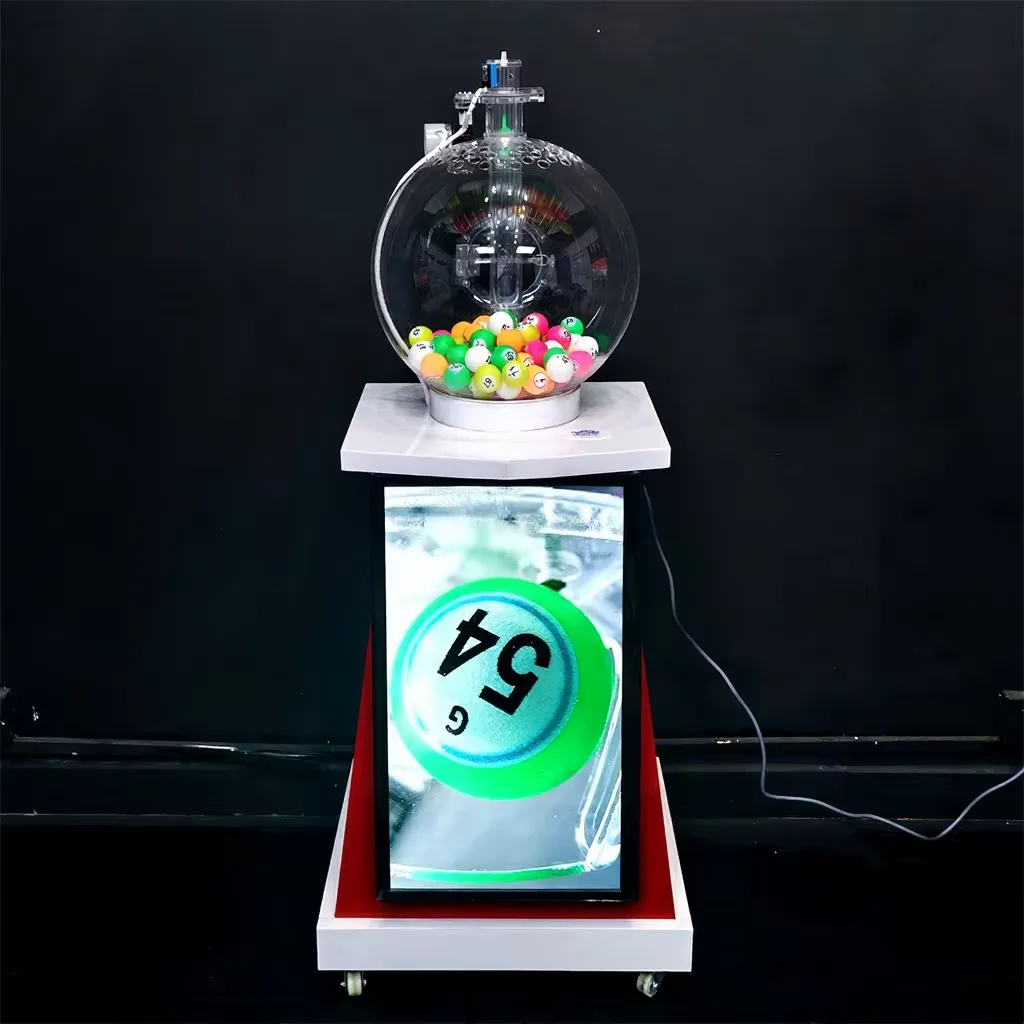
Jisun's existing P40 Lottery Ball Machine with Camera and LCD Display documents camera capture of the selected ball and an LCD in the cabinet front. That model is sufficient when a configured camera view and local result display meet the buyer's presentation needs. SightRail proposes an additional physical arrangement: an adjustable external camera support referenced to a retained-ball cradle, with a separate rack for a common-pool sequence. The P40 reference establishes a useful mechanism comparison; SightRail's rail, cradle transfer and reset arrangement are proposed custom features.
Define the studio before defining the machine
Jisun needs the full ball count, numbering range, diameter, material and draw rules, including replacement policy and results retained per round. A 40 mm or 50 mm ball configuration would require matched chamber loading, outlet clearances and cradle geometry; changing diameter is not simply a camera adjustment. The studio footprint, service access, camera model and lens, lighting positions, cable route and desired console location also shape feasibility. Cabinet dimensions, electrical load and sequence timing would be established for the selected design.
Customize the rail arrangement, retention layout and cabinet finish around your studio workflow. Production usually takes 7-15 working days after deposit and final specification confirmation. Shipping time is additional; the final schedule is confirmed in the quotation. Get a Quote with your ball set, draw sequence and studio layout.
What Should Be Confirmed Before Engineering?
Who This Concept Is For
- Lottery operators equipping a dedicated indoor draw studio
- Draw-studio production teams needing repeatable physical-ball camera framing
Configuration Directions
- Custom camera rail on the left or right side, with mount geometry matched to the camera and lens
- Proposed 40 mm or 50 mm ball configuration with matched chamber, outlet and cradle geometry
- Custom transparent retention rack sized for the agreed results per round
- Proposed operator-authorized cradle transfer and controlled end-of-round return chute
- Separate console placement and cable routing designed around the studio layout
- Custom cabinet finish, branding panel and restrained accent lighting
Operator and Site Requirements
- Provide stable indoor floor space with access for loading, servicing and ball reconciliation.
- Confirm camera support loads, lens clearance and unobstructed studio sightlines.
- Check framing and reflections under the actual session lighting before running a draw.
- Assign venue staff to inventory balls, record results and authorize transfer and reset.
- Confirm destination electrical supply and protected routes for console and camera cables.
Inputs We Need From the Buyer
- Full pool count, numbering range, ball diameter, material and mass
- Selections per round and replacement or non-replacement rules
- Required retention quantity and result-recording workflow
- Camera model, lens, mounting interface and combined supported weight
- Studio layout, lighting positions, available footprint and service clearances
- Console location, control sequence and cable route
- Destination voltage, frequency and plug requirements
- Branding, cabinet finish and desired presentation timing
Existing Equipment to Compare
These photos and demonstrations show the existing models cited above. They do not show a completed version of this concept; each model keeps its own specifications.
Customization Questions
- How would staff restore the SightRail camera position after moving it?
- The proposed rail includes reference marks to help restore an agreed position. Staff would still frame a sample ball in the cradle and check focus and reflections under the session lighting.
- Why does SightRail separate the result cradle from the retention rack?
- The cradle provides a consistent close camera position for the current ball. After recording, an operator-authorized transfer moves that ball into the transparent rack, keeping it outside the pool during a sequence without replacement.
- Can the same SightRail outlet accept both 40 mm and 50 mm balls?
- Each diameter is a separate proposed configuration. Chamber loading, outlet clearances and cradle geometry must match the selected ball set; adjusting the camera alone does not make the mechanism compatible.
- What happens to retained balls when a SightRail round ends?
- Staff first reconcile the retained balls, then use the proposed controlled return chute to restore them to the chamber. They check that the cradle and retention rack are empty before preparing another round.