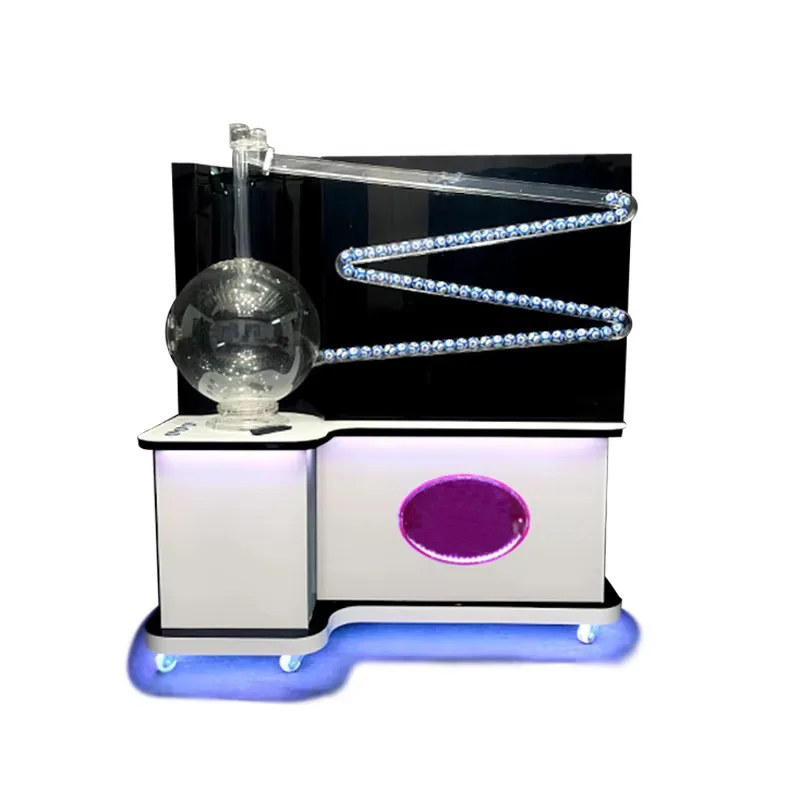
1P75 Bingo Ball Machine with Physical Result Track
Model: 1P75 Manual Calling
Category: Bingo Machines
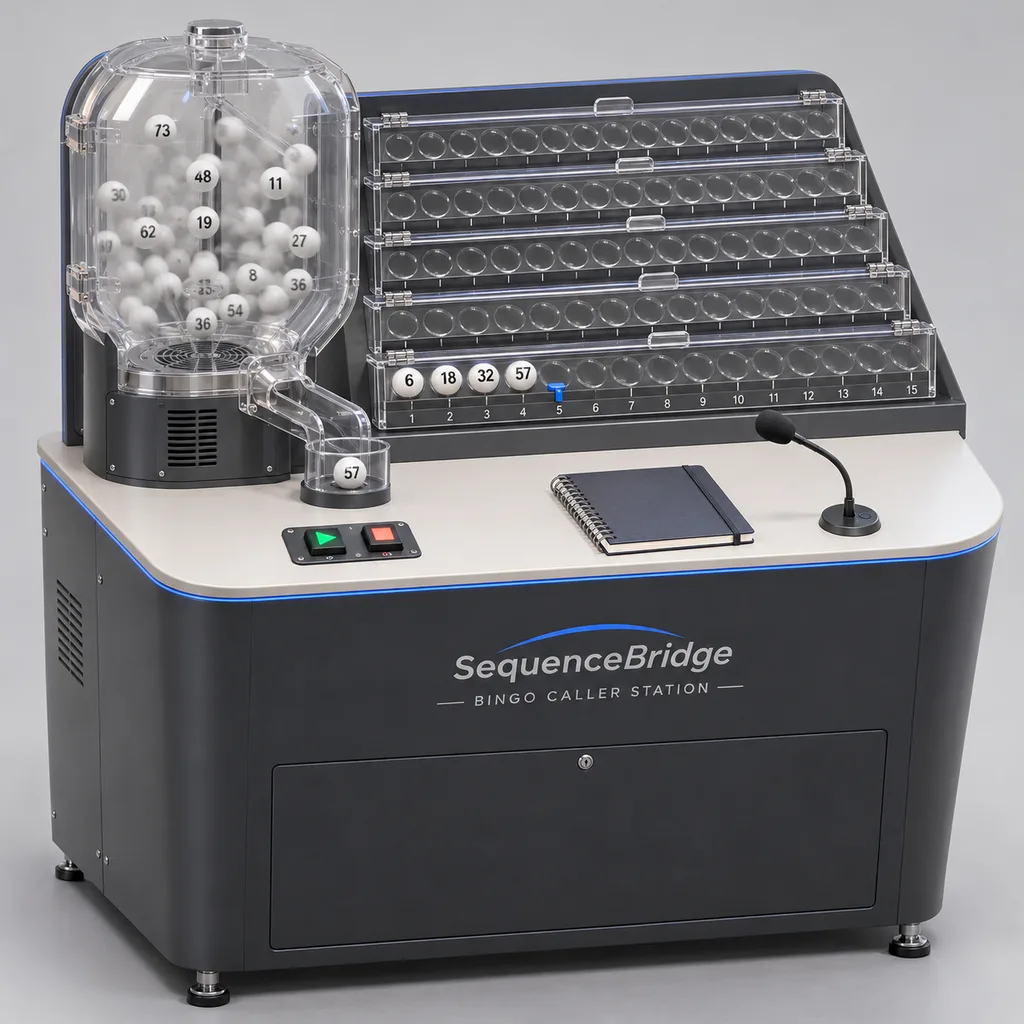
Concept design — fully customizable. Contact us to make it real.
Concept design — fully customizable. Contact us to make it real.
SequenceBridge is a proposed bingo caller station for a community club equipment buyer running recurring indoor 75-ball bingo evenings. It addresses one practical problem: during a disputed call or staff handover, a loose collection of drawn balls can make the calling sequence difficult to reconstruct. The design direction pairs visible air mixing with a physical result track divided into indexed lanes, so the caller can retain the actual numbered balls in their calling order.
Physical equipment gives the room a visible mixing chamber and keeps each drawn ball available for inspection. These are numbered bingo balls; the mechanism is designed around their diameter, material and movement, rather than paper raffle entries. The central feature is the sequence record beside the caller, with a desk surface for session notes and a microphone position.
The proposed cabinet has a transparent mixing chamber on the left and a shallow, stepped result bridge across the right side. A charcoal cabinet, warm white work surface and restrained blue edge lighting give it a professional club-hall appearance. Clear lane covers would keep the balls visible while separating the retained results from paperwork and the caller's hands. Cover hinges, access openings and viewing angles are custom design details.
In the proposed manual workflow, the blower mixes the balls and a controlled outlet presents one ball at a time for the caller to read. After announcing its number, the caller places that ball into the next indexed position. The lanes would carry position markers rather than number-matching sockets: they record when each ball was called. A movable next-position marker is a proposed aid for handovers. Lane slope, retention lips and pocket geometry must be developed around the selected balls so they remain accessible and do not obscure adjacent numbers.
A 75-ball layout is the initial design target. A 90-ball alternative would require a revised result-lane layout and matching chamber design; it is a separate configuration direction. Ball diameter is a buyer input. A proposed 40 mm version would require its own chamber, outlet and lane assessment, rather than inheriting another model's compatibility.
Before play, venue staff reconcile the numbered ball set, inspect number legibility, check that every result position is empty and place the next-position marker at the beginning. They also check the outlet and lane covers and keep the service access area clear. During play, the caller reads each presented ball, announces it and places it in sequence before advancing the marker. A handover follows the retained balls and the session notes together.
At the end of a game, staff complete any result checks before unloading the lanes. Proposed removable lane trays would let staff transfer balls to a counting surface, reconcile the complete set and then reload the chamber. Tray lifting points and covers must suit the agreed handling method. Closing the covers and returning the marker to its starting position completes the physical reset. Venue staff provide the calling and supervision.
Jisun's existing 1P75 Bingo Ball Machine with Physical Result Track uses air mixing, manual number calling and a long transparent track for physical ball viewing. Its listed configuration uses 40 mm balls, with ordered formats of 75, 80, 85 or 90 balls and a maximum reference set of 90 solid balls. That model is sufficient when the buyer needs a visible physical track and a conventional manual calling arrangement.
SequenceBridge instead proposes indexed, removable result lanes integrated with a caller workspace, specifically for reviewing call order and transferring retained balls during reset. The existing model illustrates the related equipment category; it does not establish that this proposed lane mechanism has been built or tested.
Engineering needs the ball count, diameter, material and numbering, the calling and dispute-review procedure, caller reach preferences, available installation space and access route. Buyers should also identify audience sightlines, desk equipment and destination electrical requirements. Manual calling is the starting direction. An electronic number display could be specified with operator entry; RFID reading would be a separate option requiring compatible tagged balls and a defined handling workflow.
The quotation would define the cabinet envelope, lane arrangement, supplied accessories, electrical specification and agreed acceptance checks. Proposed checks include complete-set reconciliation, single-ball presentation, lane visibility, retention and tray handling. Equipment price and shipping cost depend on the selected configuration, packing and destination. Production usually takes 7-15 working days after deposit and final specification confirmation. Shipping time is additional; the final schedule is confirmed in the quotation. Get a Quote to develop the configuration for your hall.
These photos and demonstrations show the existing models cited above. They do not show a completed version of this concept; each model keeps its own specifications.
Model: 1P75 Manual Calling