Concept / Customizable Design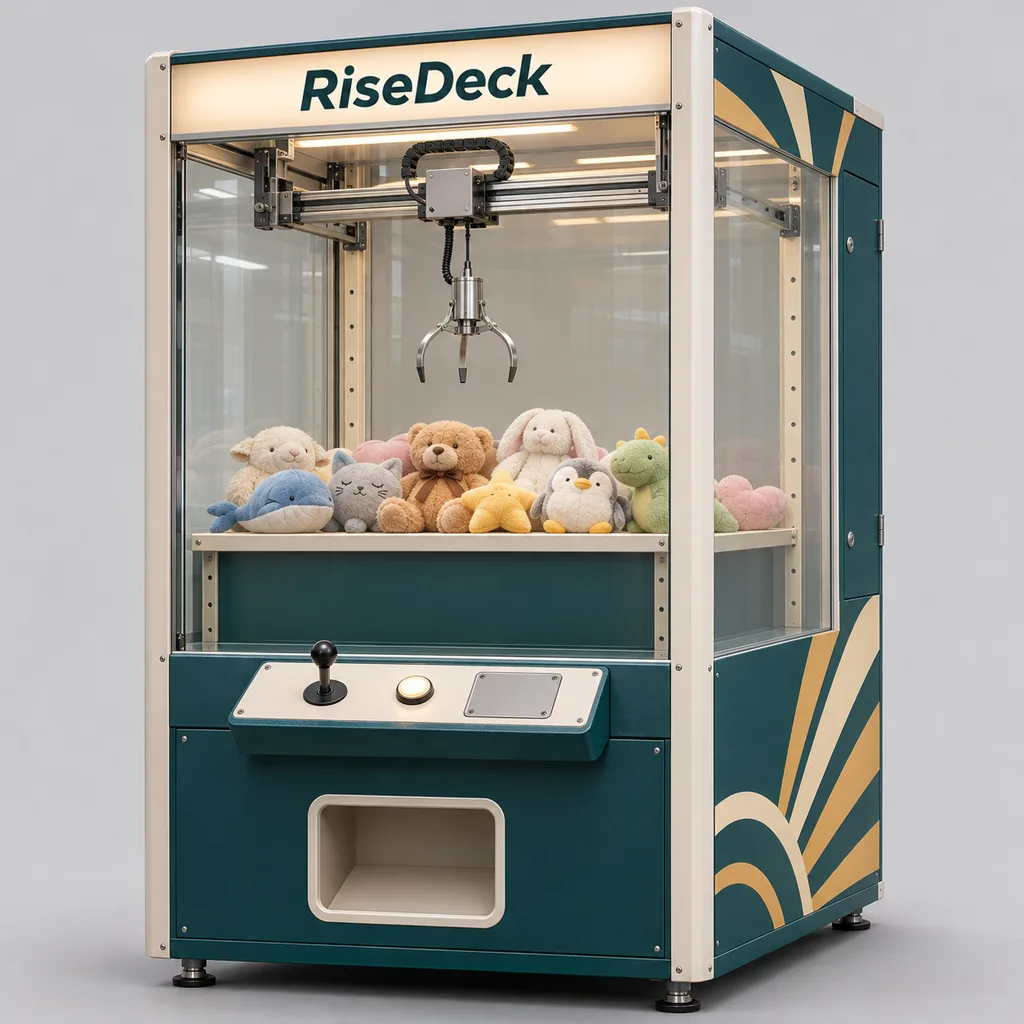
Category: Claw Machines
RiseDeck Claw Cabinet
Concept design — fully customizable. Contact us to make it real.
- ✓Proposed adjustable prize deck accommodates agreed seasonal plush assortments.
- ✓Matching claw descent settings coordinate crane travel with deck position.
- ✓Secured front infill panel closes the space below the raised deck.
- ✓Clear display and fixed collection chute keep the physical grab attempt visible.
- ✓Defined empty-cabinet reset workflow supports cinema staff changing prizes.
A commercial claw concept for changing cinema prizes
Concept design — fully customizable. Contact us to make it real.
RiseDeck Claw Cabinet is a proposed custom equipment design for a cinema operator running a permanent lobby prize corner. Its starting problem is specific: seasonal plush assortments change shape and bulk, while a fixed prize bed can leave smaller items buried or larger items crowded near the crane. Choosing a commercial claw machine therefore involves more than matching cabinet artwork to a venue. The prize bed, claw travel, retrieval opening and staff loading method must work together around the intended merchandise.
The proposed appearance combines a clear glass display, a powder-coated metal base and a narrow illuminated header. A teal lower cabinet, warm white lighting and replaceable illustrated side panels create a restrained cinema-lobby presentation. The defining feature is a manually adjustable internal prize deck, concealed beneath the merchandise. This physical equipment gives guests a visible joystick-controlled attempt to grasp a real plush prize, while giving staff a way to configure the display around an approved assortment.
A raised prize deck with coordinated claw travel
The custom mechanism would use a rigid false floor supported at selectable mounting positions inside the cabinet. Staff would change its height only with the game disabled and the prize compartment empty. Captive fasteners and a secured front infill panel are proposed to keep the deck in position and close the space beneath it. The usable adjustment range, deck loading and access arrangement remain engineering design decisions determined by the buyer's prizes and cabinet envelope.
Each approved deck position would need a corresponding claw descent limit. A proposed operator setup menu would identify the selected deck position; the final control method and any position sensing would be defined during engineering. This coordination matters because raising the floor without changing crane travel could cause contact with the deck. The design target is a consistent, manageable play area across agreed prize assortments, rather than a claim that every plush shape will perform alike.
During play, the guest uses a joystick to position the crane and a button to begin the grab cycle. The claw attempts to lift a prize and carries it toward a fixed collection chute. A successful grasp is required; this is a claw game rather than a vending mechanism that dispenses an item after every payment. Deck adjustment is a staff setup task and does not select a winning outcome.
Preparation, daily operation and seasonal reset
Before opening, venue staff would confirm the deck is secured, select its matching setup, inspect the claw cable and chute, and load the agreed plush assortment without obstructing crane movement. A supervised trial cycle would check clearance and retrieval before paid play begins. During operation, staff would redistribute crowded prizes, keep the collection opening clear and disable the machine if a prize becomes trapped.
A seasonal reset would involve disabling play, removing remaining prizes, changing the deck position if needed, securing the infill panel and applying the corresponding descent setup. Staff would then reload and repeat the clearance check. The concept is intended for an indoor location with space for players, collection and service-door movement. It does not assume that a cinema's busiest pedestrian route provides adequate operating clearance.
When an existing cabinet is sufficient
Jisun's existing Mini Claw Machine is designed for 10–15 cm prize items and offers a standard coin acceptor, with bill acceptance and Nayax card payment as options. It is a relevant starting point when the operator uses a consistent small-prize assortment and does not need a proposed adjustable deck. RiseDeck adds a coordinated deck-height and claw-travel setup for changing assortments. The existing model's specifications establish that comparison only; they do not establish RiseDeck dimensions, payment compatibility or operating performance.
Custom scope and quotation inputs
Custom options include deck positions, claw geometry, header artwork, cabinet colors, control-panel layout and a payment-reader mounting provision. Reader integration depends on the selected payment system, interface and destination market. Engineering needs prize dimensions, weight, compressibility and packaging, together with the intended loading depth, cabinet space, access route, local electrical supply and staff servicing preference. These inputs determine whether the proposed adjustment system is practical and what it should cost. Get a Quote with your prize assortment and installation plan.
Production usually takes 7-15 working days after deposit and final specification confirmation. Shipping time is additional; the final schedule is confirmed in the quotation.
What Should Be Confirmed Before Engineering?
Who This Concept Is For
- Cinema operators maintaining a permanent lobby claw-game corner
- Cinema-chain equipment teams planning seasonal plush assortments
- Arcade distributors specifying cinema lobby equipment
Configuration Directions
- Optional selectable deck positions, with adjustment range defined around the approved prizes
- Optional claw geometry matched to plush size, weight and compressibility
- Proposed matching descent presets, with position sensing considered during engineering
- Optional service-door and captive-fastener arrangements for deck access
- Optional payment-reader mounting and interface integration for a selected system
- Optional replaceable side artwork, header graphics and cabinet colors
- Optional control-panel layout suited to the intended player audience
Operator and Site Requirements
- Confirm an indoor installation area with player, collection and service-door clearance.
- Provide the destination electrical supply and connection requirements.
- Disable play and empty the prize compartment before adjusting the deck.
- Secure the deck and select its matching descent setup before reloading.
- Run a supervised clearance and retrieval check after each configuration change.
- Assign staff to redistribute prizes and respond to blocked retrieval openings.
Inputs We Need From the Buyer
- Prize dimensions, weight, shape, compressibility and packaging
- Expected seasonal assortments and intended loading depth
- Maximum cabinet envelope and delivery access dimensions
- Available player space and service-door clearance
- Preferred joystick, button and staff setup controls
- Selected payment system, interface requirements and destination market
- Local voltage, frequency and plug requirements
- Brand artwork and staff access preferences
Existing Equipment to Compare
These photos and demonstrations show the existing models cited above. They do not show a completed version of this concept; each model keeps its own specifications.
Customization Questions
- Can staff raise the RiseDeck floor while prizes remain inside?
- The proposed workflow requires staff to disable play and empty the compartment first. They would then adjust and secure the deck, fit the infill panel, select the matching descent setup and reload.
- Why does each RiseDeck position need a matching descent setup?
- Raising the floor reduces the clearance beneath the claw. A matching descent limit is needed to avoid the crane continuing toward the previous floor position. The control method and any position sensing remain engineering decisions.
- Does the raised deck make every paid attempt dispense a prize?
- No. Players position the claw and initiate a grab attempt. A prize must be successfully grasped and carried to the collection chute; the adjustable deck does not turn the machine into a guaranteed-dispense mechanism.
- When would the Mini Claw Machine be sufficient instead of RiseDeck?
- The existing Mini Claw Machine is a relevant starting point for a consistent assortment of 10–15 cm prizes. RiseDeck is intended for buyers whose changing assortments justify a custom deck adjustment system and coordinated claw-travel setup.