Concept / Customizable Design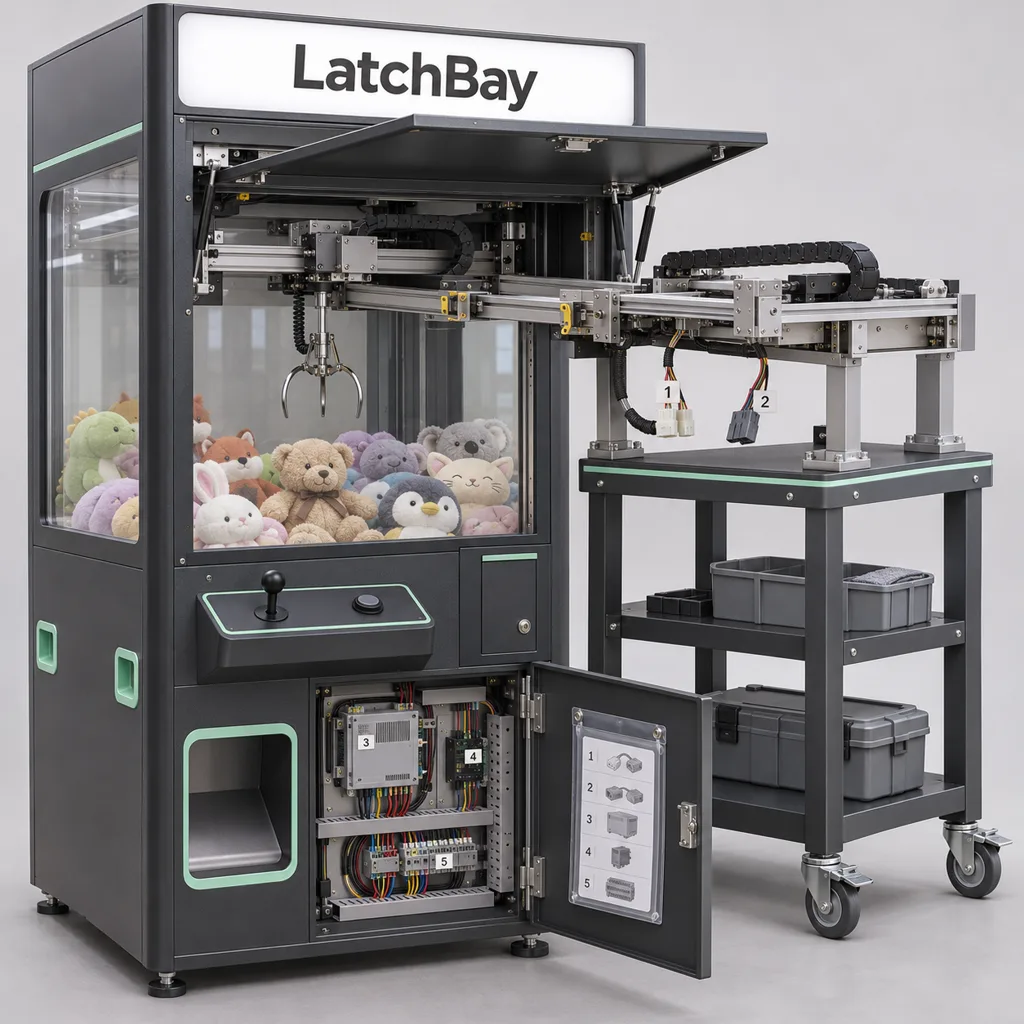
Category: Claw Machines
LatchBay Service Claw
Concept design — fully customizable. Contact us to make it real.
- ✓Proposed removable crane cassette accessed through a locked front upper opening.
- ✓Separate prize replenishment access keeps routine refills away from service assemblies.
- ✓Recessed lower service bay organizes identified connections and control components.
- ✓Conventional joystick claw play with a visible prize bed and enclosed delivery chute.
- ✓Proposed component diagrams and matched spare assemblies support planned technician visits.
A claw cabinet designed around the service visit
Concept design — fully customizable. Contact us to make it real.
LatchBay Service Claw is a proposed commercial claw machine for a regional arcade operator whose technicians maintain machines in shopping mall entertainment areas. Its starting problem is practical: investigating a worn claw cable or control fault can require awkward access behind a cabinet and leave loose components in a public aisle. This concept brings planned maintenance access to the front and gives replaceable assemblies clear identification. The service layout is a custom design direction, not an existing supplied configuration.
The proposed appearance combines a rectangular glass prize chamber with a charcoal metal frame, mint-colored service handles and a softly illuminated white topper. A recessed lower service door sits beneath the joystick panel. Inside that locked compartment, labeled mounting positions would organize the control assembly, connection points and a parts-reference card. The cabinet needs physical crane travel, a visible prize bed and an enclosed prize delivery path because the attraction is manipulating real plush prizes with a claw.
Conventional claw play with a proposed service cassette
Players use a joystick to position an overhead claw and a button to begin the grab cycle. The claw descends, closes, lifts and travels toward the prize chute. A successful grab delivers the prize through the enclosed outlet. This is a claw game: payment starts a play attempt rather than guaranteeing a dispensed item.
The distinctive proposed mechanism is a removable crane service cassette. During play, the cassette would be secured to locating features and mechanical retainers inside the upper cabinet. For maintenance, a technician would access it through a lockable front upper opening, disconnect identified connections and remove it using a supported handling procedure. Connector placement, cassette weight, lifting clearance and retention details require engineering development. It is not intended for removal while powered, and the concept does not promise tool-free replacement.
Custom options could include separately replaceable claw-and-cable assemblies, an accessible control mounting plate and connector labels matched to a component list. Mechanical location features would help establish the installation position, but a replacement would still require travel, homing and clearance checks before returning to play. The design target is a more orderly service task; no repair-time reduction has been measured.
How venue staff prepare, run and reset it
Before opening, staff would inspect the prize outlet, check for loose or damaged parts, distribute approved prizes and run a test game. Prize shape, mass and surface texture determine the proposed claw selection and settings. Staff would avoid packing prizes into crane travel space. During normal operation, players use the external controls while service doors remain locked.
If movement becomes abnormal, staff would take the machine out of service. A trained technician would isolate power before opening maintenance areas, identify the affected assembly and follow the agreed removal procedure. After refitting, the technician would check cable routing, retainers, unobstructed travel and prize delivery, then close the cabinet and complete functional checks. Routine prize replenishment would use a separate access opening so attendants do not need to handle the service cassette. Resetting after maintenance includes testing the mechanism; clearing a fault message alone is insufficient.
When an existing machine is sufficient
Jisun's Mini Claw Machine already provides conventional claw gameplay for 10–15 cm prize items, with a coin acceptor as standard and optional bill acceptor and Nayax card payment. It is a suitable starting point when a buyer needs a compact claw format and does not require the proposed removable crane layout. LatchBay adds a service-access architecture for operators planning recurring technician visits and identified replacement assemblies. The Mini model's specifications do not establish dimensions, electrical ratings or service performance for this concept.
Define the installation and support package
Jisun needs the venue's usable footprint, front maintenance clearance, delivery route, electrical supply and intended prize range before developing the cabinet. Proposed payment options include coin operation or a card-reader mounting position; reader choice, controller interface and local payment arrangements determine integration feasibility. Branding, lighting and service-door placement can be developed around the venue layout.
A proposed support package could pair an illustrated component list with connection diagrams, replacement instructions and a buyer-selected spare-parts kit. Parts availability, compatibility, documentation language and support scope would be defined in the quotation. Share the intended machine quantity, technician capability and preferred spare assemblies to shape that package. Production usually takes 7-15 working days after deposit and final specification confirmation. Shipping time is additional; the final schedule is confirmed in the quotation.
Get a Quote for a LatchBay configuration built around your prize range and maintenance workflow.
What Should Be Confirmed Before Engineering?
Who This Concept Is For
- Regional arcade operators maintaining claw machines in mall entertainment areas
- Mall arcade technical managers planning front-access maintenance
- Multi-location amusement equipment buyers developing a shared spare-parts plan
Configuration Directions
- Proposed removable crane cassette with retention and handling details developed for the selected mechanism
- Optional separately replaceable claw-and-cable assembly
- Front service-door arrangement adjusted to venue maintenance clearance
- Claw geometry and prize-bed layout developed around the intended prize assortment
- Coin operation or optional card-reader integration subject to interface compatibility
- Custom cabinet graphics, mint accent alternatives and topper lighting
- Optional illustrated parts list, connection diagrams and selected spare assemblies
Operator and Site Requirements
- Confirm sufficient front clearance for service access and supported cassette removal.
- Provide a suitable indoor installation position and electrical supply matching the final design.
- Assign trained technicians to isolate power and handle mechanism replacement.
- Complete homing, travel, cable-routing and prize-delivery checks after maintenance.
- Keep service doors locked during play and inspect the outlet before opening.
Inputs We Need From the Buyer
- Prize dimensions, mass range, shape and surface materials
- Usable cabinet footprint, height restrictions and front service clearance
- Delivery route dimensions and installation access
- Destination country, supply voltage, frequency and plug requirements
- Payment method, reader preference and required controller interface
- Expected operating pattern and replenishment workflow
- Technician capability, preferred spare assemblies and documentation language
- Intended quantity, branding artwork and required support scope
Existing Equipment to Compare
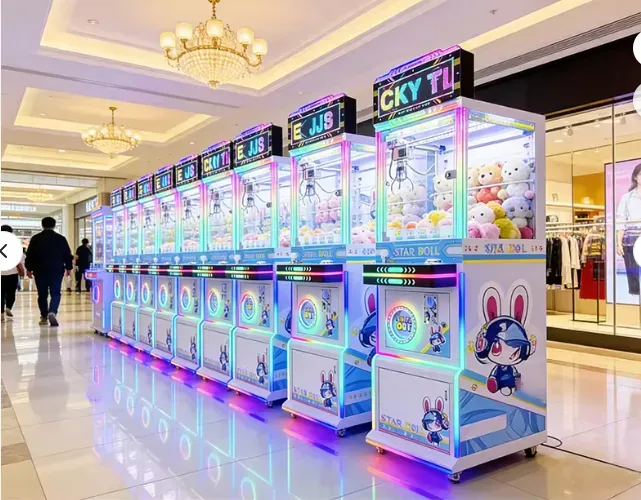
These photos and demonstrations show the existing models cited above. They do not show a completed version of this concept; each model keeps its own specifications.
Customization Questions
- Can attendants remove the LatchBay crane cassette during a prize refill?
- Prize replenishment would use a separate opening. Cassette removal is a maintenance task for a trained technician after power isolation, using the agreed supported handling procedure.
- Does fitting a replacement cassette immediately return LatchBay to play?
- The technician must first check retainers, cable routing, homing, unobstructed travel and prize delivery. Closing the cabinet and completing functional checks are part of the return-to-play workflow.
- What space does the front service layout need?
- Jisun needs the available front clearance and delivery route dimensions. The upper opening must allow supported cassette removal, and the lower service door must open without obstructing the planned work area.
- How would LatchBay replacement parts be identified?
- The proposed layout uses identified connections and mounting positions. An optional illustrated component list, connection diagrams and buyer-selected spare assemblies would be defined with the support package.