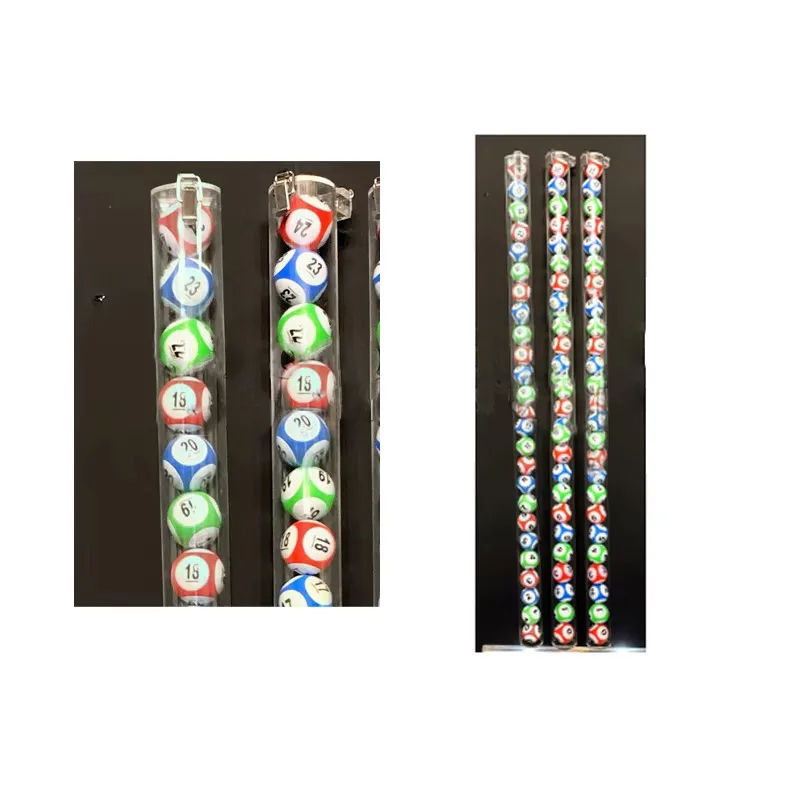
25-Ball Acrylic Lottery Ball Display and Storage Tube
Model: 25-Ball Acrylic Tube
Category: Lottery Balls and Accessories
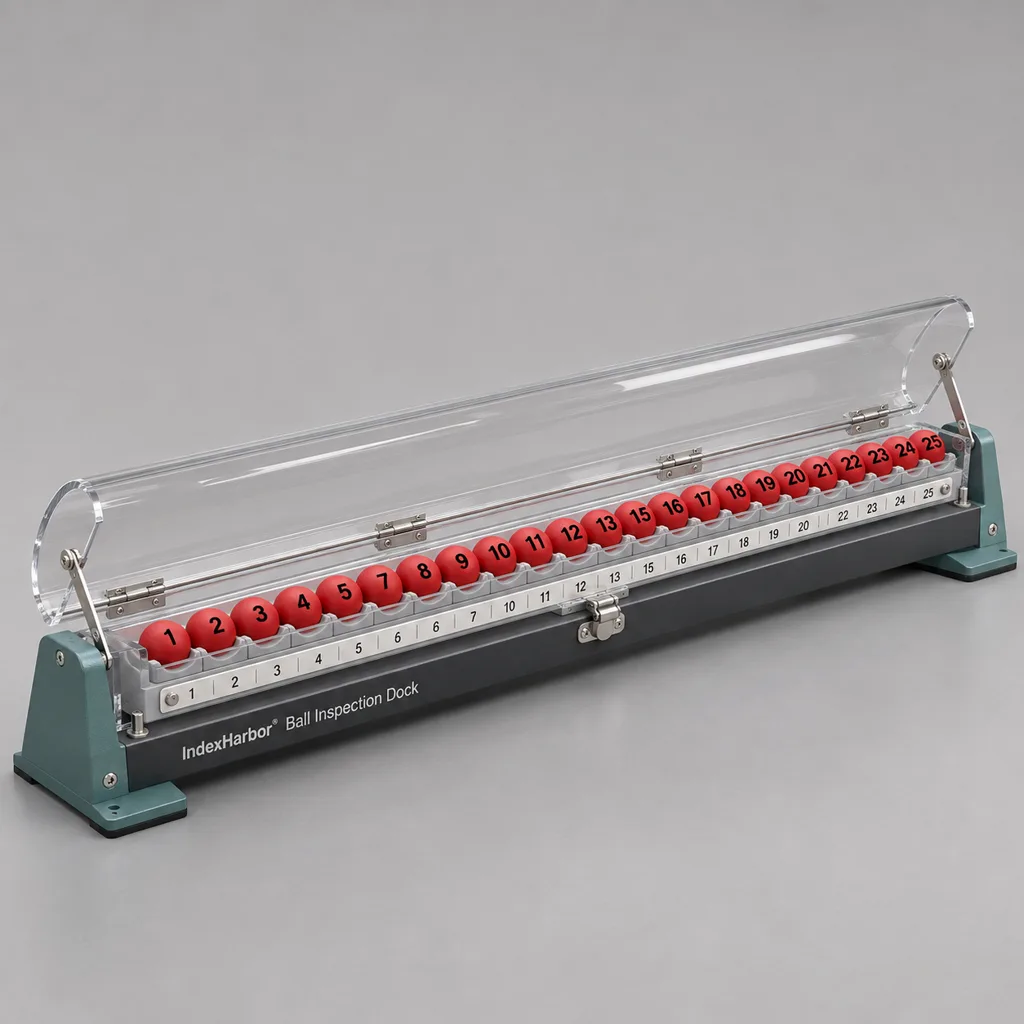
Concept design — fully customizable. Contact us to make it real.
The IndexHarbor Ball Inspection Dock is a proposed tabletop accessory for a bingo hall equipment manager preparing numbered balls before an evening session. It addresses one practical problem: checking a tube of balls without tipping the entire contents onto a counter, where balls can roll away or become mixed with another set. Physical numbered balls need a physical holding and inspection system; a stock list alone cannot expose a damaged surface, a mismatched ball or a missing position.
The proposed appearance combines a long transparent acrylic cassette with a low, charcoal-colored docking base and contrasting end supports. A target layout of 25 individual ball positions follows the familiar storage-tube format, but introduces a different access mechanism. Instead of emptying balls through an end cap, staff place the cassette horizontally in the dock and open a longitudinal clear cover. A lower carrier with shallow individual saddles holds the balls apart while their numbers and surfaces are inspected.
The 25-position layout is a design target for this concept, not a validated capacity. Cassette length, internal clearance, saddle shape and cover movement would be developed around the specified ball diameter and the counter space available. Proposed mechanical details include locating feet, a manual cover latch and a cover-opening stop. The dock would support the cassette during inspection; staff would close and latch it before lifting it away.
Before a session, the operator seats the closed cassette in the dock, checks its set identification label, then opens the cover. A removable reference strip beside the saddles shows the intended number sequence. Staff compare each occupied position with that strip and gently turn each ball by hand to inspect the printing and accessible surface. Occupied saddles help staff see gaps, but occupancy alone does not establish that every required number is present.
After checking, staff transfer the balls manually into a separate, compatible draw machine using the venue's loading procedure. Empty saddles make the transfer progress visible. This accessory neither mixes nor selects a winning ball and has no remote outcome control. It is intended for numbered physical balls; its separated saddles are not designed to collect or mix folded paper raffle tickets.
After the session, staff return balls to their assigned positions, reconcile the sequence against the reference strip, close the cover and move the cassette to its storage location. Any suspect ball should be kept separately from the active set pending the venue's replacement decision. A proposed removable carrier would allow access to the cassette interior for care, with materials and cleaning methods specified for the selected construction.
Jisun's existing 25-Ball Acrylic Lottery Ball Display and Storage Tube uses transparent acrylic, caps at both ends and a reference capacity of 25 balls for the matched ball size. Its diameter and length are matched to the ordered balls, and balls are specified separately. That existing model is sufficient when staff primarily need compact storage, transport and visual checks through a closed tube.
IndexHarbor proposes a side-opening cassette and dock for venues that repeatedly handle individual balls during inspection. The separated carrier provides access without releasing the whole row. That additional mechanism also requires more counter space and more parts to clean than a simple capped tube. The existing tube's specifications describe that model only; they do not establish the proposed dock's capacity or performance.
Custom options could include alternative saddle spacing, removable number strips, separate cassettes for different sets, contrasting carrier colors and venue identification plates. A 40 mm ball layout is one possible design direction, subject to matching the actual balls. Storage fit would not establish compatibility with a draw machine: the machine, outlet and any recognition arrangement must be considered separately.
Jisun needs the full set count, ball diameter and material, numbering scheme, inspection and loading workflow, available counter dimensions, and storage conditions. Buyers should also confirm whether manual handling is suitable, how the cover may open, and whether the dock stays on the counter or moves between rooms. The proposed manual configuration needs no electrical controls; any requested sensing or electronic logging would require a separate controls and installation brief.
Production usually takes 7-15 working days after deposit and final specification confirmation. Shipping time is additional; the final schedule is confirmed in the quotation.
Customize the cassette around your ball set, or Get a Quote with your inspection workflow and workspace dimensions.
These photos and demonstrations show the existing models cited above. They do not show a completed version of this concept; each model keeps its own specifications.
Model: 25-Ball Acrylic Tube