Concept / Customizable Design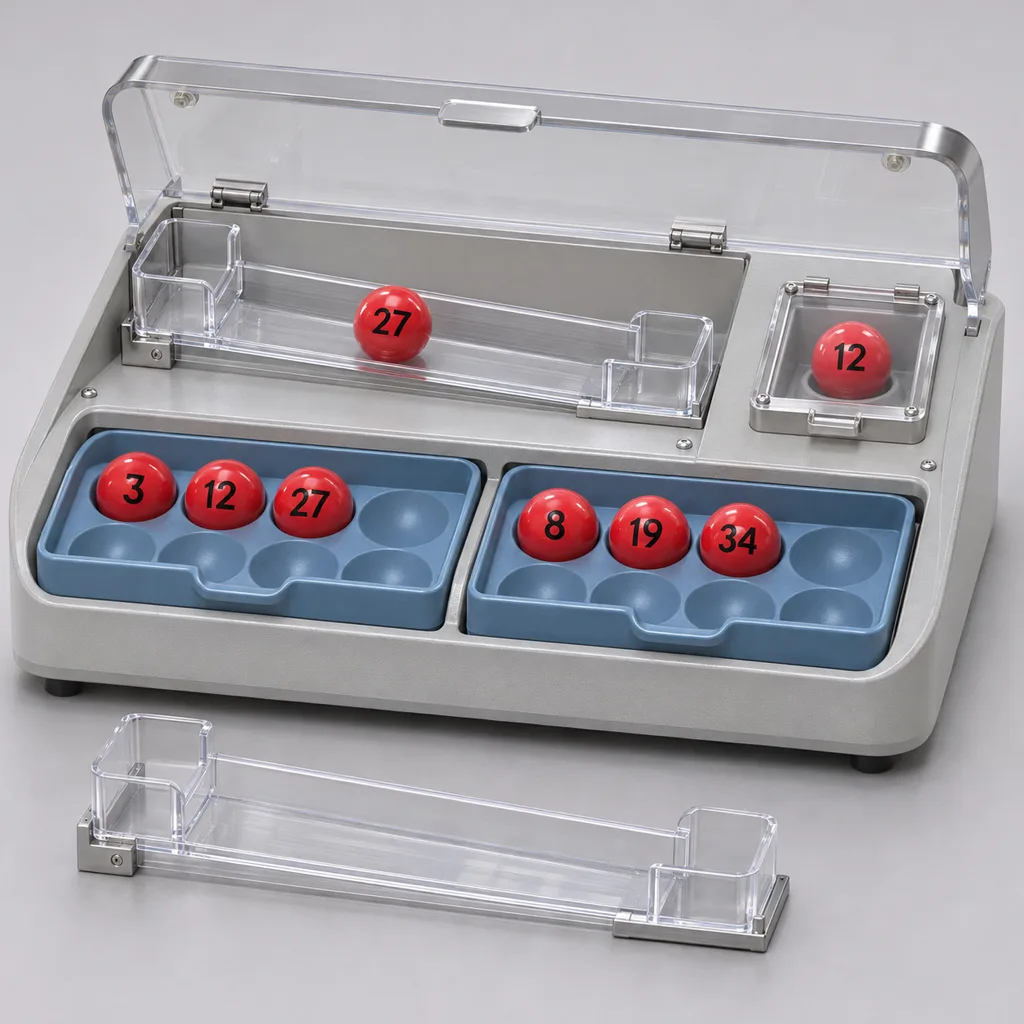
Category: Lottery Balls and Accessories
FitPath Ball Matching Bench
Concept design — fully customizable. Contact us to make it real.
- ✓Interchangeable comparison lane proposed around the intended machine's ball route
- ✓Separate reference pocket and candidate return tray help prevent set mixing
- ✓Covered viewing section supports observation of individual manual releases
- ✓Removable inserts and trays support reset between machine configurations
- ✓Countertop layout suited to venue equipment rooms and maintenance benches
A replacement-ball workspace for draw equipment teams
Concept design — fully customizable. Contact us to make it real.
The FitPath Ball Matching Bench is a proposed accessory workstation for an equipment manager preparing replacement numbered balls for a venue's existing lottery draw machine. Its central problem is practical: balls that look similar can belong to different machine configurations, and a loose sample on a desk provides little help with checking the intended outlet path or keeping candidate sets separate. FitPath would combine a retained reference sample, an interchangeable mechanical comparison lane and divided candidate storage in one physical workspace.
The proposed appearance is a low countertop cabinet with a pale gray base, transparent viewing covers and contrasting blue removable trays. A recessed reference pocket would sit beside the comparison lane, while a separate return tray would receive candidate balls. Physical equipment is useful here because staff need to handle actual balls and observe their movement through representative geometry. A photograph or printed diameter alone cannot show that interaction.
A configurable path for comparing replacement candidates
As a custom design option, a removable lane insert would reproduce agreed features of the intended ball route, such as a guide channel, transition or outlet opening. Staff would place one candidate ball at the entry and release it manually through a covered viewing section into a catch pocket. Interchangeable inserts could support different machine configurations, provided Jisun receives the relevant geometry and operating information. This is a proposed comparison mechanism; its behavior would not establish performance inside a powered draw chamber.
The bench would help staff compare visible clearance, surface condition and handling behavior against a retained reference. It would not establish material equivalence, mass distribution, recognition compatibility or draw fairness. Those questions depend on the intended machine and the agreed evaluation scope. Numbered balls remain numbered draw media: this concept neither draws paper tickets nor dispenses capsules, and the reference pocket has no connection to selecting a winning outcome.
Prepare, compare and reset without mixing sets
Before a session, the operator would identify the machine, fit its designated lane insert and place a reference ball in the separate reference pocket. Staff would check the candidate set against the required number list, keep different sets in separate trays and record which candidate is being compared. The reference should have a documented relationship to the machine; a retained sample is a comparison aid, not proof that its present condition remains suitable.
During use, staff would release candidates individually, observe their passage and move each one to a clearly identified return compartment. A ball that hesitates would be removed for investigation rather than pushed through. Afterward, staff would reconcile the numbered set, empty the lane and catch pocket, remove debris and return the insert to its labelled storage position. Balls should be dry before enclosed storage, with cleaning methods chosen for the actual ball material and printing. Transparent acrylic surfaces would need a damp soft cloth and protection from sharp tools.
When existing storage equipment is sufficient
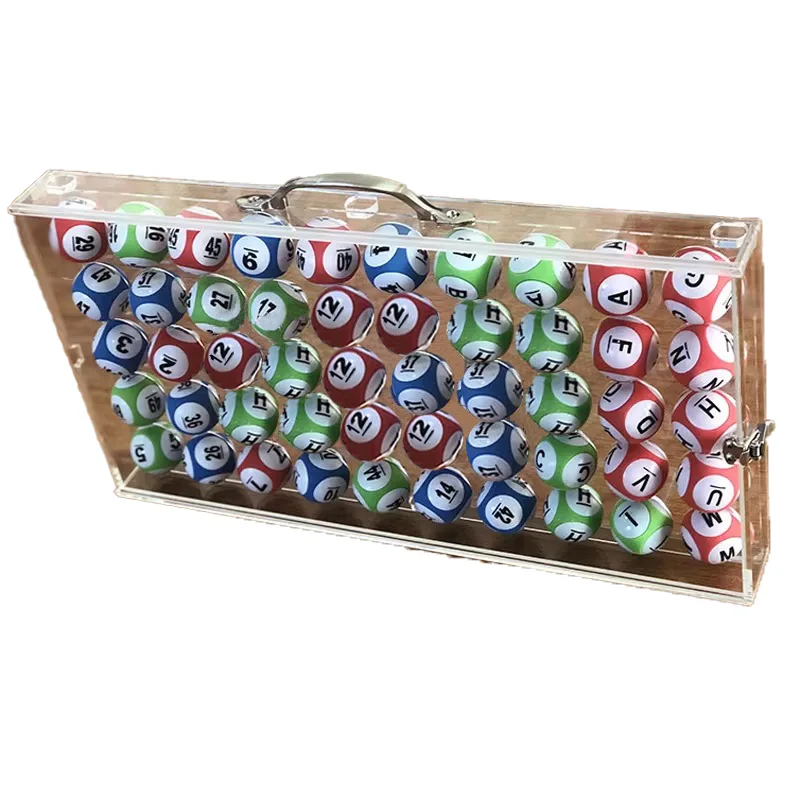
Jisun's Acrylic Lottery Ball Storage Case for 50 or 100 Balls provides transparent acrylic storage with fixed positions for numbered balls. That existing model is sufficient when the task is counting, storing and transporting an already matched set. FitPath adds a proposed replaceable comparison path and physical separation between reference and candidate balls; the existing case does not establish that this new mechanism has been built.
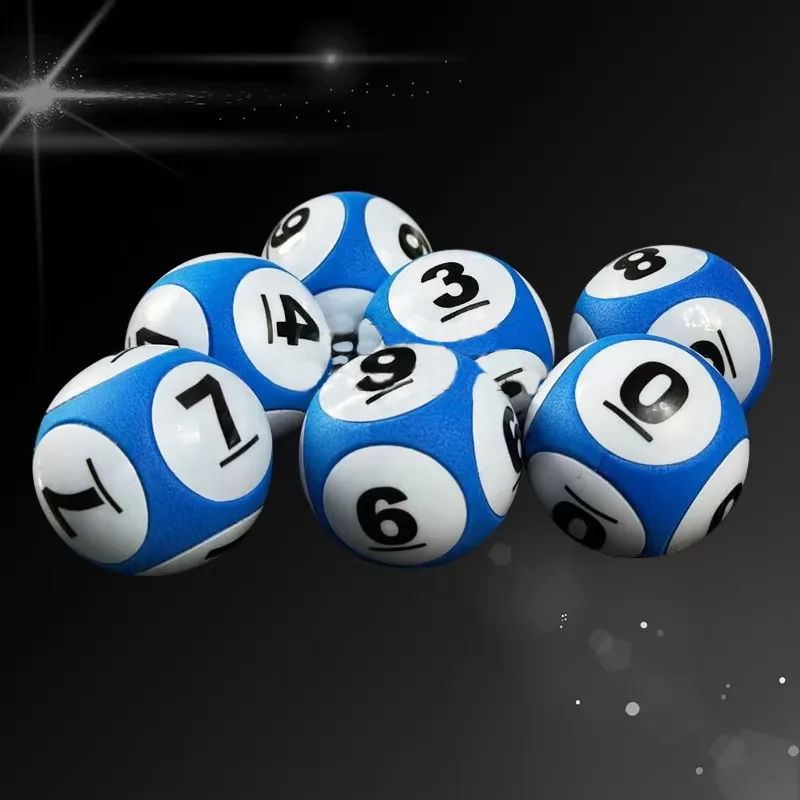
Jisun's existing 40 mm Numbered EVA Lottery Balls for Matched Draw Machines use solid EVA, with numbers printed on six sides. Their compatibility must match the machine, outlet and recognition configuration. A FitPath insert intended for those balls would therefore require the intended machine details rather than assuming that diameter alone determines suitability.
Define the bench around your replacement workflow
Custom options include interchangeable comparison inserts, removable candidate trays, a covered reference pocket, machine identification plates and a manually completed comparison record holder. Bench dimensions, tray capacity, insert geometry and cover access would be design targets set around the buyer's ball count, ball diameter, available counter space and handling workflow. The proposed manual configuration requires no electrical connection; any requested sensing or powered movement would need separate engineering.
For a quotation, provide the machine model, ball material and diameter, numbering range, replacement quantity, relevant route dimensions, recognition method and installation space. Explain how balls are loaded, drawn and returned so Jisun can define the useful comparison scope. Production usually takes 7-15 working days after deposit and final specification confirmation. Shipping time is additional; the final schedule is confirmed in the quotation. Get a Quote to define your custom configuration.
What Should Be Confirmed Before Engineering?
Who This Concept Is For
- Venue equipment managers preparing replacement sets for existing numbered-ball draw machines
- Draw equipment distributors comparing replacement candidates for customer machines
- Multi-venue maintenance teams managing several machine and ball configurations
Configuration Directions
- Custom lane inserts representing agreed guide, transition or outlet geometry
- Optional covered reference pocket with machine identification plate
- Removable candidate trays sized around the required ball count and diameter
- Optional divided return compartments for separating candidate sets
- Custom countertop footprint and cover access arrangement
- Optional holder for manually completed comparison records
Operator and Site Requirements
- Confirm a stable counter and sufficient clearance to open covers and remove trays
- Associate each insert and reference sample with its intended machine
- Keep candidate sets separated and reconcile their numbered contents after use
- Remove hesitant balls for investigation without forcing them through the lane
- Use cleaning methods appropriate to the ball material, printing and acrylic surfaces
Inputs We Need From the Buyer
- Intended draw machine model and configuration
- Ball diameter, material and available dimensional information
- Numbering range and replacement quantity
- Relevant ball route and outlet geometry
- Recognition method, if fitted to the intended machine
- Loading, drawing and return workflow
- Available counter space and access constraints
- Required comparison scope and record format
Existing Equipment to Compare
These photos and demonstrations show the existing models cited above. They do not show a completed version of this concept; each model keeps its own specifications.
40 mm Numbered EVA Lottery Balls for Matched Draw Machines
Model: 40 mm EVA Lottery Balls
Customization Questions
- What would a FitPath comparison insert represent?
- A custom insert would represent agreed features of the intended machine's ball route, such as a guide channel, transition or outlet opening. Jisun needs the relevant geometry and workflow to define it.
- Does passing through the FitPath lane establish machine compatibility?
- It provides an observation of passage through the agreed comparison geometry. It does not establish powered chamber behavior, material equivalence, mass distribution, recognition compatibility or draw fairness.
- How would staff change FitPath between two machine configurations?
- Staff would reconcile and remove the first set, empty the lane and catch pocket, remove debris, then fit the next machine's designated insert and reference sample. Candidate sets would remain in separate trays.
- When would the existing acrylic storage case cover the same team's needs?
- The existing case is sufficient for counting, storing and transporting an already matched set. FitPath is proposed for teams that also need a configurable physical comparison path for replacement candidates.