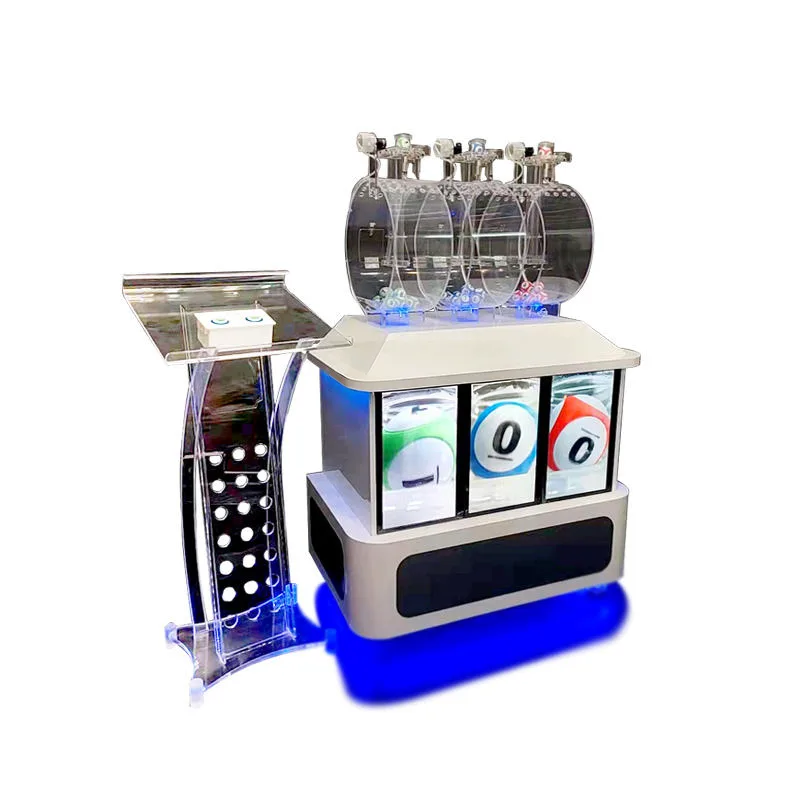
Concept / Customizable Design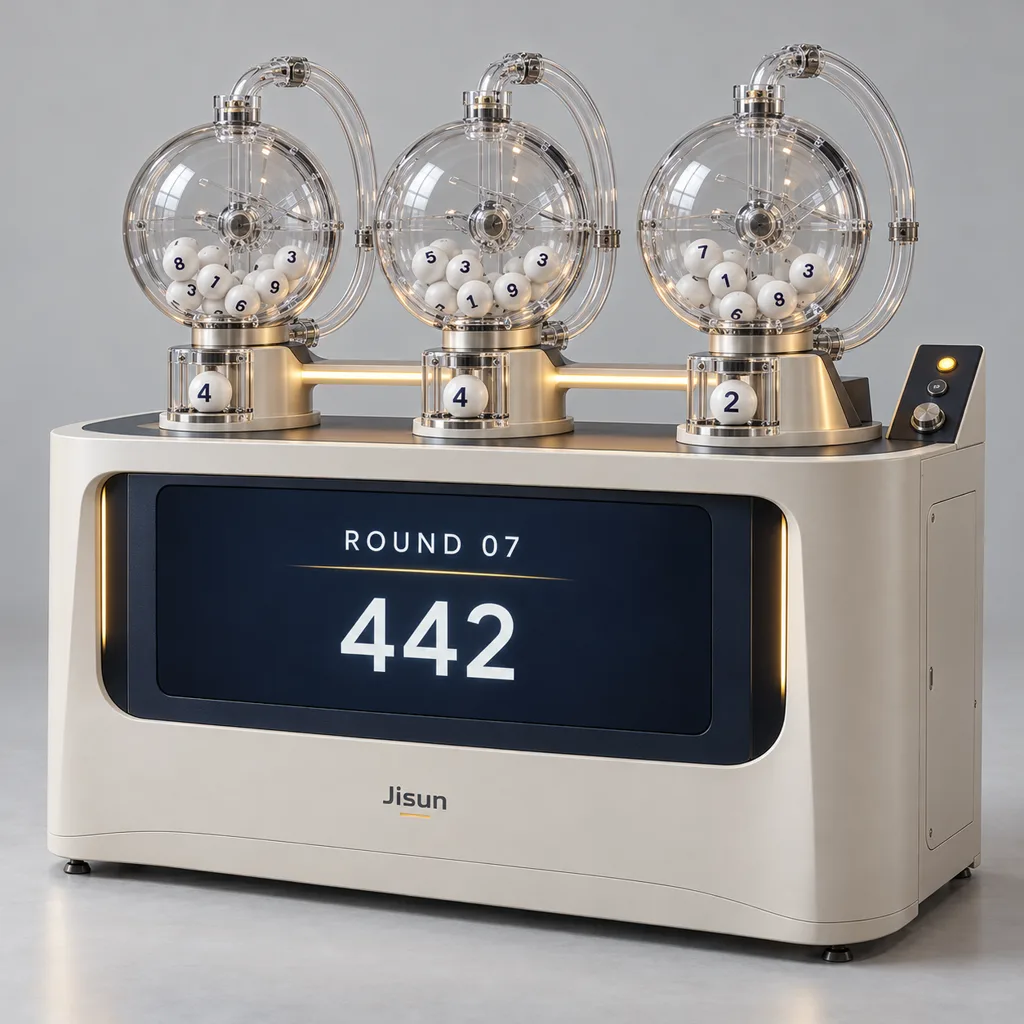
Category: Lottery Ball & Draw Machines
DigitBridge Repeat Draw Station
Concept design — fully customizable. Contact us to make it real.
- ✓Three proposed independent digit chambers allow repeated digits within a result.
- ✓Separate transparent return routes keep each ball set in its own position.
- ✓Previous-round results remain visible while physical balls return.
- ✓Operator confirmation separates result publication, ball return and next-round preparation.
- ✓Clear ball holders align with the combined front result screen.
- ✓Manual reading or matched RFID capture can be specified around the same physical workflow.
A repeat-draw station for a company annual dinner
Concept design — fully customizable. Contact us to make it real.
The DigitBridge Repeat Draw Station is Jisun's proposed lottery draw machine for a corporate events department running successive three-digit prize rounds at its annual dinner. The operating problem is keeping the previous result visible while staff return the physical balls and prepare the next round. A screen cleared too early can leave the presenter announcing one result while the equipment appears ready for another. This concept separates the physical reset from the audience result display, with an explicit operator step between rounds.
The proposed appearance is a low, gently curved floor cabinet with three transparent air-mix chambers across its top. A narrow illuminated bridge connects the chamber supports visually, while three clear selected-ball holders sit directly beneath their corresponding chambers. A wide front screen presents the combined result with a round identifier. Matte ivory panels, dark blue trim and restrained amber status lighting give the equipment a stage presence without competing with the visible numbered balls. Cabinet proportions and service access would be developed around the venue's space and handling route.
Independent digit positions with visible return paths
The example custom configuration uses three separate sets of ten balls numbered 0–9, with a proposed ball diameter of 40 mm. Each chamber supplies one digit position, allowing combinations with repeated digits, such as 4-4-2. This is an independent-position draw, rather than selecting three different numbers from one common pool. Buyers requiring common-pool selection need a different ball-retention and replacement workflow. The DigitBridge mechanism is intended for numbered balls, rather than paper-ticket raffle contents.
Air mixing would circulate each ball set before a selection mechanism presents one ball in its clear holder. The proposed distinguishing feature is a separate transparent return route for each position, paired with a display state that retains the completed round after the balls return. Balls would return only to their original chambers. Return gates, ball-presence sensing and control sequencing are custom engineering directions; their geometry depends on ball material, diameter and the agreed draw sequence.
Manual reading is the proposed starting configuration: staff read the visible balls and enter the digits for the audience display. Matched RFID balls and readers are a custom alternative for capturing those physical results. An unread or conflicting reading would keep the round pending for operator resolution. RFID identifies a selected ball; it does not select the winning outcome. A remote start/stop console could be specified for stage positioning, with the same distinction between controlling the sequence and determining its result.
Prepare, draw, retain and reset
Before the event, staff would count and inspect each numbered set, load the corresponding chamber, confirm digit order and rehearse the agreed mixing and presentation sequence. The buyer would also define how leading zeros, repeated combinations and interrupted rounds are handled.
During a round, the operator starts mixing and initiates selection in the agreed sequential or simultaneous mode. Staff read and confirm the held balls before releasing the result to the audience screen. After announcement and recording, a return command sends each ball back through its own clear route. The screen continues showing the completed result, labelled with its round identifier. Staff then check that all holders are empty and the ball sets are restored before choosing the next-round command. The proposed screen changes to a clearly labelled preparation state before another draw begins.
The venue supplies its own operating staff, a stable installation surface, suitable electrical service and clearance for loading, cleaning and maintenance. Final mixing duration, return timing, electrical load and cabinet dimensions would be specified for the agreed configuration.
When existing equipment is sufficient
Jisun's 3D-V1 Pick 3 Lottery Machine with Control Console already documents three air-mix cylinders, ten balls numbered 0–9 per cylinder, independent or simultaneous draws, adjustable mixing duration and return without manual handling. That existing model is sufficient when a buyer needs a conventional Pick 3 arrangement with a separate console. DigitBridge proposes a different round-management workflow: individually visible return paths, a retained previous-round display and a deliberate transition into the next round. Those proposed additions are not specifications of the 3D-V1.
Define your custom configuration
For a quotation, tell Jisun the required digit positions, ball count and diameter per position, ball material, replacement rules, reading method and desired draw sequence. Provide the available footprint, access-route dimensions, audience viewing distance, operator location, destination voltage and frequency, and any screen or data interface requirements. Logo panels and screen layouts can then be developed around the round workflow. Production usually takes 7-15 working days after deposit and final specification confirmation. Shipping time is additional; the final schedule is confirmed in the quotation.
Customize the DigitBridge Repeat Draw Station with Jisun. Get a Quote for your ball sets, venue layout and operating sequence.
What Should Be Confirmed Before Engineering?
Who This Concept Is For
- Corporate events departments equipping an annual dinner stage for successive three-digit prize rounds.
- Company venue teams retaining draw equipment for recurring internal celebrations.
Configuration Directions
- Proposed three-position layout, with position count adjustable to the buyer's digit format.
- Example ball sets of ten numbered 0–9 balls per chamber; diameter and material specified together.
- Custom separate transparent return routes with gate and presence-sensing arrangements.
- Manual digit entry or matched RFID ball-reading configuration.
- Sequential or simultaneous selection with agreed mixing and presentation timing.
- Custom front screen with round identifier, retained result and preparation states.
- Optional remote start/stop console positioned to suit the stage layout.
- Custom cabinet proportions, logo panel, colors and service-access arrangement.
Operator and Site Requirements
- Venue staff must inventory and inspect each ball set before loading its assigned chamber.
- Staff must confirm the held physical results before publishing the combined number.
- Operators must check empty holders and restored ball sets before preparing another round.
- The venue must confirm a stable installation surface and loading, cleaning and service clearances.
- Electrical service and console cable routes must suit the final configuration.
Inputs We Need From the Buyer
- Digit positions, numbering range and ball count for each position.
- Ball diameter, material and preference for manual or RFID reading.
- Rules for ball replacement, leading zeros, repeated combinations and interrupted rounds.
- Sequential or simultaneous draw workflow and desired round cadence.
- Available footprint, access-route dimensions and service clearances.
- Audience viewing distance, operator position and screen content requirements.
- Destination voltage, frequency and plug requirements.
- Logo artwork and any external display or data interface requirements.
Existing Equipment to Compare
These photos and demonstrations show the existing models cited above. They do not show a completed version of this concept; each model keeps its own specifications.
Customization Questions
- What stays on the DigitBridge screen while the balls return?
- The proposed screen retains the completed result and its round identifier. After staff check the returned ball sets and empty holders, the next-round command changes the display to a labelled preparation state.
- Can DigitBridge produce a result such as 4-4-2?
- Yes, in the example custom configuration each independent chamber contains its own 0–9 set. Each position can therefore produce the same digit. This differs from selecting distinct numbered balls from one common pool.
- Why does each DigitBridge position have its own return route?
- The proposed separate clear routes return selected balls to their original chambers and let staff observe the return. Gate geometry and sensing depend on the specified ball diameter, material and sequence.
- How would manual reading differ from the RFID option on DigitBridge?
- With manual reading, staff read the visible held balls and enter the digits. The custom RFID alternative uses matched balls and readers to capture those results, keeping unread or conflicting readings pending for operator resolution.