Concept / Customizable Design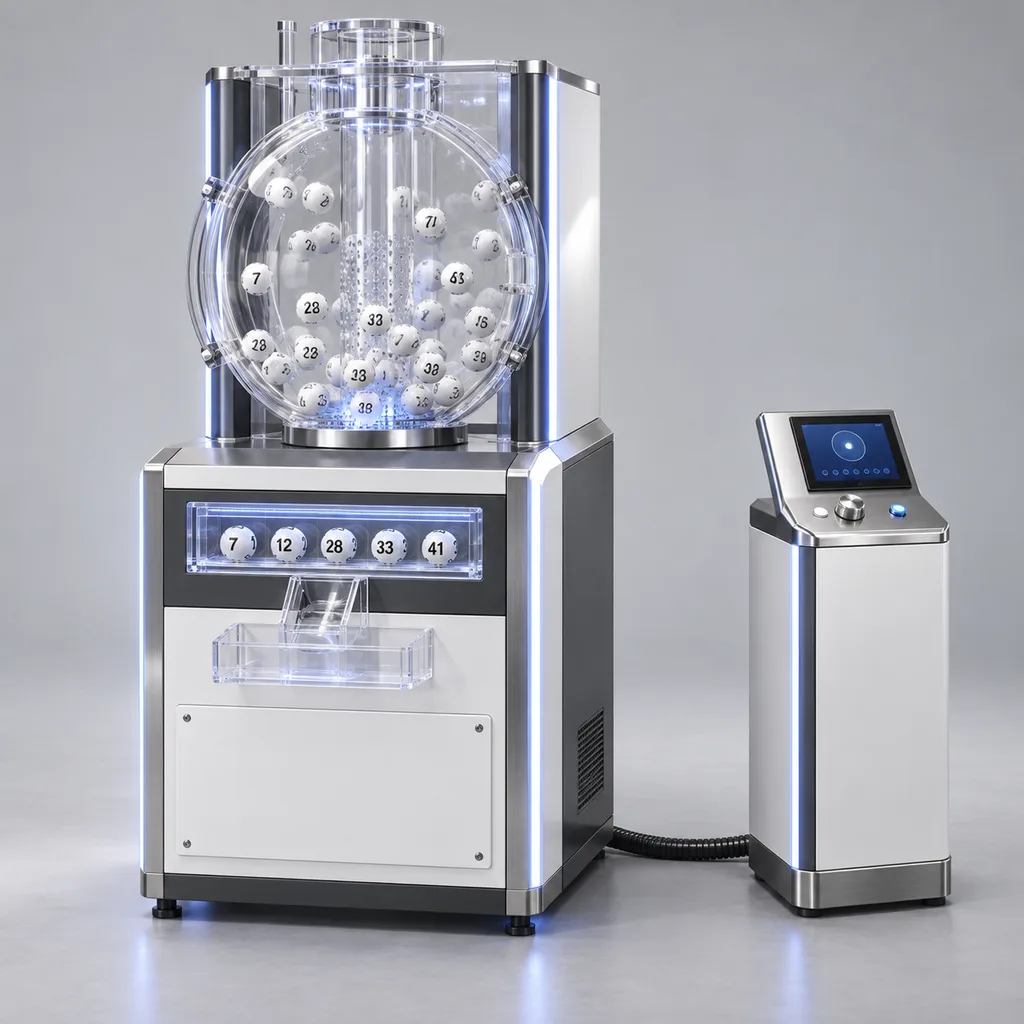
Category: Lottery Ball & Draw Machines
ClearLine Lottery Draw Concept with Retained Results
Concept design — fully customizable. Contact us to make it real.
- ✓Retained result lane proposed for round-by-round visual reconciliation
- ✓Separate console direction for a host-led draw with an unobstructed front view
- ✓Ball-removal and full-lane behavior defined as acceptance questions
- ✓Compare RFID/LCD display with physical ball retention before commissioning
Concept design — fully customizable. Contact us to make it real. The illustration shows a proposed arrangement, not a completed machine or an approved engineering drawing.
When should drawn balls stay visible until a round closes?
ClearLine addresses a draw in which several selected balls must remain visible in their original order while a host announces or verifies the results. Its concept illustration shows a separate console and a horizontal front result window. The buying decision is whether that retained display is necessary, rather than returning every selected ball immediately. Keeping results visible can simplify a host’s comparison with an independently written record, but visibility alone does not establish randomness, security or official approval. The number of balls sketched in the image does not set the permitted working pool or a guaranteed tray capacity.
How would the round differ from an automatic-return sequence?
For a proposed without-replacement round, prepare and count the approved ball set, load the mixing chamber, and inspect an empty result lane before starting. Each selected ball would move to a separate retained position and stay outside the active pool until the round is closed. The operator would announce or record its position before requesting the next result. At the end, staff would reconcile the retained balls with the record and return the full set under the agreed procedure. This sequence is a design requirement, not a claim that the illustrated mechanism already performs it. If repeats are allowed after each selection, a return path may be more appropriate.
What must the result lane prevent or make visible?
Ask the design review to address a ball rolling backward, two balls arriving together, an unreadable number and a full lane before the round ends. Assign a visible position to each accepted result and define how staff can stop the sequence before a jam affects another selection. Access for clearing the lane should be part of the operating plan, including how an interrupted result is recorded. A retained mechanical ball and an electronic result record are different things: this concept does not include RFID, a data API or stored video unless those interfaces are separately specified.
Which existing model helps evaluate a physical result display?
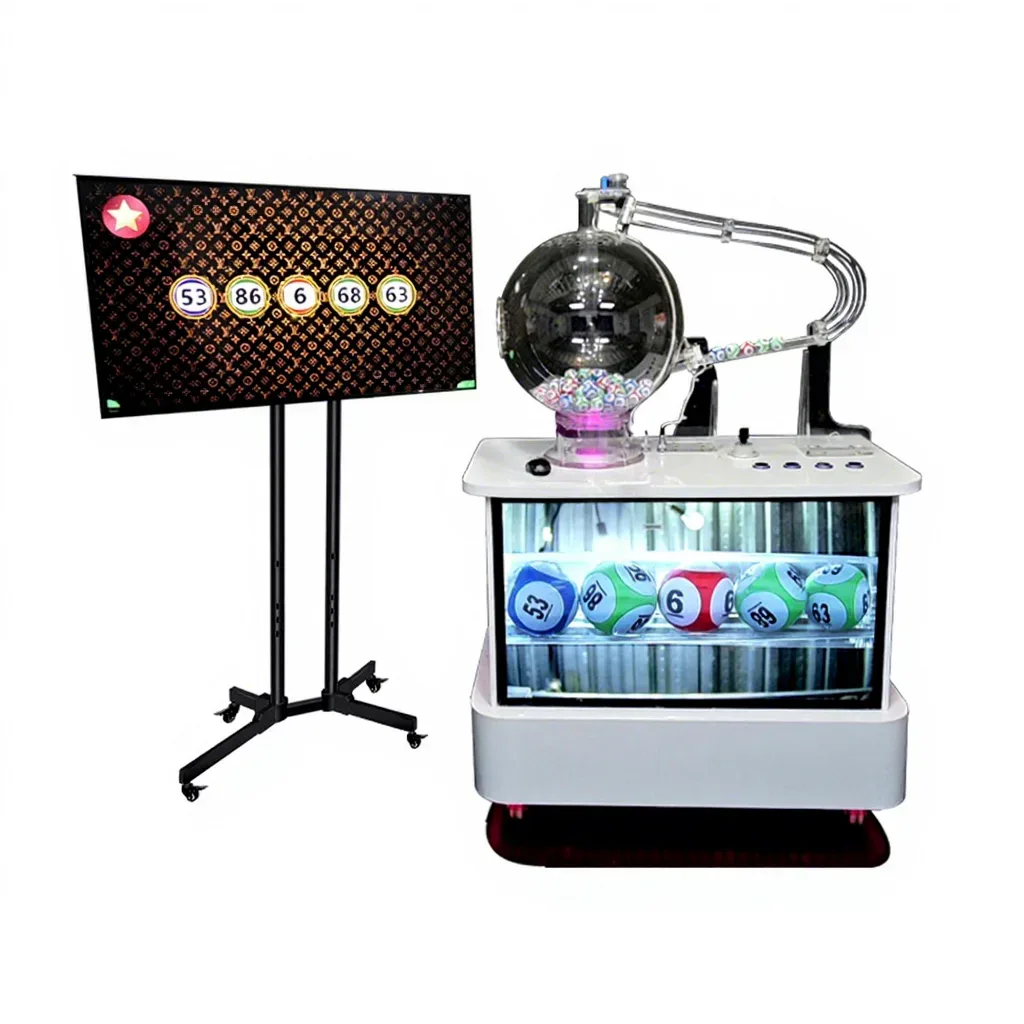
1P420V RFID Air-Mix Lottery Machine with External LCD provides an existing comparison: it lists 50 solid 4 cm balls, RFID reading and an external LCD. Its on-screen recommendation is three balls, with four to seven supported; those are that model’s display details, not ClearLine lane capacity. P350 Compact 50-Ball Ping Pong Lottery Machine instead lists 50 ping-pong balls of 40 mm diameter and a 10-second ball cycle. Compare how the existing equipment presents a result before deciding whether a new retained lane is needed. A shared nominal ball diameter does not make solid balls and lightweight ping-pong balls interchangeable.
What drawing and demonstration should define acceptance?
Supply winners per round, working pool size, replacement rule, ball construction, host position and the preferred reading direction. Request a drawing that distinguishes the mixing pool, transfer path, retained positions and retrieval access. Agree a demonstration using the entire intended round, including the last occupied position, a controlled interruption and the reset procedure. Record the acceptance observations against the drawing revision. Overall dimensions, required electrical load and cycle time remain project-specific; neither the rendering nor another model’s datasheet supplies them. This page is useful when keeping several physical results on display is the actual operational requirement.
Send the draw rules and the number of results that must remain visible to request a quote for the retained-result concept.
What Should Be Confirmed Before Engineering?
Who This Concept Is For
- Host-led draws retaining several results until round close
- Operators comparing physical result retention with automatic return
Configuration Directions
- Horizontal retained-result lane with defined position order
- Separate operator console
- Manual retrieval access after round reconciliation
- Optional electronic result interface as a separate scope
Operator and Site Requirements
- Verify an empty result lane and correct ball set before the round
- Stop and record an interrupted or unreadable result
- Reconcile retained balls before returning the set
- Reserve access for lane cleaning and inspection
Inputs We Need From the Buyer
- Working ball pool and ball construction
- Winners per round and replacement rule
- Host reading direction and required retained positions
- Method of independent result recording
- Site access and power requirements
Existing Equipment to Compare
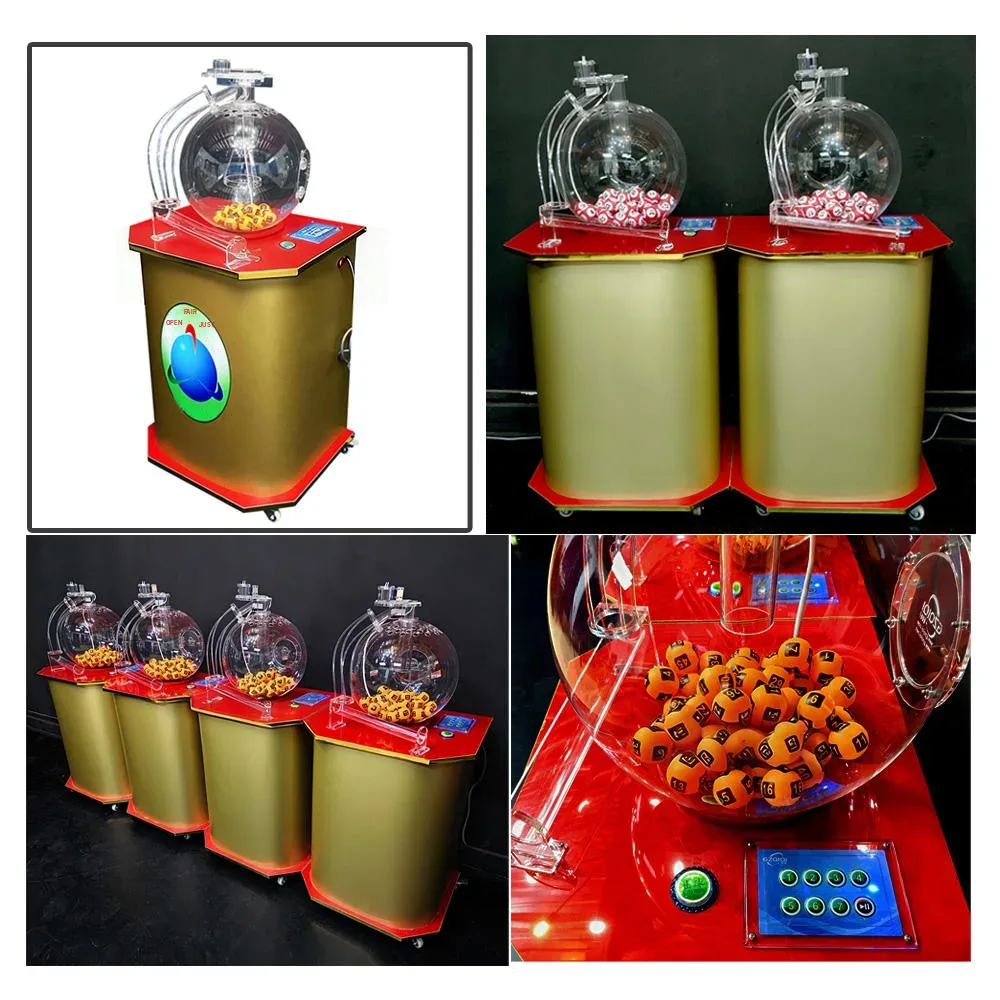
These photos and demonstrations show the existing models cited above. They do not show a completed version of this concept; each model keeps its own specifications.
Customization Questions
- Does the illustration establish five-result capacity?
- No. The image shows a design direction. Specify the required number of retained results and have the lane and transfer sequence engineered for that round.
- Can a retained ball be selected again during the same round?
- The proposed without-replacement workflow keeps accepted balls outside the active pool until reset. The delivered mechanism and operating procedure must demonstrate that behavior.
- Is an electronic log included with the retained display?
- No electronic logging is implied. RFID, data export and recording must be specified separately, including how their records correspond to the physical positions.