Concept / Customizable Design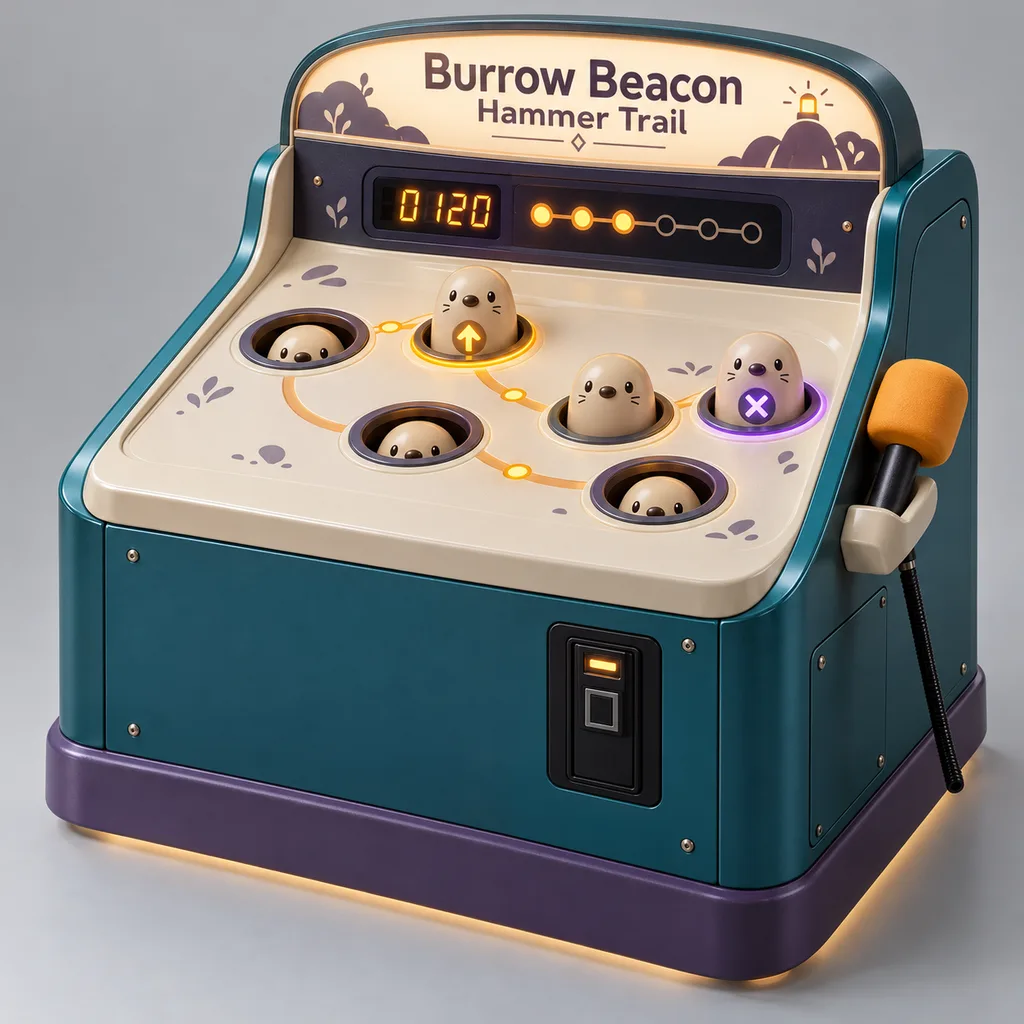
Category: Whack-a-Mole & Hammer Games
Burrow Beacon Hammer Trail
Concept design — fully customizable. Contact us to make it real.
- ✓Illuminated trail links successive strikes across physical pop-up targets.
- ✓Raised distraction targets add selective reaction gameplay.
- ✓Curved play deck and rear progress display make the challenge visible from the aisle.
- ✓Proposed service sequence checks movement, lighting and strike inputs before play.
- ✓Optional score-based redemption can be developed around the venue's ticket system.
A physical reaction trail for mall arcade operators
Concept design — fully customizable. Contact us to make it real.
Burrow Beacon Hammer Trail is a proposed hammer game for a shopping mall arcade operator adding a family-friendly reaction challenge to a redemption area. Its central problem is simple: guests should understand the challenge from the aisle, while the operator needs a game with a clear beginning, visible progress and a predictable reset procedure. Instead of scoring every raised target equally, this concept asks the player to follow a moving illuminated trail across physical pop-up targets.
The proposed cabinet resembles a small landscape of rounded burrows, with a sloped play deck, a recessed central progress display and a low rear marquee. Teal cabinet panels, warm amber target rings and cream-colored character heads create a readable visual hierarchy. A contrasting violet ring identifies a raised distraction target. These colors are a proposed treatment; symbols and distinct light patterns would also communicate target status so that color alone does not carry the instructions.
Follow the beacon, then strike the raised target
An example custom layout uses six target positions arranged along a shallow curved trail. This is a design direction, with the final target count and spacing determined by player reach, cabinet size and mechanism packaging. Each target would rise through an individual guided opening. A cushioned tethered hammer and a strike sensor at each target would provide the physical interaction. The illuminated trail matters because players must connect a visible cue with an actual raised object, rather than simply tap a screen.
During a round, a beacon ring identifies the next scoring target. Other heads may rise as distractions, but only a strike on the active raised target advances the trail. The proposed controller would accept scoring input only during that target's active window, then move the beacon to another position. Missed cues and distraction strikes could interrupt a streak or apply an adjustable score penalty. These are configurable game rules, not measured performance claims. Target movement, strike detection, guarding and timing would need engineering validation together.
Optional redemption would convert the completed round score into a venue-defined ticket award. Paper ticket output or an interface to a compatible venue system could be explored as separate custom options. Neither interface is assumed to be included. The concept does not contain a prize claw, capsule dispenser or numbered-ball draw mechanism.
Prepare, supervise and reset each session
Before opening, staff would inspect the hammer cushion and tether, check that target openings are clear, and run a service sequence to exercise target movement, lights and strike inputs. The operator would select the agreed difficulty profile, session rules and redemption settings, then confirm that credits and any ticket output behave as configured. Target assemblies and service access panels are proposed to support inspection and replacement without requiring routine access through the player openings.
At the end of a round, the proposed sequence parks the targets, displays the score, completes any configured award and returns to the attract display. A blocked target or incomplete movement should place the game into a service state rather than start another round; the fault detection method remains an engineering requirement. Staff would isolate power before clearing a mechanical obstruction. Venue planning must account for the hammer swing area, spectators, service access and sound limits, as well as the cabinet itself.
How this differs from the existing hammer game
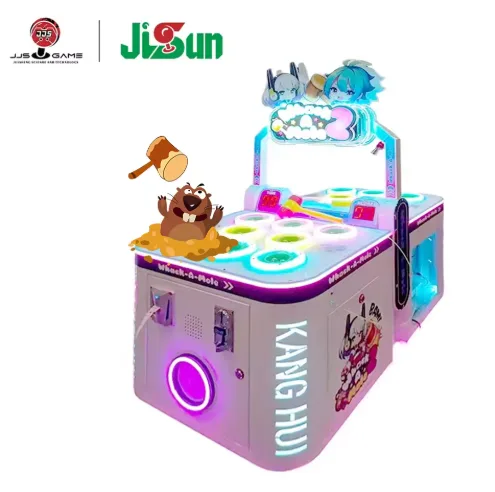
Jisun's existing Whack-a-Mole Machine, JISUN-MOLE-001 provides classic whack-a-mole hammer gameplay and supports cabinet graphics and branding customization. That model is sufficient when the venue wants a familiar reaction game without the proposed trail-following rules. Burrow Beacon Hammer Trail instead proposes coordinated target movement, selective scoring and visible route progress. This added control relationship is the reason for a separate concept, rather than a new cabinet color. The existing model's dimensions and operating behavior do not establish specifications for this design.
Define the installation before engineering and quotation
Jisun needs the intended player age range, usable installation envelope, access route, preferred target count, game duration direction, payment method and redemption interface requirements. Buyers should also specify destination electrical supply, service access constraints, branding and sound expectations. Cabinet height, target spacing, hammer characteristics and movement settings would be developed around those inputs. No final dimensions, power rating or compatibility are assigned at this concept stage.
Production usually takes 7-15 working days after deposit and final specification confirmation. Shipping time is additional; the final schedule is confirmed in the quotation. Get a Quote to develop the target layout, operating rules and cabinet treatment for your venue.
What Should Be Confirmed Before Engineering?
Who This Concept Is For
- Shopping mall arcade operators developing a family redemption area
- Family entertainment centers seeking a physical selective-reaction hammer game
- Arcade groups planning a common game format with venue-specific graphics
Configuration Directions
- Target count and curved trail arrangement adjusted to reach and mechanism packaging
- Cabinet height and deck profile developed for the intended player age range
- Adjustable active-target windows, distraction frequency and streak rules
- Optional paper ticket output or compatible venue redemption interface
- Custom cabinet graphics, character heads and lighting palette
- Payment interface selected around the venue's credit system
- Service panel placement adapted to the installation's access constraints
Operator and Site Requirements
- Reserve space for hammer movement, spectators and service access.
- Inspect the hammer cushion, tether and target openings before opening.
- Run the movement, lighting and strike-input service sequence before play.
- Confirm credit handling and any configured ticket award behavior.
- Isolate power before clearing a mechanical obstruction.
- Confirm electrical supply and acceptable sound levels for the venue.
Inputs We Need From the Buyer
- Intended player age range and reach requirements
- Installation envelope, delivery access route and service clearances
- Preferred target count and trail arrangement
- Desired round duration and difficulty progression
- Payment system and required interface information
- Redemption method and ticket system interface requirements
- Destination electrical supply and sound constraints
- Brand artwork and preferred character treatment
Existing Equipment to Compare
These photos and demonstrations show the existing models cited above. They do not show a completed version of this concept; each model keeps its own specifications.
Customization Questions
- Does striking every raised head advance the Burrow Beacon trail?
- The proposed rules advance the trail only when the player strikes the active raised target identified by the beacon. Distraction strikes could interrupt a streak or apply an adjustable score penalty.
- Is the six-target curved deck a fixed cabinet specification?
- No. Six positions illustrate a custom layout. Final target count, spacing and deck profile depend on player reach, installation space and mechanism packaging.
- What happens if a target fails to return between rounds?
- The proposed control sequence should place the game into a service state when movement is incomplete. Fault detection still requires engineering development, and staff would isolate power before clearing an obstruction.
- Can Burrow Beacon connect to our existing redemption system?
- A compatible venue interface can be explored as a custom option. Jisun needs the system's interface requirements before defining compatibility; paper ticket output is another proposed option.