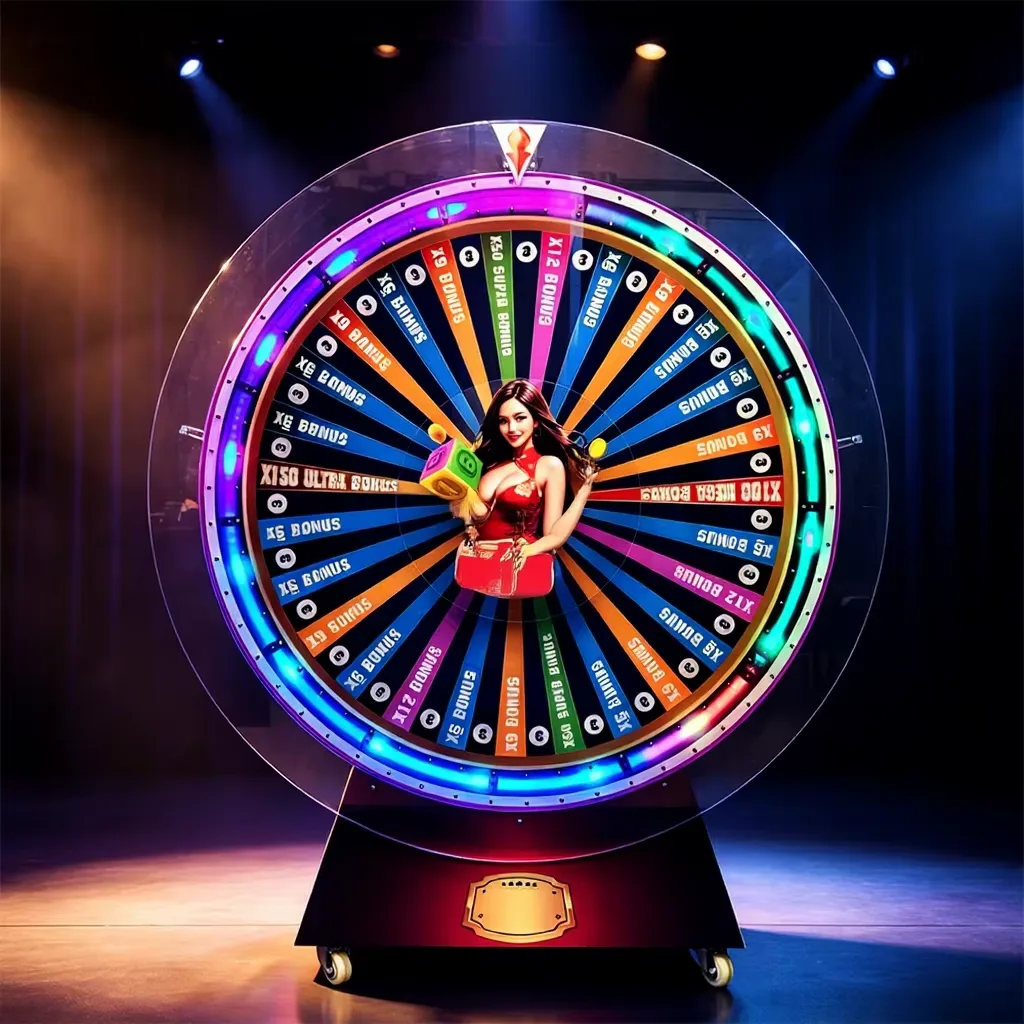
120 cm Custom Prize Wheel with LED Rim
Model: 120 cm LED Prize Wheel
Prize wheel probability depends on how sectors are allocated under an assumed landing model. We explain how to estimate prize costs and turn that calculation into a custom physical wheel specification without treating theoretical odds as measured fairness.
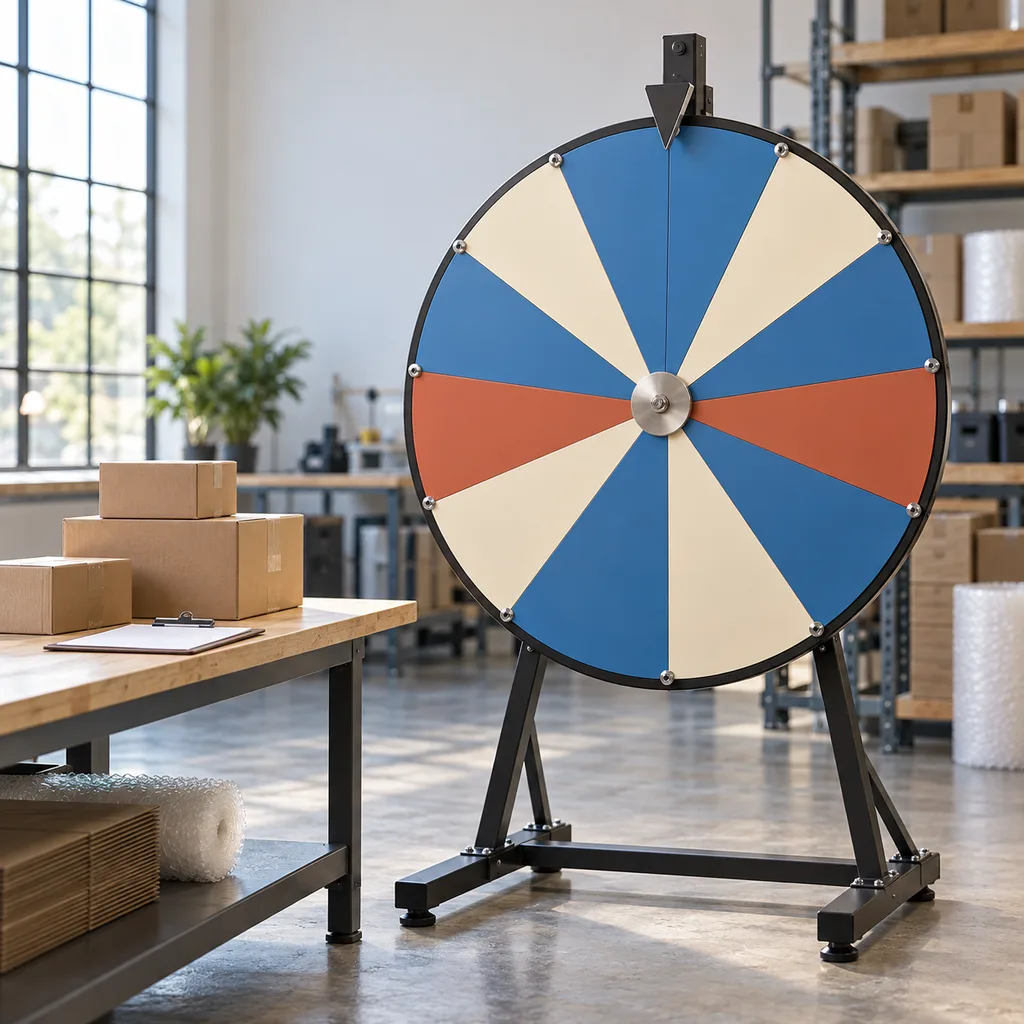
Prize wheel probability is the theoretical chance of landing on a particular prize. For equal sectors, divide that prize’s sector count by the total sector count, assuming every sector is equally likely. We use this calculation to help buyers plan custom wheel artwork and prize budgets; physical geometry and friction mean equal sectors alone do not establish measured fairness.
A physical prize wheel is a rotating, segmented display whose stopping position identifies an outcome at a pointer. Probability expresses how likely an outcome is under a stated model. For a hypothetical wheel with 12 equal sectors, one sector represents a theoretical chance of 1/12, or approximately 8.33%, if every sector is equally likely. A prize repeated across three sectors has a theoretical chance of 3/12, or 25%. Count the labels carefully. Repeated labels combine into one prize category even when they sit apart on the face. When we discuss custom prize wheels with buyers, we distinguish this artwork calculation from the behavior of the finished physical assembly.
Expected prize cost is the probability-weighted average cost of the prizes awarded per spin. Multiply each prize category’s assumed probability by its fulfillment cost, then add the results. The numbered example below is entirely hypothetical: these dollar amounts represent a buyer’s prize costs, not Jisun equipment prices. Under the equal-likelihood assumption, the example produces an expected cost of $4.33 per spin before staffing, freight or equipment costs. We recommend using the cost you actually incur when a prize is redeemed. A voucher’s face value may differ from that amount. Keep the accounting basis consistent across categories so the comparison remains useful.
No. An expected value describes an average under the assumed probabilities; it does not cap an individual session’s spend. In the hypothetical 12-sector example, 240 spins would produce an expected prize cost of $1,040 using the unrounded calculation. Actual results could cost more or less. Several expensive prizes can occur close together. Before we finalize a wheel face, we ask buyers to distinguish their average spending target from their available prize inventory and maximum spending allowance. If a hard budget ceiling matters more than the spinning experience, a simpler fixed gift per eligible participant may suit the purchase objective better. It makes the unit prize cost easier to plan.
Equal sectors establish equal angular shares of the artwork. They do not prove equal observed landing frequencies. In a physical assembly, wheel balance, bearing friction, pointer contact, sector boundary geometry and the way participants spin can affect stopping behavior. Visible symmetry is only part of the picture. We therefore describe calculated odds as theoretical and keep any claims about observed behavior separate. A useful evaluation records repeated outcomes under defined operating conditions, including the starting procedure and how boundary stops are resolved. Such observations describe those conditions; they do not establish certified randomness or guarantee future results. Changing the pointer, installation or operating method can also change the conditions being evaluated.
We start with the intended outcome, audience and operating frequency: who will spin, what they can receive, and how many spins the program expects. Equal sectors with repeated prize labels make the theoretical allocation easy to explain. Unequal sectors are a custom artwork option, but their theoretical probabilities follow angular share only under an assumed uniform stopping-angle model. A sector covering one quarter of a circle would then represent 25%; its printed label alone establishes nothing. Keep the rules readable. Define participant eligibility, who initiates each spin, when the pointer result becomes final, how boundary stops are handled, and how the operator records awards before resetting. This workflow should guide the face design before decoration begins.
The probability calculation does not determine wheel diameter, stand style or lighting. We select those around viewing distance, participant access and the installation space. The named models below provide different starting points for the purchase brief. Their supplied descriptions do not specify a sector count or measured outcome distribution, so the hypothetical 12-sector example is not a supplied configuration of any model. For custom artwork, discuss label length and boundary visibility along with the prize allocation. A small prize description can become difficult to read across a room. Choose the physical format after deciding how participants and the operator will read the result.
| Named product | Relevant supplied configuration |
|---|---|
| 120 cm LED Prize Wheel | 120 cm wheel diameter; custom wheel face and branding. |
| Pedestal Manual Prize Wheel | Enclosed pedestal base; custom colored segments and central branding. |
| Open-Stand Manual Prize Wheel | Open floor-standing frame; custom colored segments, numbers or prize labels. |
Send us the proposed prize categories, sector allocation, assumed spin volume and fulfillment cost per category. Include your audience, operating frequency, preferred wheel size, installation space and result-recording workflow. These inputs connect the budget calculation to the equipment order. Specify who spins the wheel and whether optional lighting is required; for the Open-Stand Manual Prize Wheel, the supplied power configuration provides an optional lighting supply configured for the destination, with manual rotation. Transport deserves a line in the brief too: the Open-Stand Manual Prize Wheel’s packing and disassembly arrangement is specified with the order. Artwork, assembly requirements and delivery planning belong in the same quotation discussion.
| Order planning item | Usual schedule |
|---|---|
| Production across Jisun product families | Usually 7-15 working days after deposit and final specification confirmation. |
| Shipping and final timing | Shipping time is additional; the final schedule is confirmed in the quotation. |
Send Jisun your theoretical prize allocation, expected usage and preferred wheel format to request a quote for a custom prize wheel built around your purchasing requirements.
Use the model photos, available demonstrations and specification sheets to check the equipment discussed above. Specifications apply to each named model.
Model: 120 cm LED Prize Wheel
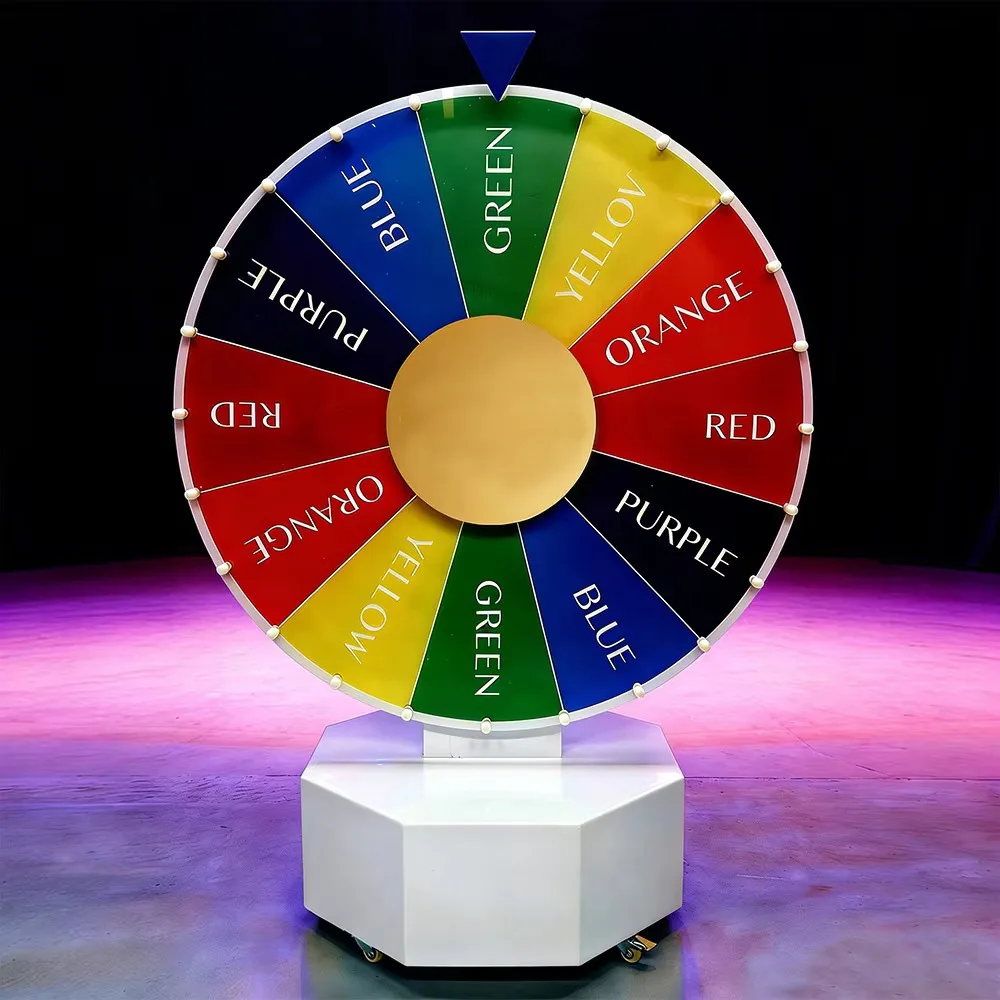
Model: Pedestal Manual Prize Wheel
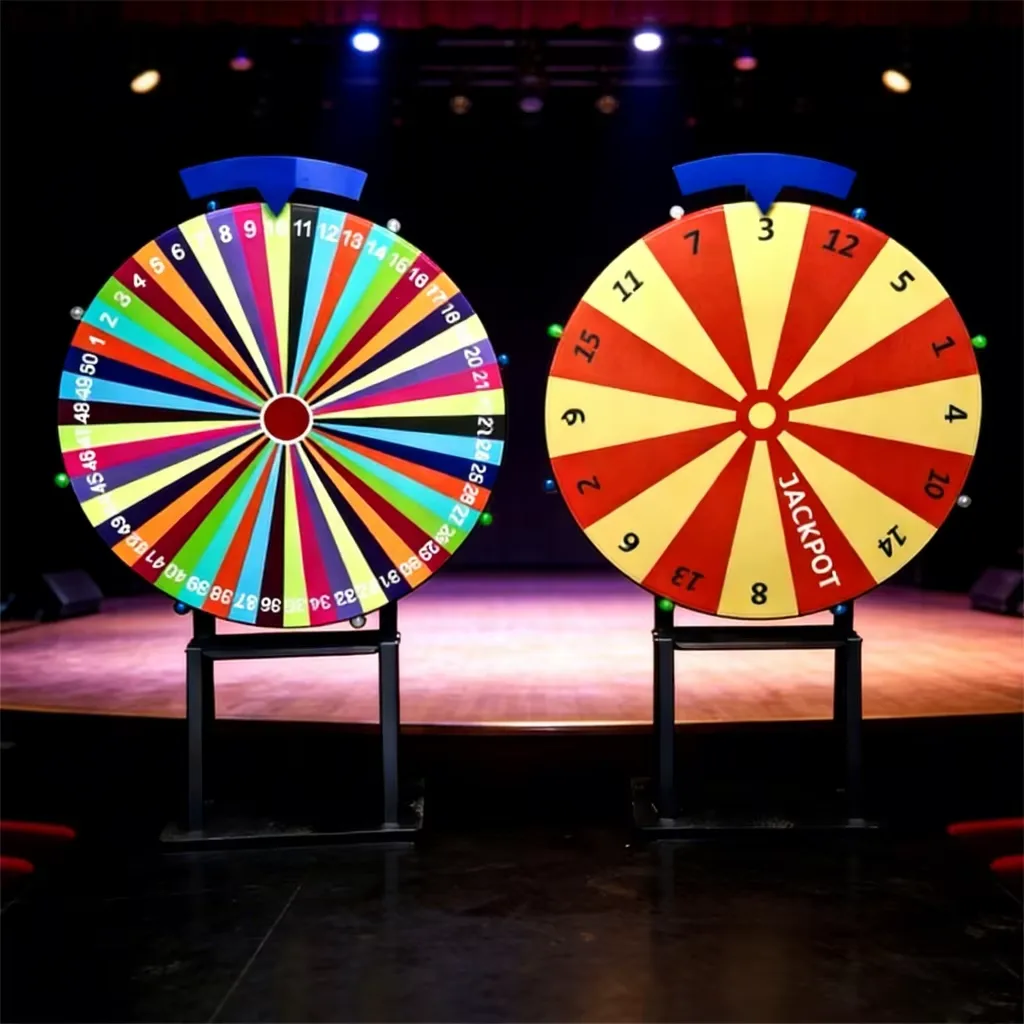
Model: Open-Stand Manual Prize Wheel