← Vending & Amusement Equipment Manufacturer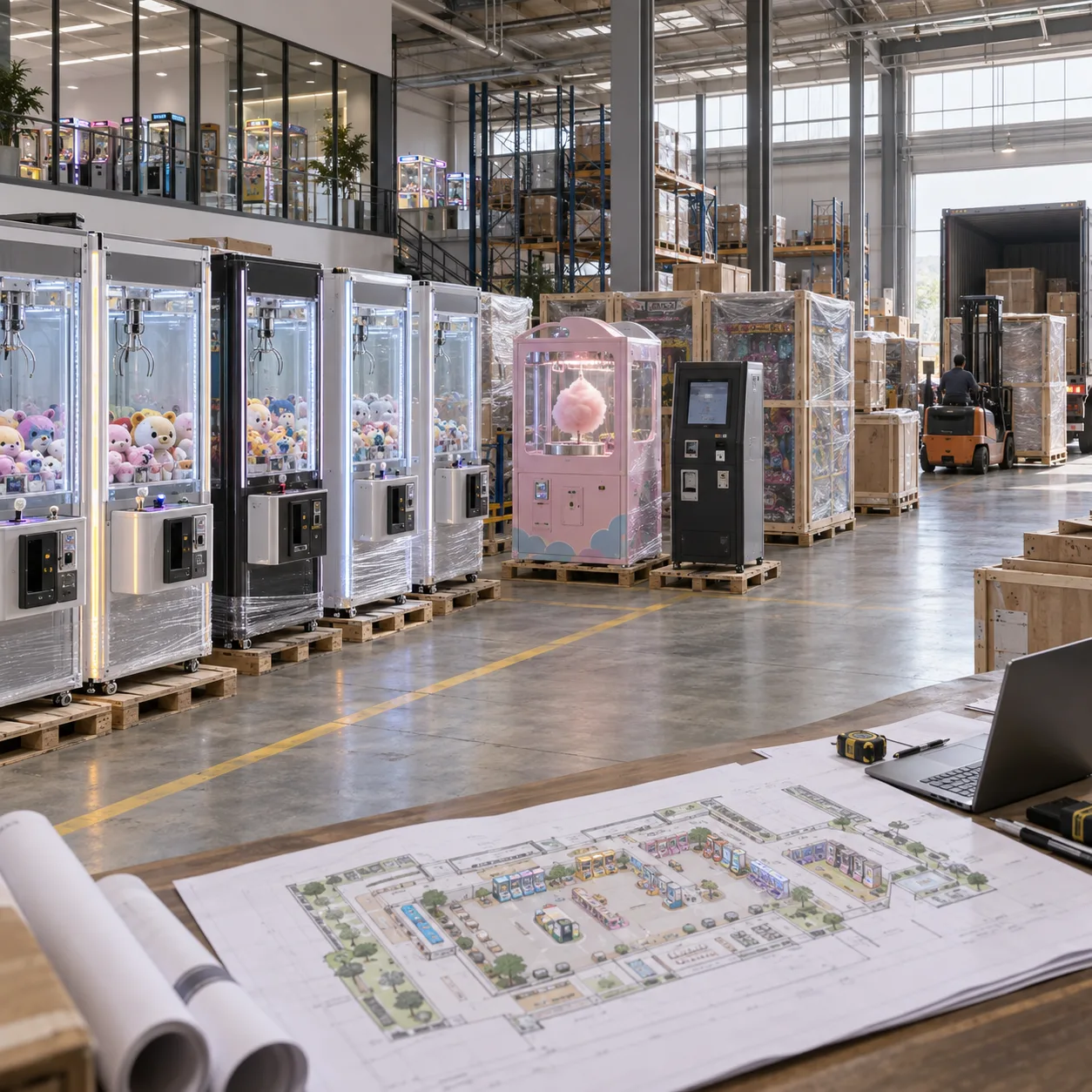
How to Choose an Arcade Equipment Supplier for a Mixed Order
Choose a supplier using a model-by-model equipment schedule that separates play equipment, food vending and payment support, then checks utilities, service access and acceptance evidence.
Written by Jisun Product Team
Choose an arcade equipment supplier by checking whether every proposed cabinet has a clear role, correct model data and a workable service plan. A mixed order may include games, food vending and coin exchange; combining their specifications into one generic configuration creates expensive layout and electrical mistakes.
How should an equipment list be organized before quotes?
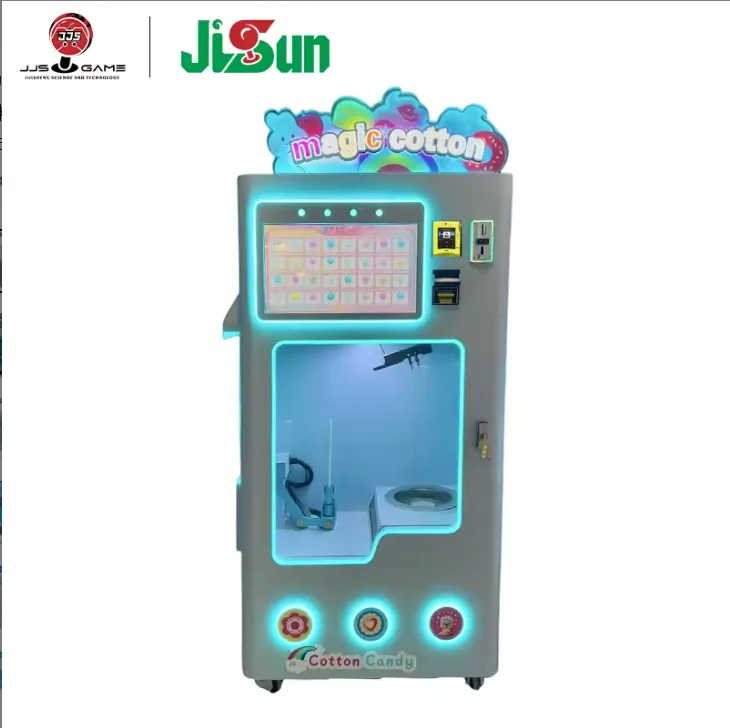
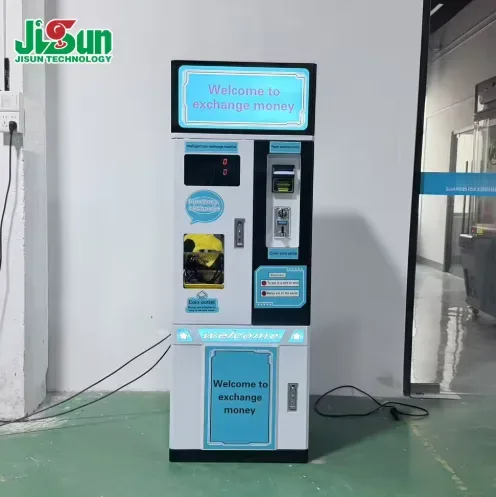
Start with the operation each unit performs. Prize play, preparation of food and exchange of money are separate tasks with different staff, consumable and maintenance needs. The Magic Cotton Candy Machine prepares cotton candy; the Self-Service Coin Exchange Machine supplies coins or tokens to support payment flow. The latter does not supply evidence for the former’s electrical load or cabinet size. Group the proposed order by function, then identify every exact model within it. Record what guests do, how staff refill or clean the machine, and what happens when the machine cannot finish a transaction. This produces a usable sourcing brief before artwork or cabinet colors are discussed.
| Existing model | Its own dimensions and weight | Its own power and supply |
|---|---|---|
| Magic Cotton Candy Machine | 94.6 × 70 × 170.9 cm; 160 kg | Maximum 2700W; 220V standard, 110V custom option |
| Self-Service Coin Exchange Machine | 42 × 55 × 155 cm; 53 kg | 80W; 110–240V/60Hz |
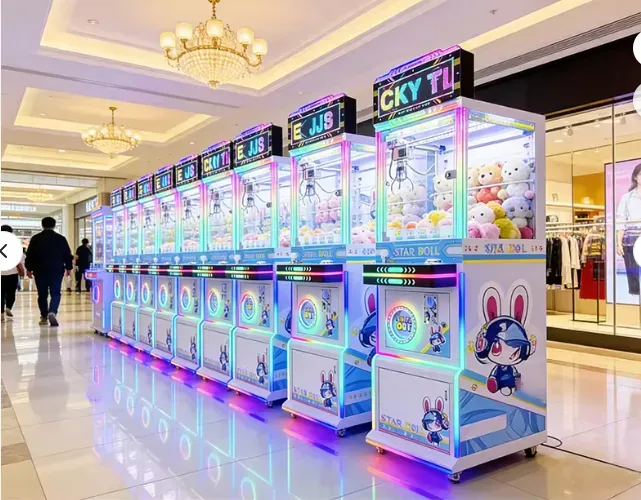
| Mini Claw Machine | 56 × 44 × 168 cm; 56 kg | 150W; 110–240V/60Hz |
Which utilities and interfaces must remain model-specific?
Keep rated or maximum power, voltage and frequency in separate columns, with the model name on every row. The cotton candy machine’s 2700W maximum is not its measured average energy consumption. The coin exchanger’s 80W rating must not be used to size a food-vending connection. Have the venue’s electrical designer assess the final combination of loads, protective devices and local connection requirements. Also identify payment terminal, network availability and account responsibility for each machine. A cabinet accepting a physical card reader does not by itself confirm compatibility with the venue’s payment platform. Those interfaces need a written responsibility and test plan.
How can the supplier show that the floor plan will work?
Ask for an arrangement that includes the customer approach, prize or product collection, queue, replenishment and service access. Cabinet dimensions describe only the equipment envelope. A technician opening a service door and a customer collecting a serving need room outside that outline. The Magic Cotton Candy Machine lists about 120 seconds to produce a serving; payment, collection, cleaning and interruptions add time. This gives a starting point for a queue trial, not a guaranteed hourly sales rate. Place coin exchange where customers can use it without crossing a striking-game zone. Keep delivery access and floor positioning separate from guest circulation in the plan.
What should buyers ask to see in a demonstration?
Request an uncut sequence of the function you are buying. For food vending, follow payment, production, collection, cleaning and return to readiness. For a coin exchanger, confirm accepted payment, intended denomination, coin delivery and the response when a hopper cannot complete the exchange. For a claw cabinet, use the proposed merchandise and show loading, play and release. A general factory video can establish context but cannot verify all of these different functions. Label demonstrations by model and version, then list the questions the recording did not answer. Repeat those checks on the delivered configuration rather than treating a demonstration of a different cabinet as acceptance.
How should maintenance and consumables affect the shortlist?
Ask the supplier to identify daily operator tasks, service access points, consumables and the parts that need qualified technical work. The cotton candy equipment lists automatic cleaning, but operators still need a defined cleaning and food-handling routine for the installation. Coin exchange requires control of float, collection and reconciliation. Prize cabinets require refill access and an agreed prize assortment. None of those tasks disappears because a cabinet has a self-service display. Compare how your available staff can perform them, where supplies will be stored and how a stopped unit will be isolated from guests. This makes maintenance part of equipment selection rather than a problem discovered after installation.
What should a complete mixed-order quotation include?
Ask for an itemized schedule naming each model, version, quantity, payment devices, electrical preparation, graphics and included accessories. Add separate lines for proposed custom work, packing and any site commissioning support that has actually been offered. Final packed sizes and gross weights belong to the shipment, not the bare-cabinet table above. Use the arcade opening equipment plan to define the mix, and the cotton candy manufacturer checklist for the food-vending acceptance details. The supplier comparison should show which requirements are answered, which are optional and which remain unresolved. Do not compare an undetailed headline price with a fully configured order as if the scope were equal.
Send your floor drawing, target equipment functions, quantities, destination supply and payment requirements to request a quote for a named-model equipment schedule.
Equipment Discussed in This Guide
Use the model photos, available demonstrations and specification sheets to check the equipment discussed above. Specifications apply to each named model.
Frequently Asked Questions
- Can the coin exchanger’s 80W rating be used for cotton candy planning?
- No. The Self-Service Coin Exchange Machine lists 80W. The Magic Cotton Candy Machine lists maximum power of 2700W. They are separate appliances with different dimensions and weights.
- Does the 120-second serving time establish hourly vending revenue?
- No. It is a production-time reference, not a sales or uptime measurement. Include payment, collection, cleaning, availability and actual customer demand in an operating trial.
- Which drawing is needed before reserving a position?
- Use the selected model’s cabinet dimensions plus guest, service and delivery access. Bare cabinet size does not include the queue or the space needed to open access doors.
Related Buying Guides
CE Documentation for Arcade Equipment Sourcing in China
European arcade buyers need model-specific CE documentation backed by clear electrical, installation, and operating specifications. Here is how we approach that sourcing process at Jisun.
Automatic Cotton Candy Vending Machine Manufacturer
Compare automatic cotton candy vending machines by serving cycle, sugar capacity, electrical configuration, cabinet size and remote operation. Jisun supplies commercial equipment for malls, arcades and family entertainment centers.
What Equipment Is Needed to Open an Arcade?
Opening an arcade needs revenue games, payment and coin systems, prize support, and reliable venue-ready machines. We explain the equipment mix from a manufacturer’s view, including claw machines, cotton candy vending, and coin exchange equipment.